

Check the driver’s door jamb sticker or under the hood for the paint code.
Finding the exact color match is easy when you know where to look. In this guide, I’ll show how to find paint code on car across popular makes, how to read those codes, and what to do if the label is missing. I’ve matched hundreds of colors in body shops and dealerships. You’ll get clear steps, brand-specific tips, and smart tools that make this job simple.
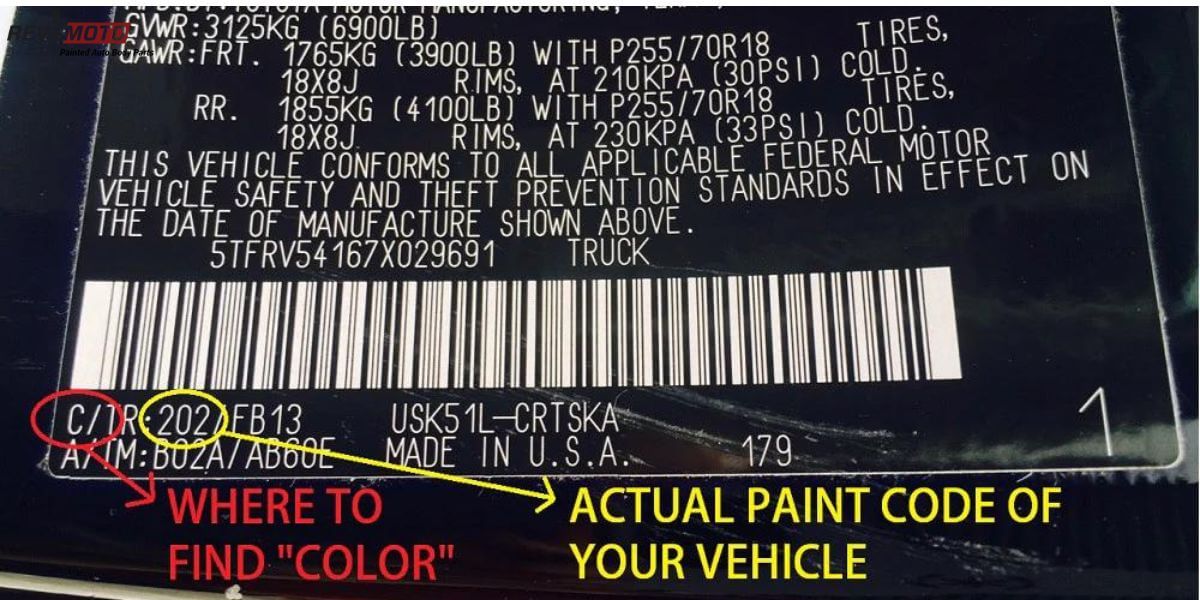
Source: revemoto.com
Why your paint code matters
Your paint code is the precise recipe for your car’s color. It ensures touch-up paint, aerosol cans, or a full respray match the factory finish. Color names can repeat across brands. Codes do not.
Most modern colors are complex. Some are metallic, pearl, or tri-coat systems. A small mismatch can stand out under sunlight. Knowing how to find paint code on car saves time, money, and frustration.
Source: youtube.com
Fast places to check on most cars
These spots cover 90% of vehicles. Open, look, and take a phone photo.
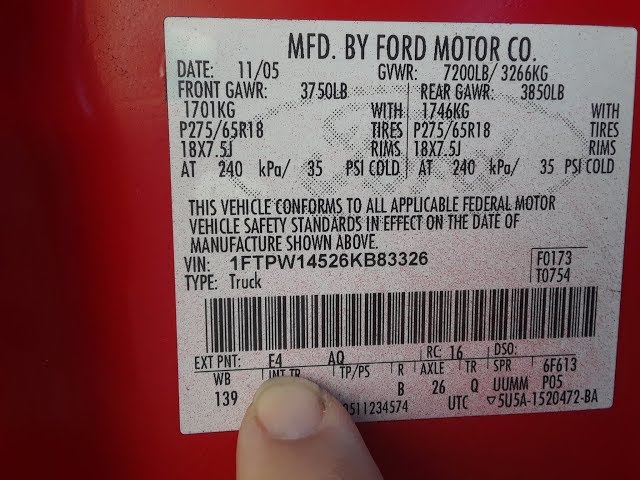
- Driver’s door jamb. Check the certification or tire label for a line showing paint, color, or PNT.
- Under the hood. Look at the radiator support, firewall, or underside of the hood.
- Trunk area. Lift the trunk lid, spare tire well, or left side panel.
- Glove box or center console. Some brands tuck it here.
- Owner’s manual or service booklet. It may list the exterior color code.
- Fuel filler area. A few models print it near the cap.
If you wonder how to find paint code on car fast, start with the door jamb, then the hood.

Source: wikihow.com
Step-by-step: how to find paint code on car
Follow these simple steps. Keep the search short and stress-free.
- Clean labels. Wipe dust and grease. Codes get hidden by grime.
- Check the driver’s door jamb first. Scan for paint, color, ext, or PNT on the label.
- Open the hood. Look at the radiator support, shock towers, firewall, or hood underside.
- Check trunk areas. Inspect the spare tire well and inner panels.
- Look in the glove box and center console. Some brands place the service label there.
- Read the owner’s manual. It may point you to the right label name or spot.
- Write down the full code. Include letters, numbers, and dashes if present.
- Confirm with the dealer or OEM website using your VIN. The VIN does not hold the code, but it lets them look it up.
- Take a clear phone photo. It prevents mistakes when you order paint.
- Compare the code with paint supplier charts. Ensure you have the correct variant.
This is the fastest way to master how to find paint code on car and avoid wrong orders.
How to use the VIN to confirm your paint code
The VIN itself does not list the paint code. But dealers and OEM parts catalogs use your VIN to access your build data. They can confirm the exact exterior color and offer paint options.
Here is how to do it:
- Call the parts counter. Give them your VIN. Ask for the exterior paint code.
- Use official brand owner portals. Many list build options tied to your VIN.
- Ask for variant details if the color has multiple formulas.
If you tried how to find paint code on car and could not find a label, VIN-based lookup is the next best move.
Source: youtube.com
Brand-by-brand paint code locations
Here are high-probability spots and sample codes. Regions and years can vary. Always read the label carefully.
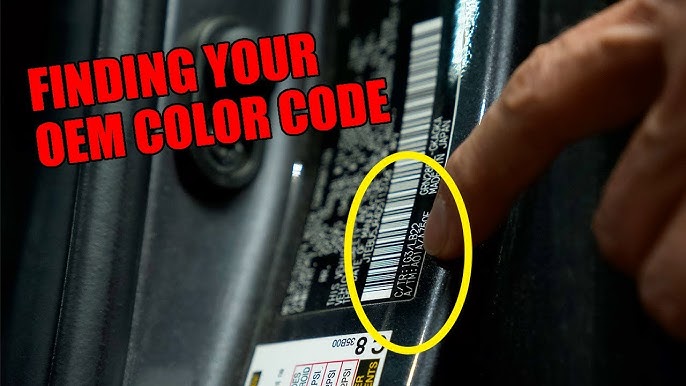
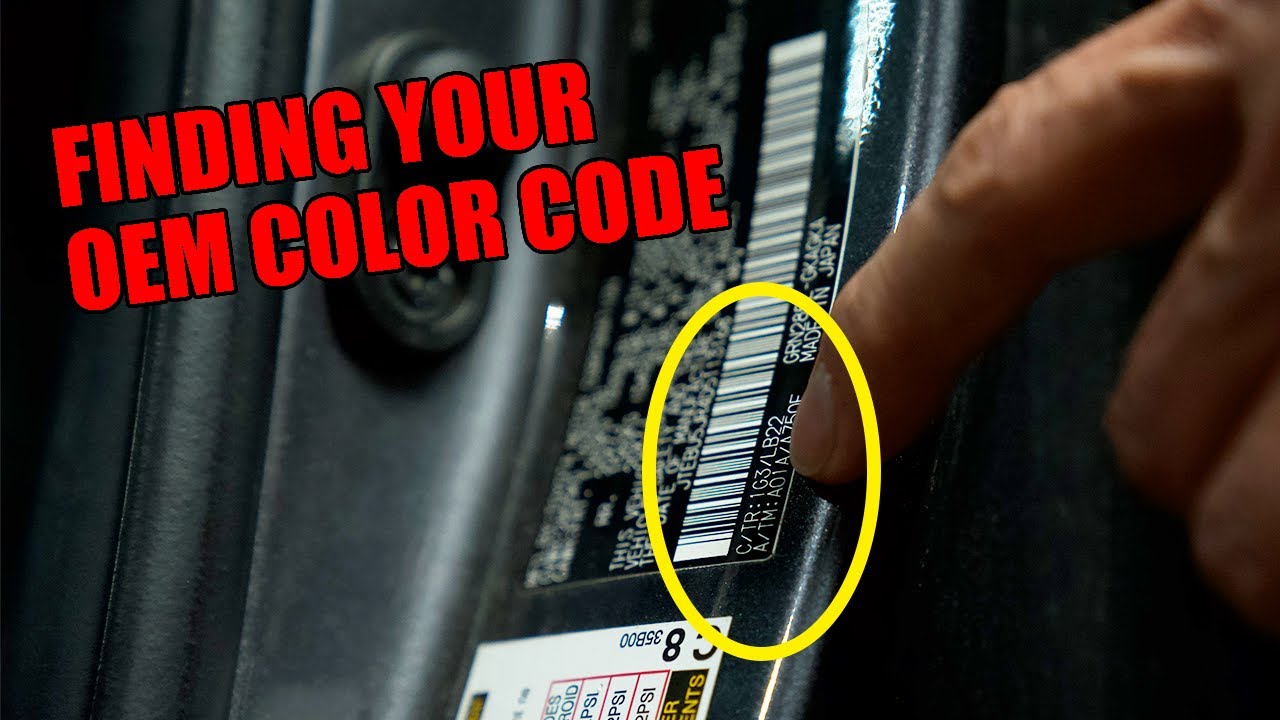
- Toyota and Lexus. Door jamb or under hood. Look for C/TR. Example: C/TR 040/FA13. The paint code is 040.
- Honda and Acura. Driver’s door jamb. Example: NH-731P. NH means black family. YR means yellow/red family.
- Nissan and Infiniti. Door jamb or firewall. Example: QAB or KH3.
- Ford and Lincoln. Driver’s door jamb certification label. Look for EXT PNT or just PNT. Example: UX, G1, or code starting with M.
- GM (Chevrolet, GMC, Buick, Cadillac). Service Parts Identification label. Older cars in the glove box or trunk. Newer in the door jamb or cargo area. Example: WA8555 or U8555.
- BMW and Mini. Under hood or door jamb. Example: A52 Space Grey. The code is A52.
- Mercedes-Benz. Under hood, radiator support, or door jamb. Example: 744 or 9774.
- VW and Audi. Trunk spare area, under carpet, or service booklet. Example: LZ7H or LY9B.
- Hyundai and Kia. Passenger door jamb. Label shows Paint or PNT. Example: WAW or UYS.
- Subaru. Door jamb. Example: G1U or K1X.
- Tesla. Door jamb label shows PNT followed by code. Example: PNT PBCW for Pearl White Multi-Coat.
- Mazda. Door jamb. Example: 41V or 46G.
If you still need help with how to find paint code on car for these brands, call the dealer with your VIN and ask for the exterior paint code.
Source: youtube.com
Reading the label: code formats and pitfalls
Paint codes come in many shapes. Here is how to decode them.
- One code, one color. Example: Toyota 040 or BMW A96.
- Two-tone cars. You may see two exterior codes. Verify which panel you plan to paint.
- Tri-coat and pearl. The code is a single ID, but the formula has base and mid-coat layers.
- Names vs codes. Names repeat. Codes do not. Always order by code.
- Interior vs exterior. Labels often list trim and interior codes. Look for words like paint, color, ext, or PNT.
Knowing how to find paint code on car is half the job. Reading it right is the other half.

Source: co.uk
What if the sticker is missing?
It happens. Stickers get peeled, repainted over, or lost in a crash repair. Try these proven options.
- Dealer lookup with VIN. Ask for the exterior paint code and any variant notes.
- Body shop spectrophotometer scan. Pros can read your panel and match a close variant.
- Paint brand databases. Enter the color name and year to see likely codes and variants.
- Build sheet or window sticker. Some list the color by name that maps to a code.
- Prior repair invoices. Look for paint code notes from past work.
When labels fail, these methods help you still solve how to find paint code on car with confidence.
Tools and resources that help
Use simple tools and trusted sources. They speed up your match.
- Flashlight and phone camera. Get a crisp, readable label photo.
- OEM owner portals and parts catalogs. Confirm the code against your VIN.
- Dealer parts counter. Fast and reliable for factory data.
- Paint supplier catalogs. Cross-check codes, names, and variants.
- Touch-up pens, aerosols, or pro-mixed quarts. Choose the format that fits your repair size.
If you are teaching someone how to find paint code on car, show them how to confirm with two sources. It prevents ordering the wrong shade.
Common mistakes and how to avoid them
Here are the slip-ups I see most in the shop. They are easy to prevent.
- Ordering by color name instead of code. Always use the code.
- Reading the interior color as exterior. Look for paint, ext, or PNT.
- Ignoring variants. Metallic and pearl colors can have several formulas.
- Skipping the door jamb. It is the most common spot on modern cars.
- Not taking a photo. A quick picture saves a second trip to the store.
With a calm check-list, you will master how to find paint code on car every time.
Frequently Asked Questions of how to find paint code on car
Does the VIN show my paint code?
No. The VIN does not include the paint code. But dealers can use your VIN to pull build data and confirm the correct code.
How do I find my paint code without a sticker?
Call the dealer with your VIN, or visit a body shop for a scan. Many paint suppliers can also narrow it down by year, model, and color name.
Where is the paint code on most cars?
Most often on the driver’s door jamb label. If not, look under the hood, in the trunk area, or inside the glove box.
Can two cars with the same color name have different codes?
Yes. Names repeat across years and brands. Always match and order by the exact paint code.
What does a tri-coat or pearl code mean?
It is one code that needs a base coat and a mid-coat before clear. This creates depth and pearl effect, so always follow the formula.
Will a paint pen match perfectly?
It is good for chips and small spots. On large areas, blend and spray methods match better.
How many times should I check how to find paint code on car before ordering?
Check at least two sources. Read the label, then confirm with dealer or a paint supplier database.
Conclusion
You now know the fastest spots to look, how to read labels, and how to verify the code. Take a clear photo, confirm with your VIN at the dealer, and pick the right format for your repair. A perfect match is not luck. It is a simple process you can repeat.
Try these steps today. If you still cannot locate the code, call your dealer’s parts counter with your VIN and ask for a printout. Want more guides like this? Subscribe, share your question in the comments, or request a brand-specific walkthrough.