

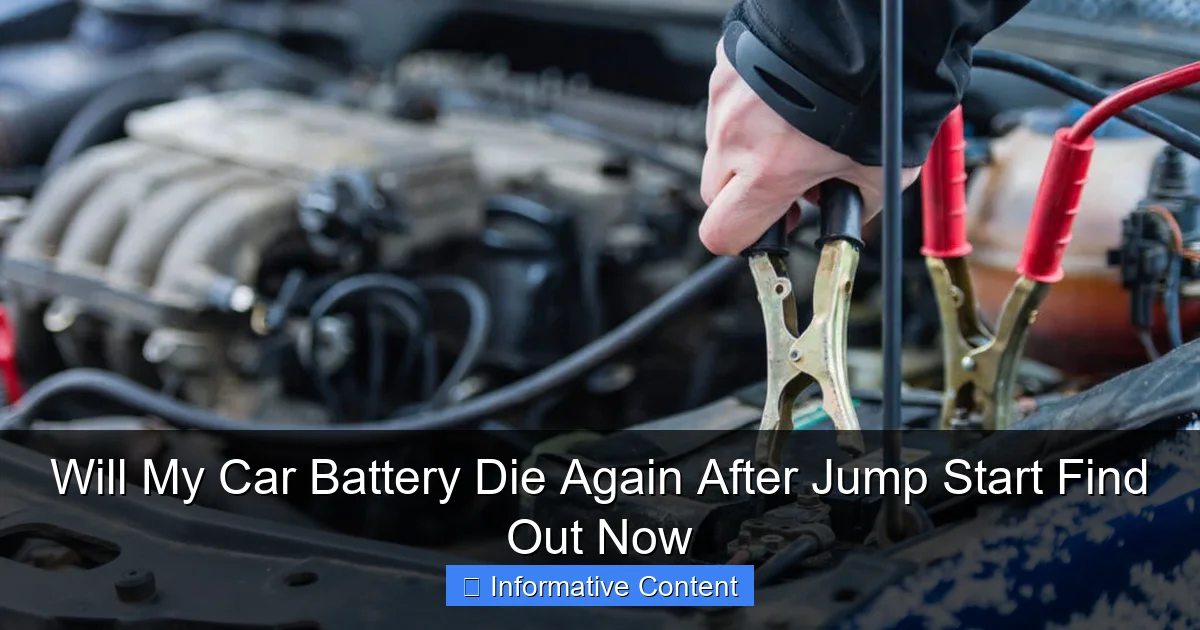
If your car battery dies again after a jump start, the jump likely restored enough power to start the engine—but it did not fix the underlying problem. In a U.S. vehicle, the most common causes are a failing battery, a charging-system fault, loose or corroded battery connections, a short drive that did not replace the energy used, or an electrical drain that continues after the car is parked.
A jump start is an emergency way to provide temporary electrical power. It is not a battery recharge or a repair. The next step is to determine whether the battery can hold a charge, whether the alternator is charging it, and whether something is draining power while the vehicle is off.
Source: Bing
What Happens After a Jump Start?
A jump start uses another battery or a portable jump starter to supply the current needed to operate the starter motor. Once the engine runs, the vehicle’s charging system—usually the alternator—should supply electrical power and recharge the battery.
However, several conditions can prevent that from happening:
- The battery may be too old or internally damaged to accept or retain a charge.
- The alternator may not be producing enough voltage or current.
- The drive may have been too short to replace the energy consumed during starting.
- Battery terminals or ground cables may restrict electrical flow.
- A light, module, accessory, or aftermarket device may continue drawing power after the car is turned off.
- A loose or damaged serpentine belt may prevent the alternator from turning properly.
A functioning charging system does not automatically make a dead battery healthy. The alternator can maintain a good battery, but it may not restore a deeply discharged or damaged battery reliably during a short drive.
The U.S. Department of Energy explains that alternators generate electrical power while the engine runs, while the battery supplies power for starting and supports the electrical system when the alternator cannot provide enough output. This distinction explains why a car can start with a jump and still fail later.
Common Reasons a Car Battery Dies Again
The cause usually falls into one of five categories: battery failure, charging failure, poor electrical connections, insufficient recharge time, or parasitic drain.
1. The battery is worn out or damaged
A car battery can show enough voltage to start once and still be unable to hold a charge. Lead-acid batteries gradually lose capacity through age, heat exposure, sulfation, repeated deep discharges, and internal plate damage.
Symptoms of a weak battery include:
- The engine cranks slowly after the vehicle sits overnight.
- The battery repeatedly needs a jump.
- Interior lights dim when the starter operates.
- The battery case is swollen, cracked, or leaking.
- The vehicle starts after driving but fails again after sitting.
- The battery is several years old, especially in a hot climate.
Battery life varies with climate, vehicle use, maintenance, and battery design. Heat accelerates battery wear, while severe cold makes a weak battery less capable of producing starting current. Age alone does not prove a battery has failed, but an older battery deserves testing rather than repeated jump starts.
A battery load test or electronic conductance test is more useful than checking voltage alone. A battery can measure near a normal resting voltage while having insufficient reserve capacity to start the engine.
2. The alternator is not recharging the battery
The alternator should power the car’s electrical systems and replenish energy used during starting. If it fails, the car may run temporarily after a jump using the battery’s remaining energy. Once that energy is depleted, the engine can stall or fail to start again.
Possible alternator-related symptoms include:
- A battery-shaped warning light on the dashboard.
- Headlights that become unusually dim or brighten with engine speed.
- Electrical accessories that work inconsistently.
- A whining, grinding, or belt-related noise.
- The engine stalls after a jump start.
- A measurable charging voltage that remains too low with the engine running.
A typical conventional 12-volt charging system may measure roughly 13.5 to 14.8 volts at the battery with the engine running, but the correct value depends on the vehicle. Many newer U.S. vehicles use computer-controlled or “smart” charging systems that intentionally vary alternator output. Temperature, battery state of charge, electrical load, and operating conditions can change the reading.
For that reason, a voltage measurement is a useful screening check, not a complete alternator diagnosis. A professional test can evaluate alternator output, voltage regulation, diode performance, belt condition, and voltage drop in the cables.
3. The battery terminals or cables have a poor connection
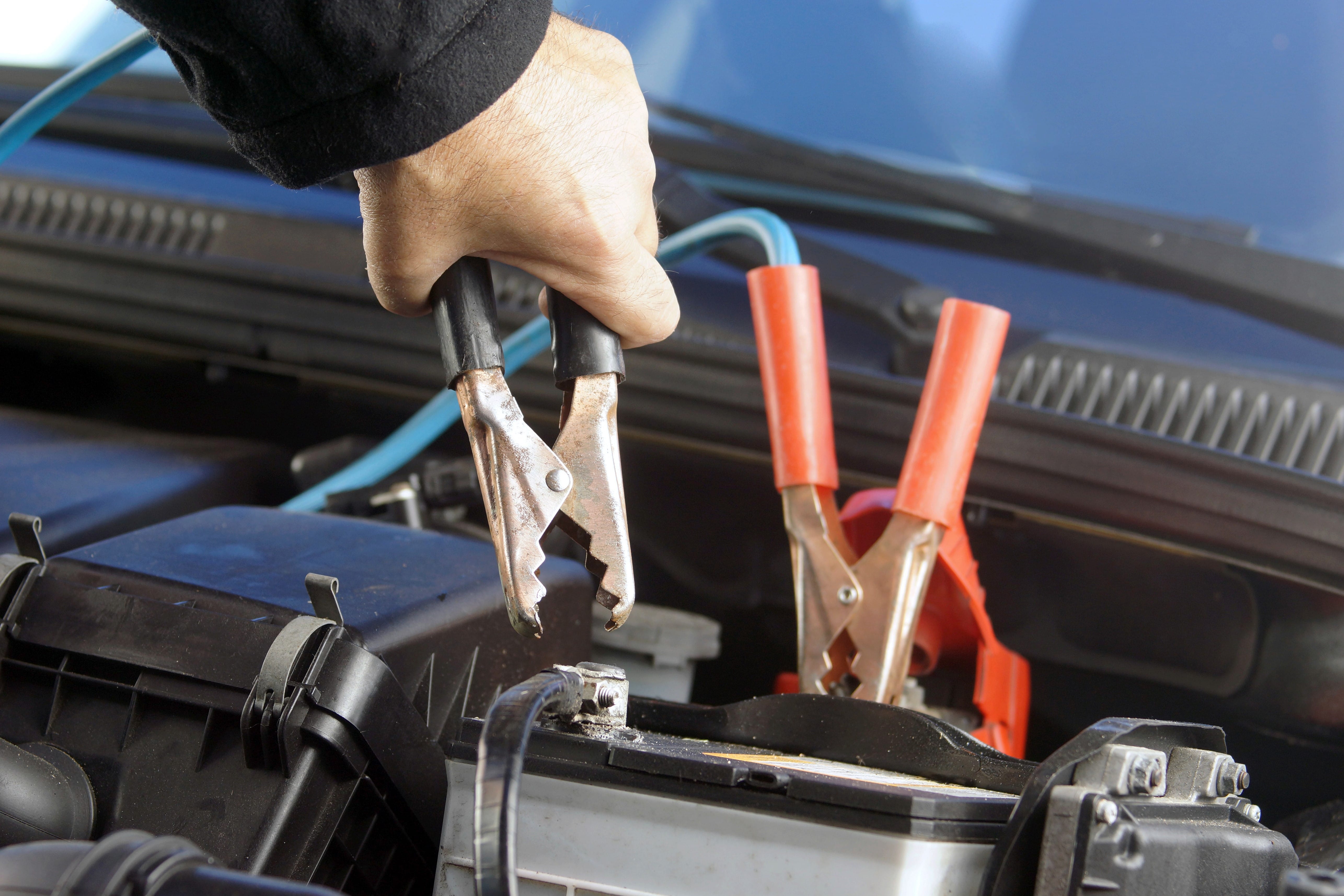
A battery may be fully charged but unable to deliver power through a loose, corroded, or damaged connection. High resistance at the positive terminal, negative terminal, engine ground, or body ground can cause starting problems and charging problems.
Inspect for:
- White, blue, or green corrosion around the terminals.
- A terminal that can be moved by hand.
- Frayed, swollen, or cracked battery cables.
- A loose negative cable where it attaches to the engine or body.
- Heat damage around a terminal or cable.
- Corrosion hidden between a cable end and the battery post.
Turn the vehicle off before inspecting. Wear eye protection and avoid placing metal tools across the battery terminals. Do not scrape or disconnect wiring without understanding the vehicle’s requirements; some vehicles can lose memory settings or require electronic initialization after power is removed.
4. The drive after the jump was too short
Starting an engine requires a substantial burst of current. A short trip—especially with headlights, climate control, heated seats, a rear defroster, or other accessories operating—may not replace that energy.
Idling in a driveway is also not a dependable way to recharge a deeply discharged battery. Alternator output at idle can be limited, and the vehicle may be using much of that output for its own electrical demand.
A longer drive may help a healthy, slightly discharged battery, but driving is not a reliable fix for a battery that was deeply discharged, repeatedly fails, or has internal damage. In those cases, use a suitable battery charger or have the battery professionally charged and tested.
5. Something is draining power while the car is parked
A parasitic draw is electrical current used after the vehicle is turned off and its systems should have entered a low-power state. Some power use is normal because security systems, clocks, keyless-entry systems, and computer modules may remain active. Excessive draw, however, can discharge the battery overnight or over several days.
Common sources include:
- A glove-box, trunk, vanity-mirror, or interior light that stays on.
- An aftermarket alarm, remote starter, stereo, dash camera, or GPS tracker.
- A phone charger or accessory left connected.
- A relay or control module that does not shut down.
- A vehicle that does not recognize that a door, hatch, or hood is closed.
- Wiring damage or an electrical short.
Parasitic-drain testing often requires waiting for the vehicle’s modules to enter sleep mode. Opening doors, pressing the key fob, or connecting a meter incorrectly can wake the modules and produce a misleading result. If the battery repeatedly dies after sitting but the battery and alternator test good, a qualified technician should perform a controlled current-draw test.
Source: Bing
How to Diagnose a Battery That Dies After a Jump
Use this sequence to separate a battery problem from a charging-system or electrical-drain problem.
Step 1: Check for immediate safety issues
Do not attempt to charge or jump a battery that is cracked, leaking, severely swollen, frozen, or emitting an unusual odor. A damaged battery can release corrosive material or hydrogen gas.
Move the vehicle outdoors or into a well-ventilated space when possible. Keep sparks, cigarettes, and open flames away from the battery.
Step 2: Inspect the battery and cables
With the engine off, check whether the terminals are tight and free of heavy corrosion. Follow the negative cable to its body and engine connection. A clean battery post does not guarantee that the other end of the ground cable is secure.
If a terminal is loose, correct that condition before replacing parts. A poor connection can imitate a dead battery or a failed alternator.
Step 3: Measure resting battery voltage
A digital multimeter can provide an initial indication if the vehicle has been off for several hours.
Approximate open-circuit readings for a conventional 12-volt lead-acid battery are:
| Resting voltage | General indication |
|---|---|
| About 12.6–12.8 volts | Fully charged or near fully charged |
| About 12.4 volts | Partially charged |
| About 12.2 volts | Roughly half charged |
| Below about 12.0 volts | Heavily discharged |
These values are approximate and affected by temperature, recent charging, battery chemistry, and surface charge. A voltage reading does not prove that the battery can deliver starting current.
Do not use a multimeter’s resistance or continuity mode directly across a car battery. Use the meter’s DC-voltage setting and follow the meter manufacturer’s instructions.
Step 4: Check charging voltage with the engine running
After the vehicle starts, measure at the battery terminals with the engine idling. Turn on headlights and other normal electrical loads if appropriate for the test.
A conventional system often rises above resting voltage when the alternator is working. If the reading stays near the battery’s resting voltage, fluctuates abnormally, or falls significantly under load, the alternator, regulator, belt, wiring, or battery may require further testing.
Because smart charging systems vary output, do not condemn an alternator from one voltage reading alone. Compare the result with the vehicle service information or have an automotive shop test the charging system.
Step 5: Test the battery under load
A battery tester can assess whether the battery maintains adequate voltage while supplying current. Auto-parts stores and repair shops in the United States often provide battery and alternator testing, although testing policies differ by location.
A battery that passes a charging-voltage test but fails a load or conductance test generally needs replacement. A battery that passes but repeatedly discharges needs further investigation for a parasitic draw or an intermittent charging fault.
Step 6: Investigate a parasitic draw if the battery passes
If the battery and charging system are healthy, the next step is measuring current after the vehicle shuts down. This diagnosis can be complicated by multiple control modules, battery monitoring sensors, and manufacturer-specific sleep procedures.
Avoid pulling fuses randomly while the vehicle is powered or sleeping. Removing the wrong fuse can erase diagnostic information, trigger faults, or prevent modules from entering their normal sleep state. Follow service information or use a professional technician.

Source: Bing
What to Do After a Successful Jump Start
A successful jump start should be followed by testing, not simply parking the vehicle and hoping the problem is resolved.
- Keep the vehicle in a safe location. If the battery warning light is on, electrical systems are fading, or the engine is running poorly, avoid a long trip. The vehicle may stop once battery power is exhausted.
- Turn off unnecessary electrical loads. Use only essential accessories while determining whether the charging system is working.
- Do not disconnect the battery while the engine is running. This old diagnostic practice can create voltage spikes that damage electronic components.
- Have the battery and charging system tested promptly. Ask for both a battery test and an alternator/charging-system test rather than only a jump start.
- Use a charger when appropriate. A compatible automatic charger can restore a healthy battery more reliably than a short drive. Follow the charger and vehicle instructions.
- Replace the battery only after confirming fitment. The replacement must match the vehicle’s required group size, terminal arrangement, capacity, and battery type. Vehicles equipped with start-stop systems may require AGM or another specified battery type, and some vehicles require battery-registration procedures after replacement.
When should you stop driving?
Stop and seek assistance if:
- The battery warning light remains illuminated.
- The engine stalls or begins losing electrical power.
- Headlights become very dim.
- You smell burning insulation or hot electrical components.
- The belt is missing, loose, or making severe noise.
- The battery is leaking, swollen, or visibly damaged.
A jump start can get a vehicle moving, but it cannot prevent a stall caused by a failed alternator or broken belt.

Source: Bing
Battery, Alternator, or Parasitic Drain? A Quick Comparison
| Symptom | More likely cause | Best next check |
|---|---|---|
| Battery dies after sitting overnight | Weak battery or parasitic draw | Battery test, then parasitic-draw test |
| Vehicle dies while driving after a jump | Alternator, belt, or charging wiring | Charging-system inspection |
| Battery terminal is visibly corroded or loose | Poor connection | Clean and secure connections, then retest |
| Car starts after a long charge but fails again soon | Battery cannot hold charge or drain remains | Load test and overnight draw diagnosis |
| Battery warning light stays on | Charging-system fault | Alternator, belt, regulator, and cable testing |
| Vehicle starts normally after charging but fails in cold weather | Marginal battery or poor connections | Battery load test and terminal inspection |
| New battery repeatedly goes dead | Charging fault, drain, or incorrect battery setup | Full electrical diagnosis |
The table provides directional guidance, not a definitive diagnosis. Several problems can occur together—for example, a weak battery can hide a charging-system fault, or a failed alternator can damage a battery through repeated deep discharge.
Common Mistakes to Avoid
Assuming the alternator fully recharges every battery
The alternator is designed primarily to supply power while the engine runs and maintain the battery. It is not always an efficient replacement for a dedicated charger, particularly after a deep discharge.
Replacing the battery without testing the alternator
A new battery may also go dead if the alternator does not charge it or an electrical drain remains. Test the charging system before or at the time of battery replacement.
Treating a voltage reading as a complete battery test
Voltage indicates charge state more directly than battery health. A weak battery can show normal voltage immediately after charging because of surface charge.
Driving until the car stalls
If charging output is failing, the vehicle may lose power with little warning. A stall can create a serious roadside safety problem, especially on a highway or at an intersection.
Using the wrong jump-start connection
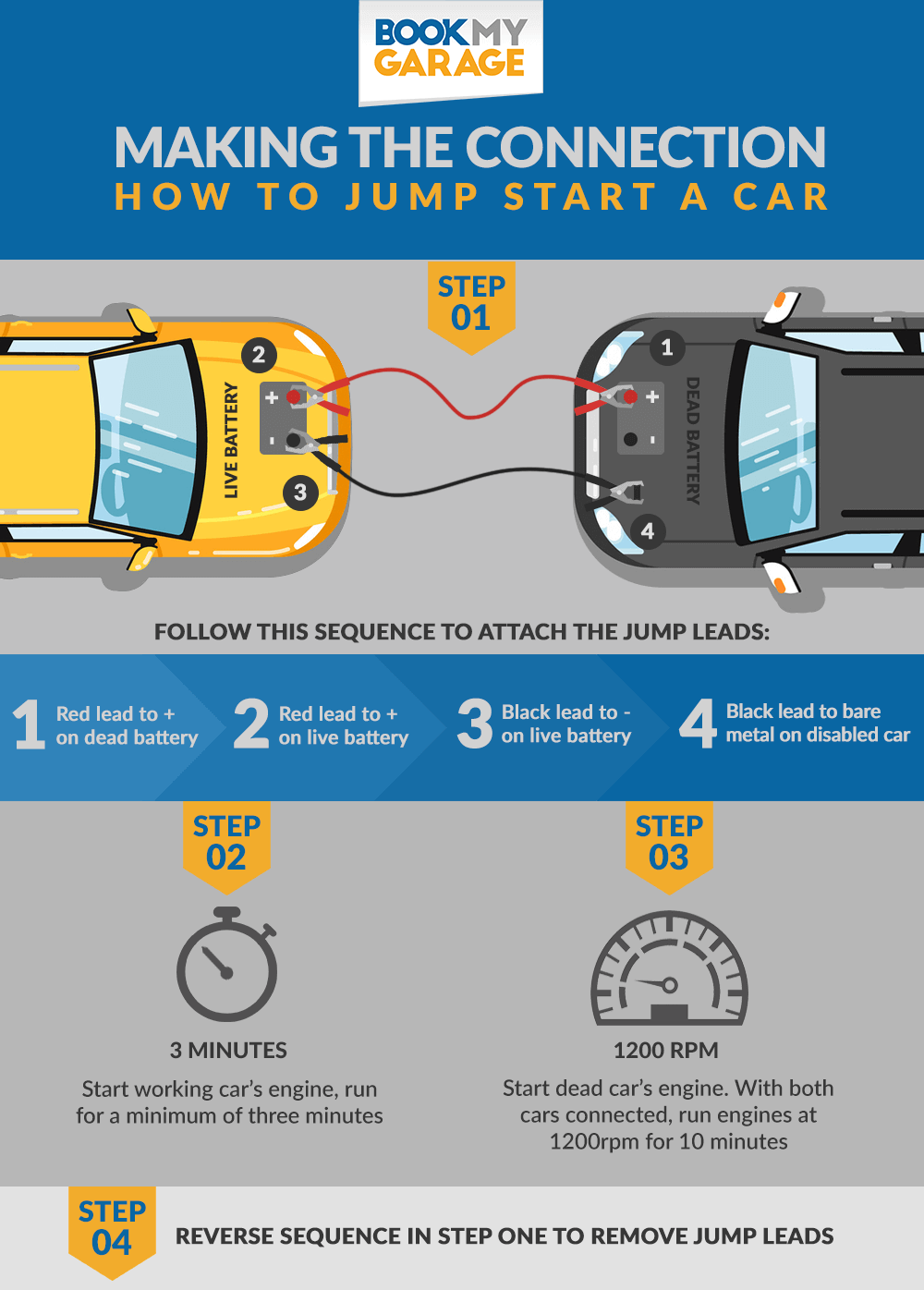
Follow the vehicle owner’s manual. In general, connect positive to positive, then connect the negative cable to the designated ground point on the disabled vehicle when the manufacturer specifies one. Keep cable clamps from touching each other or moving engine parts. Reverse polarity can damage electronic systems.
Source: Bing
How to Prevent a Repeat Battery Failure
- Have the battery tested before extreme summer or winter conditions.
- Keep terminals and cable connections clean and tight.
- Avoid leaving lights, chargers, and accessories operating when the engine is off.
- Use a battery maintainer if the vehicle sits for long periods, provided the device is compatible and used according to its instructions.
- Repair aftermarket electrical accessories that were installed incorrectly.
- Take repeated jump starts seriously; each event can indicate an unresolved fault.
- Follow the manufacturer’s battery-replacement procedure, including any battery-management-system reset or registration.
- Use the battery type and capacity specified for the vehicle rather than choosing only by physical size.
For infrequently driven vehicles, a maintainer may help preserve a healthy battery, but it will not repair a battery with internal damage or correct a parasitic drain.
Key Takeaways
- A jump start supplies temporary starting power; it does not repair or fully recharge a failed battery.
- The most likely causes are a weak battery, failed alternator, poor cable connection, short recharge time, or parasitic drain.
- Test the battery and charging system before buying replacement parts.
- Do not disconnect the battery while the engine is running.
- Stop driving if the battery warning light appears, the engine begins stalling, or the vehicle loses electrical power.
- Seek professional diagnosis for repeated battery failures, modern smart-charging systems, or suspected parasitic drains.
Frequently Asked Questions
How long should I drive after a jump start?
There is no universal time that guarantees a full recharge. A healthy battery that is only slightly discharged may recover during normal driving, but a deeply discharged battery usually needs a compatible charger. A short drive may not replace the energy used during the jump and starting process.
Can a bad battery cause the alternator to fail?
A severely damaged or internally shorted battery can place unusual demand on the charging system. Repeatedly operating with a weak battery can also increase charging-system stress. Testing both components is more reliable than assuming one caused the other.
Why does my car die after a jump start but run normally while connected to another vehicle?
The donor vehicle or jump starter supplies the current that your car’s battery cannot provide. Once it is disconnected, the car depends on its own battery and charging system. If the battery dies immediately, inspect the battery, alternator, cables, and belt.
Can a car battery die overnight after a jump start?
Yes. A weak battery may lose its charge while parked, or an electrical device may continue drawing power. If the battery passes a health test, request a parasitic-draw diagnosis rather than replacing the battery repeatedly.
Should I replace the battery or alternator first?
Do not choose based only on the symptom. Have the battery’s health and the vehicle’s charging output tested together. Replace the failed component, and inspect the related cables and belt so the same problem does not damage the replacement.
Conclusion
A car battery that dies after a jump start is usually signaling an unresolved electrical problem. The jump restored enough power to start the vehicle, but the battery may not hold a charge, the alternator may not be replenishing it, or an electrical drain may be discharging it while parked.
Start with the safest and most useful checks: inspect the battery connections, test the battery under load, verify charging-system performance, and investigate parasitic draw when the first tests pass. If the battery warning light is on, the engine is stalling, or the battery is damaged, avoid continued driving and arrange professional service.
Sources and further reading
- U.S. Department of Energy — Vehicle Technologies Office
- National Highway Traffic Safety Administration — Vehicle Safety
- Interstate Batteries — Battery Testing and Maintenance Resources
- AAA — Car Battery and Roadside Assistance Resources
- Your vehicle owner’s manual and manufacturer service information