

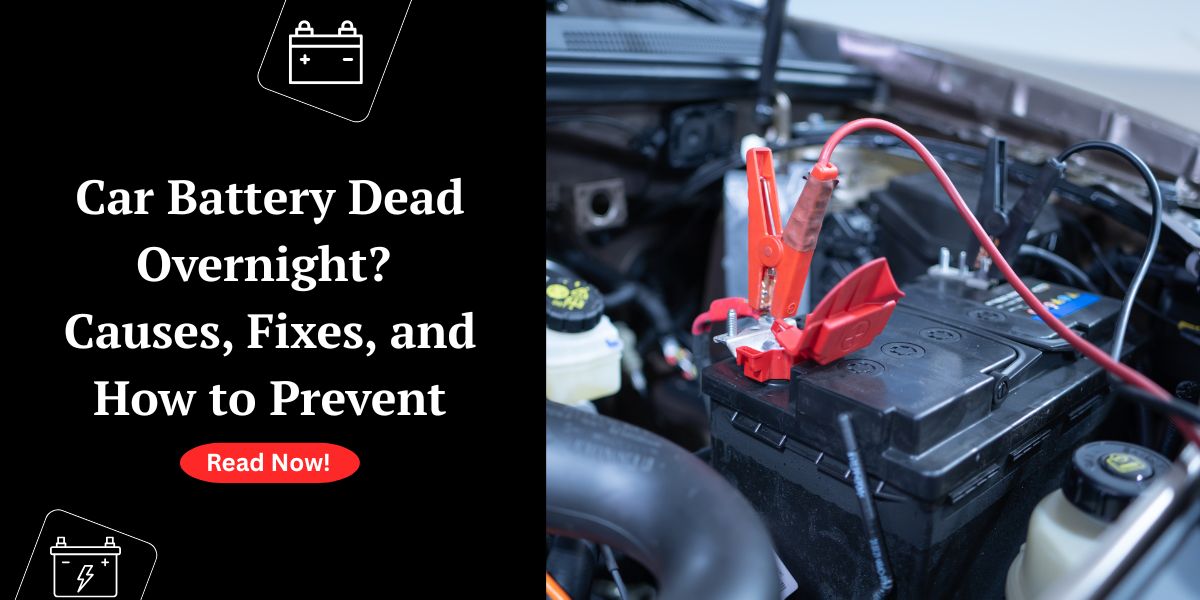
A car battery that dies overnight usually loses power because of a parasitic electrical drain, a weak or aging battery, a charging-system problem, or an accessory that remains active after the vehicle is parked. In the United States, common examples include interior lights, liftgate switches, aftermarket remote starters, dash cameras, alarm systems, and vehicles that sit unused in cold weather.
The fastest way to identify the cause is to determine whether the battery is failing to hold a charge or whether something is draining power while the car is off. A multimeter, battery test, and a systematic inspection can usually separate these problems.
Key Takeaways
- A healthy, fully charged 12-volt battery generally measures about 12.6 volts after resting with the engine off.
- A battery that repeatedly dies overnight may be defective, discharged by an electrical load, or inadequately recharged by the alternator.
- Interior lights, glove-box lights, cargo-area lights, USB devices, dash cameras, and aftermarket electronics are frequent causes.
- Modern vehicles may need 20 to 45 minutes—or longer—to enter sleep mode before a parasitic-draw test is accurate.
- Do not replace the battery before testing the charging system and checking for excessive current draw.
- Stop testing and seek professional help if the battery is swollen, leaking, hot, frozen, or damaged.
What Causes a Car Battery to Die Overnight?
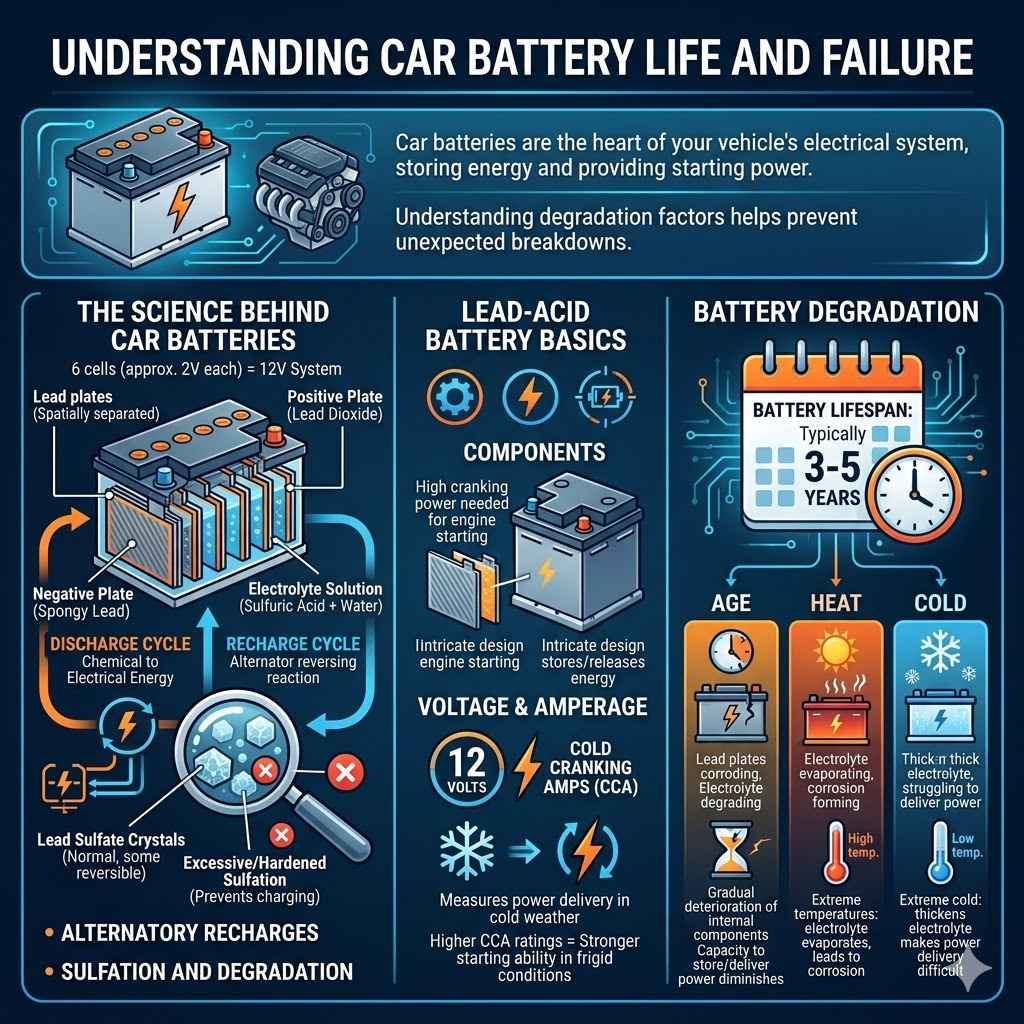
The most common cause is an electrical device continuing to use power after the ignition is switched off. This is called a parasitic draw or parasitic drain. Some current draw is normal because a vehicle must retain memory for systems such as the clock, security system, keyless-entry receiver, and electronic control modules. The problem occurs when the draw is higher than the vehicle was designed to support while parked.
- An old or damaged battery that cannot hold a charge.
- An alternator or charging-system fault that leaves the battery undercharged.
- A loose, dirty, or corroded battery connection that prevents proper charging.
- Cold temperatures, which reduce available battery power and increase starting demands.
- Short trips or long periods of inactivity, which may not restore the energy used during starting.
- Aftermarket accessories, including remote starters, stereos, security systems, lighting, and dash cameras.
- A door, trunk, or hood switch problem that keeps a vehicle module or light awake.
- A defective relay or electronic control module that fails to shut down.
A single overnight failure does not prove that one specific part is defective. The battery may have been weakened by a previous deep discharge, and the next cold night or short trip may expose the problem.

Source: Bing
Battery Drain Versus a Battery That Will Not Hold a Charge
The key diagnostic question is whether the battery loses power while parked or simply cannot store enough energy.
| Symptom | More likely cause | Useful next check |
|---|---|---|
| Battery is dead after the car sits overnight, but works after a long drive | Parasitic draw or weak battery | Measure parked current and test battery capacity |
| Battery dies after several days of sitting | Normal standby draw combined with low battery capacity, or abnormal drain | Fully charge battery, then test resting voltage and draw |
| Battery warning light appears while driving | Charging-system fault | Test alternator output and belt condition |
| Lights are visibly on after parking | Door, trunk, glove-box, or switch problem | Inspect switches and confirm lights turn off |
| Car needs frequent jump-starts | Battery, alternator, connection, or electrical drain | Perform a complete charging and battery test |
| Battery case is swollen or leaking | Internal battery failure or overcharging | Do not continue using it; arrange professional replacement |
| Problem began after installing an accessory | Aftermarket wiring or device staying active | Disconnect or correctly isolate the accessory |
A battery can show a normal voltage immediately after charging and still fail under load. Voltage tells you the battery’s state of charge; it does not fully measure its ability to deliver starting current. A professional battery conductance or load test is often necessary when the battery is more than a few years old or has been discharged repeatedly.
Typical resting-voltage readings
These are general 12-volt battery guidelines measured after the battery has rested with the engine off. Exact readings vary with battery type, temperature, and measurement conditions.
- About 12.6 volts: generally fully charged
- About 12.4 volts: partially discharged
- About 12.2 volts: approximately half charged
- Below 12.0 volts: substantially discharged
A low reading does not identify the cause by itself. It may reflect a weak battery, a recent drain, or insufficient charging.
How to Find Out Why Your Car Battery Dies Overnight
Follow the checks in order. Start with simple visual inspections, then perform electrical tests only if you have the correct equipment and understand the safety limits.
1. Check for obvious lights and accessories
Before testing electrical current, inspect the vehicle at night or in a dim garage. Confirm that:
- The dome and map lights switch off.
- The glove-box light turns off when the compartment closes.
- The trunk, hatch, and cargo-area lights are off.
- Vanity-mirror lights are not stuck on.
- Headlights and parking lights are off.
- The infotainment screen shuts down.
- A dash camera, phone charger, or USB device is not operating continuously.
- A remote starter, alarm, GPS tracker, or aftermarket stereo is wired correctly.
Do not rely only on what you can see. A door switch can report that a door is closed while a control module remains awake, and some LED lights may be difficult to notice.
2. Inspect the battery and its connections
With the engine off, look for:
- White, blue, or green corrosion around the terminals
- Loose terminal clamps
- Damaged battery cables
- A cracked, leaking, or bulging battery case
- A battery that is not securely restrained
- Corrosion where the negative cable attaches to the body or engine
Turn the vehicle off before cleaning or tightening connections. Wear eye protection and avoid allowing tools to bridge the positive terminal and a metal body component.
A clean terminal does not guarantee a good connection. Corrosion can also exist inside a cable or at the ground connection, where it may cause charging and starting problems.
3. Fully charge the battery before testing it
Use a charger designed for the vehicle’s battery type, and follow the charger and vehicle manufacturer’s instructions. A short drive may not fully recharge a deeply discharged battery, particularly if the vehicle uses heated accessories, lighting, or climate-control systems.
If the battery is frozen, swollen, leaking, or visibly damaged, do not charge it. A frozen battery can be dangerous because charging may cause internal damage or gas buildup.
After charging, let the battery rest with the vehicle off for several hours if possible. Then measure the voltage directly at the battery terminals.
4. Test the charging system
Start the engine and measure voltage at the battery terminals. Many conventional vehicles show roughly 13.7 to 14.7 volts while running, but the correct range depends on the vehicle and its charging strategy. Modern vehicles may use variable-voltage charging, so a single reading is not always conclusive.
Check the owner’s manual or a service manual for the vehicle-specific specification. Also inspect:
- The serpentine belt
- The alternator electrical connections
- The battery terminals
- The charging-system warning light
- Voltage changes when headlights, blower motors, and rear defrosters are switched on
If the alternator is not charging adequately, replacing the battery alone will not solve the problem. The replacement battery may become discharged again.
5. Measure parasitic draw
A parasitic-draw test measures how much current the vehicle uses while it is parked and “asleep.”
What you need
- A digital multimeter capable of measuring DC amperage
- The correct test leads and fuse protection
- A fully charged battery
- The vehicle’s owner’s or service information
- Patience while the vehicle modules shut down
General procedure
- Fully charge the battery.
- Switch off the ignition, lights, climate controls, radio, and accessories.
- Close the doors, trunk, and hood as far as possible. If the hood must remain open, use the appropriate method to simulate a closed hood latch.
- Lock the vehicle if that is how it normally enters sleep mode.
- Keep the key fob away from the vehicle. A nearby fob can repeatedly wake a keyless-entry system.
- Wait the time specified by the vehicle manufacturer. Many vehicles need at least 20 to 45 minutes, while some modern vehicles take longer.
- Connect the meter in series with the battery’s negative cable only if the meter and procedure are appropriate for the vehicle.
- Observe the reading without opening doors, pressing buttons, or turning on lights.
- If the draw is excessive, remove and reinstall one fuse at a time while watching for a significant drop.
- Use the affected circuit’s wiring diagram to identify the responsible component.
Important multimeter warning
Never connect a multimeter in its current-measuring mode directly across the battery terminals. That can short the battery through the meter, blow the meter fuse, damage vehicle electronics, or create sparks.
Some vehicles also lose memory or trigger faults when the battery is disconnected. Before removing a cable or fuse, check the service information for the vehicle. If you are not comfortable working around electrical systems, use a qualified automotive technician.
What counts as excessive draw?
There is no single acceptable number for every car. Older vehicles often have a very small standby draw, while newer vehicles may require more current because they contain additional control modules, security systems, connectivity features, and keyless-entry components.
As a broad diagnostic guideline, a stabilized draw around 20 to 50 milliamps is commonly considered normal for many conventional vehicles, but the manufacturer’s specification takes priority. A reading significantly above that range after the vehicle has entered sleep mode may indicate a problem.
Do not judge the reading immediately after shutting off the engine. Temporary current spikes are normal while modules save data, lock systems, or complete shutdown routines.
Source: Bing
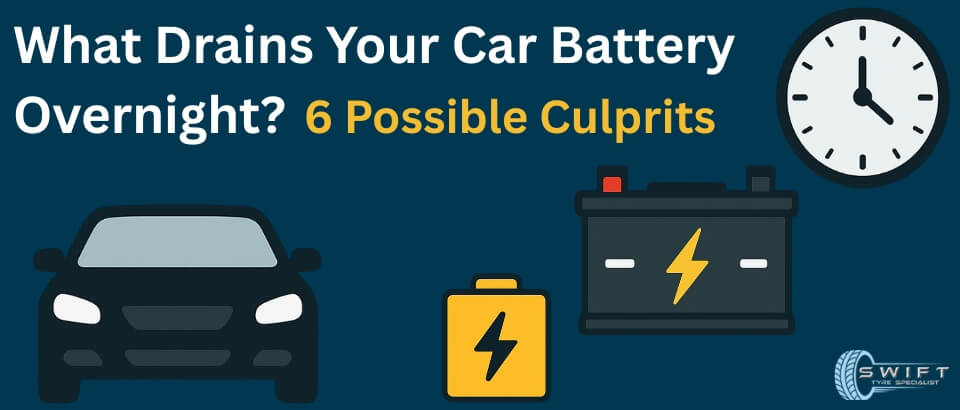
Common Overnight Battery Drain Problems
Certain faults appear repeatedly across vehicle types, but the exact repair depends on the make, model, year, and equipment package.
Interior and cargo lights
A misaligned door, hatch, or glove-box switch can keep a light on. Some lights are hidden from the driver’s view, especially cargo-area or vanity-mirror lights.
Place a phone camera inside the trunk or glove box, close it, and check the recording later if you cannot observe the light directly. Do not remain in a closed trunk or compartment while testing.
Aftermarket electronics
A dash camera, stereo amplifier, remote starter, alarm, GPS tracker, or USB accessory may be wired to constant battery power instead of switched power. A device can also malfunction and remain active even when installed correctly.
If the overnight problem started after an installation, disconnecting the accessory temporarily can help confirm the timing—but permanent rewiring should follow the manufacturer’s instructions or be performed by a qualified installer.
Keyless-entry and proximity systems
Vehicles with push-button start may monitor nearby key fobs. Keeping a key fob close to the vehicle, such as on a wall next to the garage, can sometimes cause repeated communication or prevent normal sleep behavior.
Move the fob farther away and test whether the symptom changes. If the vehicle still drains the battery, the keyless-entry system may require diagnostic testing.
Defective relays
A relay is an electrically controlled switch. When a relay sticks closed, it can keep a fan, pump, amplifier, heated component, or other circuit powered after the vehicle is shut off.
A warm relay, audible clicking, or a component that remains active after shutdown can provide a clue. Do not replace relays based only on heat; use the vehicle’s wiring information and current measurements.
Control modules that fail to sleep
Modern vehicles contain multiple electronic modules. A faulty door latch, network communication problem, software issue, or low-voltage event can keep one or more modules awake.
If removing a fuse reduces the draw but does not identify a simple accessory, professional diagnosis may be necessary. The technician may need a wiring diagram, scan tool, current clamp, and manufacturer-specific procedures.
Source: Bing
How Cold Weather and Driving Habits Affect Battery Life
Cold weather can make an existing battery problem appear suddenly. Low temperatures reduce a lead-acid battery’s available starting power, while the engine oil becomes more resistant to movement. The starter therefore needs more effort at the same time the battery can deliver less power.
In much of the United States, winter temperatures can expose a marginal battery even when the vehicle started normally during warmer months. A battery may also fail after the vehicle sits outside overnight because its state of charge was already low.
Short trips create another problem. Starting consumes energy, and a brief drive may not replace it. Repeated short trips, long idling periods, heavy electrical loads, and extended parking can gradually reduce the battery’s state of charge.
To reduce the risk:
- Combine short errands when practical.
- Avoid leaving lights, climate controls, or heated accessories running unnecessarily.
- Use a properly rated maintenance charger when the vehicle will sit for an extended period.
- Have an older battery tested before severe winter weather.
- Repair charging-system and electrical-drain problems instead of relying on repeated jump-starts.
A maintenance charger is not a substitute for repairing a parasitic draw. If the vehicle has an abnormal drain, the charger may only conceal the problem temporarily.
Should You Replace the Battery or Repair the Electrical System?
Replace the battery when testing shows that it has low capacity, fails a load or conductance test, is physically damaged, or cannot hold a charge after the charging system and electrical draw are confirmed to be normal.
Repair the electrical system when:
- The alternator does not meet the vehicle’s charging specification.
- Current draw remains excessive after the vehicle should be asleep.
- A fuse isolates a circuit with abnormal consumption.
- An accessory, relay, switch, or control module remains active.
- Battery terminals or ground cables have excessive resistance or damage.
Replacing a battery without diagnosing the cause can lead to another failure. Conversely, spending hours searching for a drain is unnecessary if the battery fails a proper capacity test and the vehicle’s electrical system is operating normally.
When installing a new battery, use the size, terminal layout, chemistry, and performance rating specified for the vehicle. Some vehicles require battery registration or charging-system adaptation after replacement. Check the owner’s manual or service information before installation.

Source: Bing
What to Do When Your Car Battery Is Dead in the Morning
If the battery is dead:
- Turn off all electrical loads.
- Check the owner’s manual for the approved jump-start procedure.
- Use a jump pack or donor vehicle with the correct voltage.
- Connect the cables only to the recommended terminals and in the specified order.
- Keep sparks, cigarettes, and open flames away from the battery.
- Do not jump-start a battery that is cracked, leaking, badly swollen, or frozen.
- After starting, have the battery and charging system tested rather than assuming the issue is solved.
Some vehicles have designated positive and negative jump points under the hood. Use those points when the manufacturer specifies them. Hybrid and electric vehicles may have a separate 12-volt system and high-voltage components; follow the vehicle-specific instructions and never attempt to access high-voltage equipment.
If the vehicle dies again shortly after a jump-start, arrange service instead of repeatedly driving it. The alternator may not be charging, the battery may be internally damaged, or a severe electrical drain may still be present.
Source: Bing
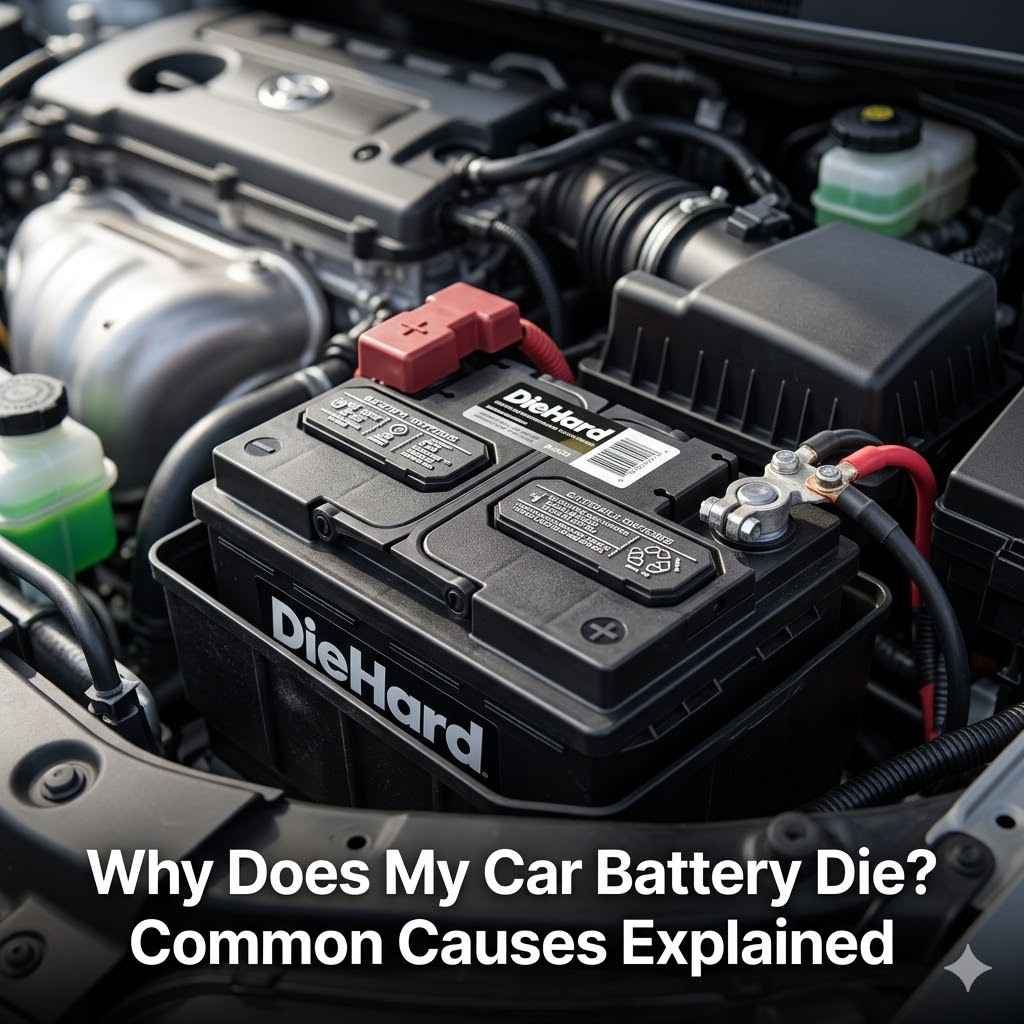
Common Diagnostic Mistakes
Replacing the battery immediately
A new battery cannot compensate for a defective alternator or an electrical component that remains active overnight.
Testing current too soon
A vehicle may draw substantial current for several minutes after shutdown. Wait until the vehicle completes its sleep process before deciding that the drain is abnormal.
Leaving a door open during testing
An open door can keep interior lights and electronic modules active, producing a misleading reading.
Disconnecting the battery without preparation
Battery disconnection can erase learned settings, trigger warning lights, disable certain features, or require a security code for the radio. Follow the vehicle’s service information.
Trusting voltage alone
A battery can measure near 12.6 volts and still fail when the starter demands high current. Combine voltage testing with a proper battery-capacity test.
Ignoring the negative cable and ground points
Poor grounds can cause slow cranking, charging problems, electronic faults, and misleading test results. Inspect the entire circuit, not just the positive terminal.
Source: Bing
Frequently Asked Questions
Can a bad alternator drain a car battery overnight?
Yes. A failed alternator can leave the battery undercharged, and a defective alternator diode can allow current to flow backward while the engine is off. Charging-system testing and a parasitic-draw test can distinguish these possibilities.
How long should a car battery last?
Battery life varies with climate, vehicle design, driving habits, maintenance, and battery quality. Frequent deep discharges, high heat, severe cold, and short trips can shorten service life. Testing is more reliable than replacing a battery solely because it has reached a particular age.
Can a car battery die overnight without leaving any lights on?
Yes. A control module, relay, alternator diode, aftermarket accessory, keyless-entry system, or hidden cargo light can consume power without an obvious visible light.
Does driving recharge a dead battery?
Driving may restore some charge, but it may not fully recharge a deeply discharged battery. The result depends on alternator output, trip length, engine speed, electrical load, battery condition, and the vehicle’s charging strategy. A battery charger and professional testing may be needed.
Is it safe to test a car battery with a multimeter?
Basic voltage testing is generally straightforward when performed correctly, but current testing can damage the meter or vehicle if the meter is connected incorrectly. Wear eye protection, avoid sparks, and do not test a leaking, swollen, frozen, or damaged battery.
Conclusion
A car battery that dies overnight is usually a symptom rather than the complete diagnosis. The underlying issue may be a parasitic electrical draw, a failing battery, an inadequate alternator, poor cable connections, cold-weather stress, or an accessory that never shuts down.
Start with a visual inspection, fully charge and test the battery, verify charging voltage, and measure the vehicle’s stabilized current draw only after its systems enter sleep mode. If the battery is damaged or the test requires working around unfamiliar electrical systems, have the vehicle inspected by a qualified automotive professional.