

Wash, clay, compound, polish, then seal the paint for a glossy, swirl-free finish.
If you want to know how to buff a car the right way, you’re in the best place. I’ve corrected hundreds of daily drivers and show cars. In this guide, I’ll teach you how to buff a car with pro-level steps, clear tips, and honest safety notes. You will learn what to use, what to avoid, and how to get a deep, mirror shine at home.
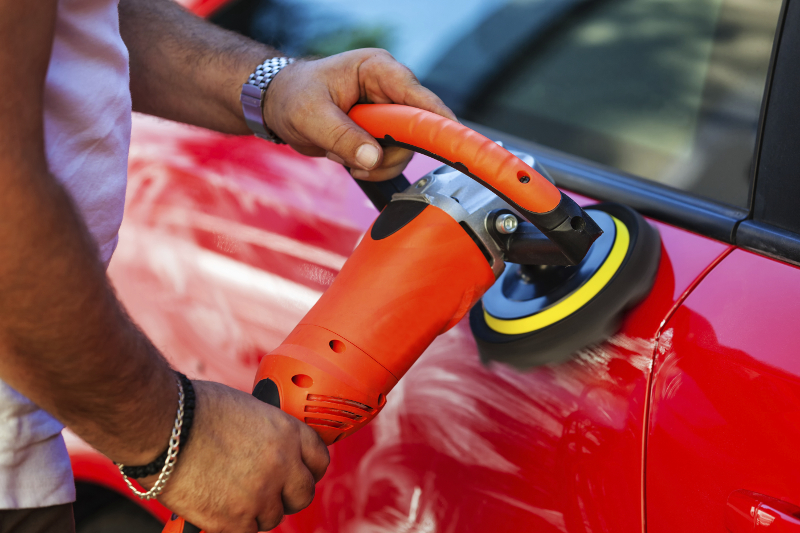
Source: carwash.com
What Buffing Actually Does (And When You Should Do It)
Buffing is controlled sanding on a tiny scale. It removes a thin slice of clear coat to level swirl marks, haze, and light scratches. Wax hides. Buffing fixes.
When to buff:
- Faded or dull paint that will not shine with wax alone.
- Light to moderate swirls, water spots, or light oxidation.
- After wet sanding or heavy clay use.
When not to buff:
- Deep scratches you can feel with a fingernail.
- Clear coat failure (white, flaky patches).
- Fresh paint that has not cured.
Most clear coats are thin. You remove microns when you buff. That is why test spots matter. If you search how to buff a car because your paint looks tired, start slow and check often. Based on paint maker guidance, work cool panels in the shade and keep pads clean to reduce heat and risk.

Source: youtube.com
Tools and Materials You Need
You do not need a huge shop. The right setup makes work safe and fast.
Polishers
- Dual-action (DA) polisher. Best for beginners. Low risk. Smooth finish.
- Rotary polisher. Fast cut but more heat. For skilled hands.
Pads
- Foam cutting pads. Medium to heavy defect removal.
- Foam polishing pads. Finishing and gloss.
- Microfiber cutting pads. Strong cut, great on hard paint.
- Wool pads. Fast cut, often for rotary use.
Liquids
- Compound. Removes swirls, sanding marks, and deep haze.
- Polish. Refines and boosts gloss.
- Panel wipe or isopropyl alcohol mix. Reveals true finish.
Prep gear
- pH-neutral car shampoo and foam.
- Two buckets with grit guards.
- Iron remover and clay bar or synthetic clay mitt.
- Detailing tape for edges and trim.
Support
- Microfiber towels with soft edges.
- Pad brush or compressed air to clean pads.
- Work light. Handheld LED reveals swirls.
- Nitrile gloves, ear and eye protection.
- Optional paint thickness gauge.
If you want a simple start for how to buff a car, pick a DA polisher, two foam pads (cut and polish), a mid-cut compound, and a finishing polish.
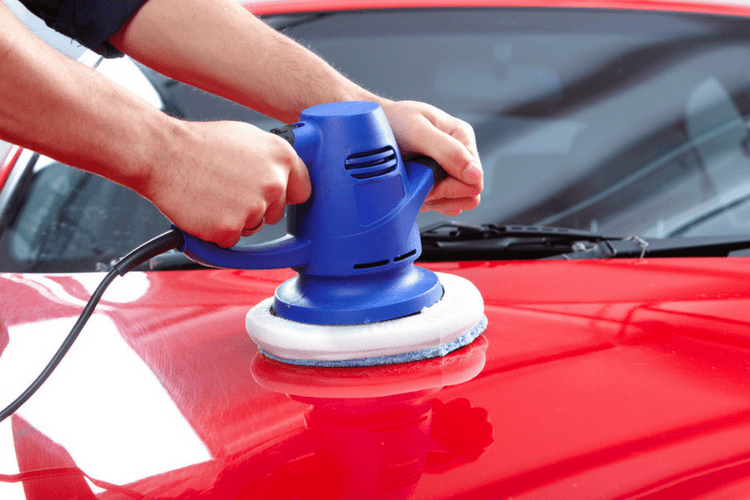
Source: goldeagle.com
Prep: Wash, Decontaminate, and Mask
A clean surface is key. Dirt on paint acts like sand and will scratch.
Do this:
- Rinse well. Use a foam pre-wash to loosen grime.
- Two-bucket wash with a soft mitt. Top to bottom.
- Dry with clean, plush towels. Dab, do not drag.
- Use iron remover. Rinse. This pulls out brake dust dots.
- Clay the paint with plenty of lube. The surface should feel like glass.
- Mask edges, badges, and rubber trim. This prevents staining and heat.
Pro tip from my own garage: If your towel grabs after claying, clay more. If it glides like ice, you are ready to buff.

Source: youtube.com
Compounds, Polishes, Pads, and Speeds
Compounds cut. Polishes refine. Pads control both.
Pad choices
– Foam cutting. Good balance of cut and control.
- Microfiber cutting. More bite on hard clear coats.
- Foam polishing. Fine finish and depth.
Abrasive tech
- Diminishing abrasives. Start coarse, break down to fine as you work.
- Non-diminishing abrasives. Same size. You control cut with time and pad.
Speeds and pressure
- DA polisher. Spread at speed 2. Work at 4–5. Light to moderate pressure. Finish with light pressure.
- Rotary. Spread at 600–800 RPM. Work at 900–1,200 RPM. Keep the pad flat and moving.
Prime the pad with a light coat. Add 3–4 pea-size drops. Less is more. Too much product causes haze and dust.
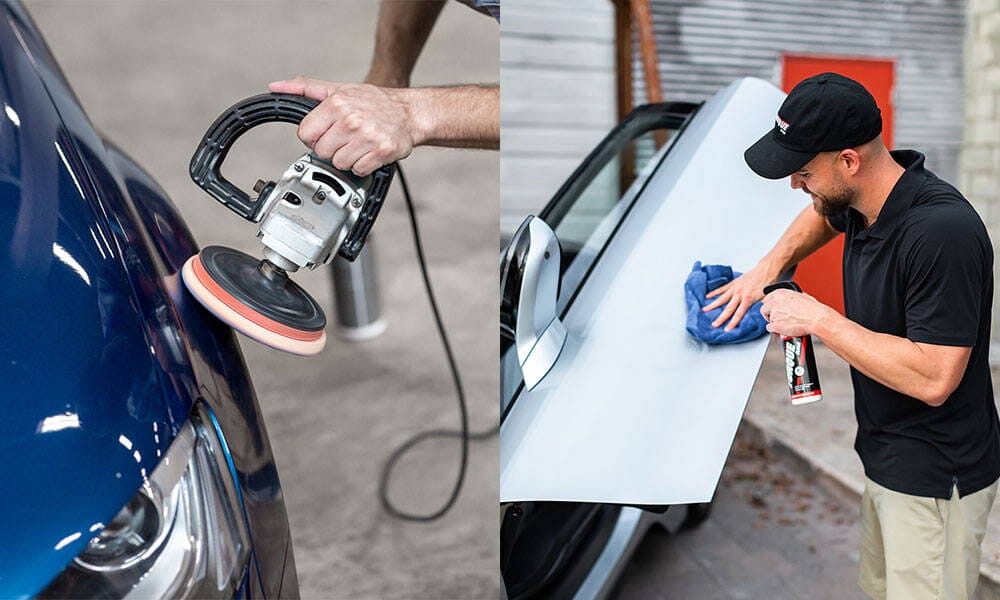
Source: torquedetail.com
How to Buff a Car: Step-by-Step
This is the exact workflow I use on customer cars. If you came here to learn how to buff a car in clear steps, follow this playbook.
- Inspect and choose a test spot
- Pick a 2×2 foot area on the hood.
- Mark off half with tape to compare.
- Try your least aggressive combo first. Step up only if needed.
- Compound stage
- Dab 3–4 drops on the pad. Tap around your section.
- Spread at low speed. Then work at speed 4–5 (DA).
- Use a crosshatch pattern. Overlap each pass by 50 percent.
- 4–6 slow passes is common. Keep the pad flat. Do not tilt.
- Work until residue turns clear and thin. Do not dry buff.
- Wipe off with a clean towel.
- Inspect the cut
- Use a bright light from different angles.
- Wipe with panel wipe to remove oils. This shows true results.
- If swirls remain, try a stronger pad or compound. If it looks good, move on.
- Polish stage
- Switch to a finishing pad and polish.
- Use light pressure and slower arm speed.
- 2–4 passes is enough. Aim for clarity and pop.
- Repeat section by section
- Keep pads clean. Blow out or brush after each section.
- Swap pads when they load up or run warm.
- Check heat with the back of your hand. Warm is fine. Hot is not.
- Final wipe and protection
- Do a full panel wipe to remove fillers.
- Apply a sealant, wax, or ceramic spray for protection and gloss.
- Let it cure per label. Most sealants need a dry, clean surface.
With this method, how to buff a car becomes simple: test, cut, check, polish, protect. Do not chase every scratch. Stop when the whole car looks clear and even.
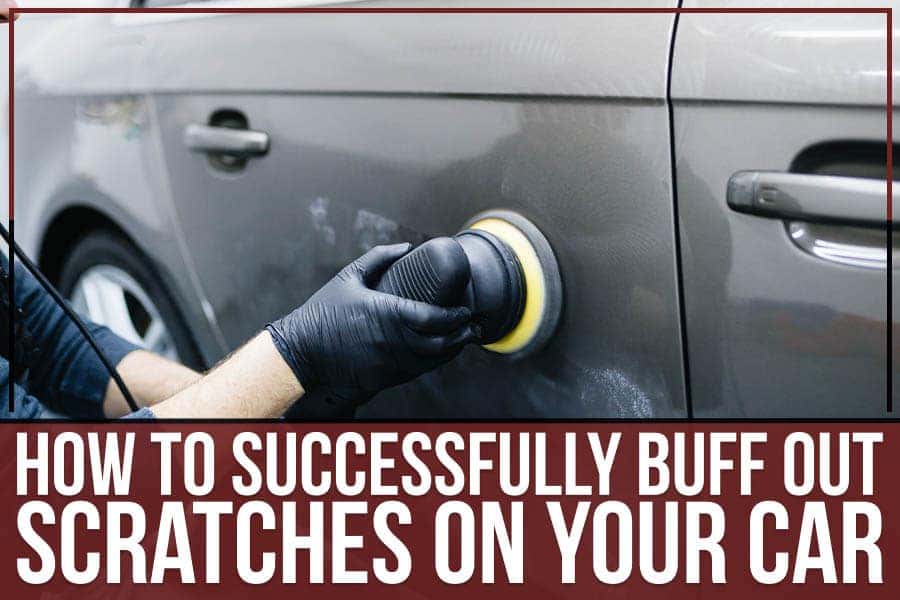
Source: mandalbuickgmc.com
Hand Buffing vs Machine Buffing
You can hand buff, but it has limits.
Hand buffing
- Good for tight spots, pillars, and near edges.
- Use a foam or microfiber applicator.
- Work in small circles or straight lines. Light pressure. Wipe clean.
Machine buffing
- Faster, more even, and better correction.
- DA polishers are safe for beginners.
- You will use less product and get a higher, clearer gloss.
If you are serious about how to buff a car, get a DA polisher. It is the best blend of speed and safety.

Source: youtube.com
Fixing Common Problems and Mistakes
I have made every mistake you can think of. Learn from mine.
- Haze or micro-marring. Use a softer pad and a finishing polish. Slow your passes.
- Holograms from a rotary. Finish with a DA and a fine polish to level the trails.
- Dusting compound. Use less product. Clean the pad. Some compounds dust more in dry air.
- Sticky, grabby paint. Use more working lube from the polish. Shorten work time. Try a different pad.
- Pad hop or stall. Keep the pad flat. Reduce pressure. Increase speed slightly on a DA.
- Burned edges. Avoid sharp edges. Tape them. Use light pressure. Keep the pad moving.
- Stained trim. Tape it before you start. If stained, clean at once with an APC and a brush.
- Overheating. Work in shade. Smaller sections. Let pads cool between sets.
If you research how to buff a car and see wild claims, be careful. You cannot make dead clear coat new. You can only level and refine what is still there.

Source: youtube.com
Aftercare: Protect and Maintain the Finish
Shine without care will fade fast. Lock it in.
Protection choices
- Sealant. Easy, 4–6 months of protection, slick feel.
- Wax. Warm glow, 1–2 months on daily drivers.
- Ceramic spray. Strong beading, up to 6–12 months with upkeep.
Care tips
- Contact wash every 1–2 weeks with a gentle shampoo.
- Use a soft drying towel. Add a drying aid for less friction.
- Top up with a spray sealant after washes.
- Avoid automatic brushes. They add swirls fast.
- Park in shade when you can. UV ages clear coat.
How often should you repeat how to buff a car? Full correction is rare. Spot polish once or twice a year is enough if you protect and wash well.
Safety, Risks, and Limits
Work smart and stay safe.
- Shade and cool panels only. Hot paint is risky.
- Ventilate. Compounds and solvents can smell strong.
- Wear eye and ear protection. Gloves keep skin clean.
- Keep cords off the paint. Drape over your shoulder.
- Repaints and thin clear need care. If you have a gauge, check readings.
- Plastic bumpers run hotter. Use fewer passes and lower speed.
- Do not chase deep cuts. Better to live with a faint line than to break through clear.
Expert guides and manufacturer sheets agree on this: slow passes, light pressure at the end, and clean pads cut defects while saving clear coat. That is the heart of how to buff a car with confidence.
Time and Cost: DIY vs Pro
Plan your day and your budget.
DIY time
- Wash and decon. 1–2 hours.
- Single-stage polish. 2–4 hours.
- Two-stage correction. 4–8 hours, depending on size and paint.
Costs
- DA polisher kit with pads and liquids. Moderate one-time cost.
- Towels, tape, and cleaners. Low ongoing cost.
Hire a pro if
- You see clear coat failure or repainted panels.
- You need wet sanding or heavy correction for show work.
- You lack a safe space to work indoors.
If you want to learn how to buff a car for resale, a single-stage polish and sealant can raise value fast. It is one of the best returns you can get on a used car.
Frequently Asked Questions of how to buff a car
How long does it take to buff a car?
Most daily drivers need 3–6 hours for a wash, one polish stage, and protection. Heavier correction can take a full day.
Can I buff a car by hand?
Yes, for small areas and light haze. For full panels and real swirl removal, a DA polisher works better and faster.
Will buffing remove scratches?
Buffing removes or softens light scratches in the clear coat. If a scratch catches a nail, it is often too deep and needs touch-up or wet sanding.
How often should I buff my car?
At most once or twice a year for correction. With good washing and a sealant, many cars only need spot polishing.
What is the best pad and polish combo?
There is no one best combo. Start with a foam polishing pad and a medium polish, test, then step up or down based on results.
Is a rotary polisher better than a DA?
It cuts faster but has more risk of heat and holograms. A DA is safer and gives a great finish for most users.
Do black cars need special products?
Not special, but they show defects more. Use softer pads for finishing and inspect with strong lighting.
Conclusion
You now know how to buff a car from start to sparkle. Clean, decon, test, cut, polish, and protect. Work small, check often, and keep pads clean. With steady hands and simple tools, you can lift years of haze and earn a deep, wet shine.
Ready to try it? Pick a test spot this weekend and follow the steps. Share your results, ask questions, or subscribe for more DIY detailing guides and tool reviews.