

Vacuum thoroughly, remove all food, place ant bait outside, seal entry points, and deep clean.
If you want a clear, safe, and lasting plan for how to get rid of ants in car, you’re in the right place. I’ve dealt with tricky car infestations, from sugar ants in floor mats to fire ants under a hood. This guide blends real-world fixes with proven methods so you can solve the problem fast and keep your car ant-free.
:max_bytes(150000):strip_icc()/how-to-get-rid-of-ants-in-your-car-5199318-Final-8fa3586e904b4c72a49eeac2827dff23.jpg)
Source: thespruce.com
Why ants invade cars
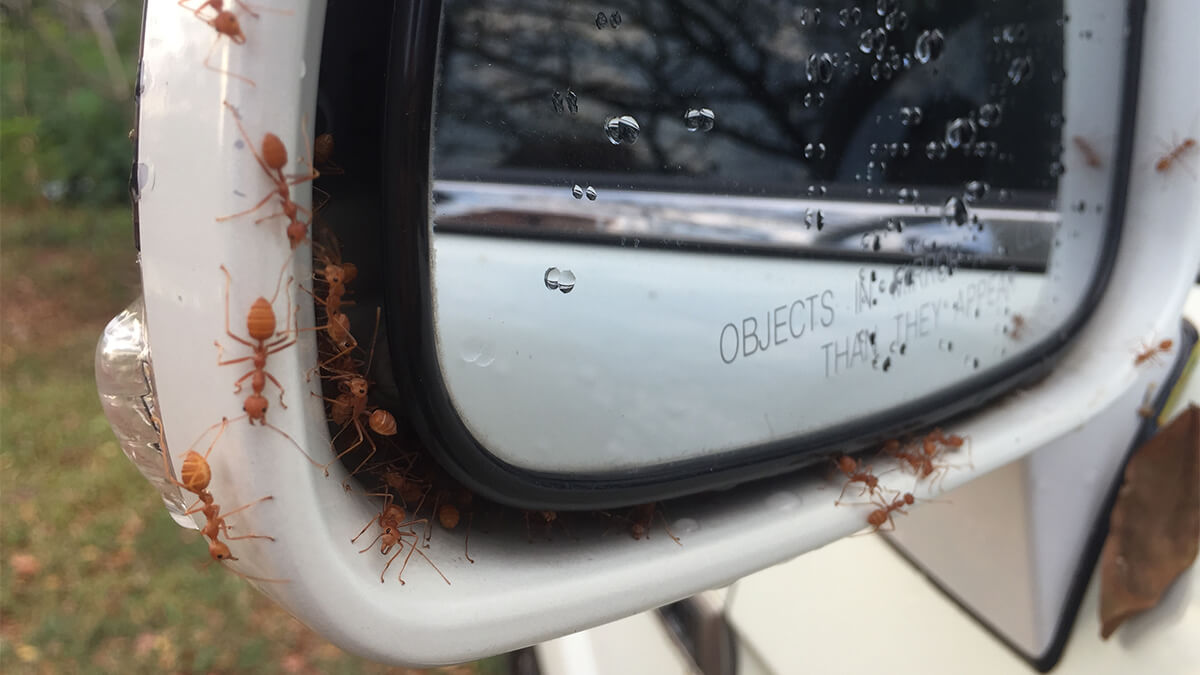
Ants are not after your dashboard. They are after food, water, and shelter. A few crumbs, a juice spill, or a sticky coffee lid is enough to draw a trail into your car.
Ants also follow scent trails. One ant finds a snack, then more follow. Parking near a nest, a tree, or trash cans makes it worse. Hot days, rain, and drought can push ants to explore cars as safe spots.
If you want the fastest path for how to get rid of ants in car, you must remove the food source, erase the scent, and target the colony.

Signs you have an ant problem in your car
Early detection saves time and stress. Look for these clues.
- A line of ants near door sills, the trunk, or the center console
- Tiny crumbs, shells, or sticky spots that draw activity
- Ants near child seats, cup holders, under floor mats, or in the spare tire well
- Ants under the hood, especially near battery trays or insulation
- A faint rustling sound in fabric or nest material near the trunk
I once chased a stubborn trail to a forgotten snack pouch under a rear seat rail. Once that was gone, the ants stopped returning.
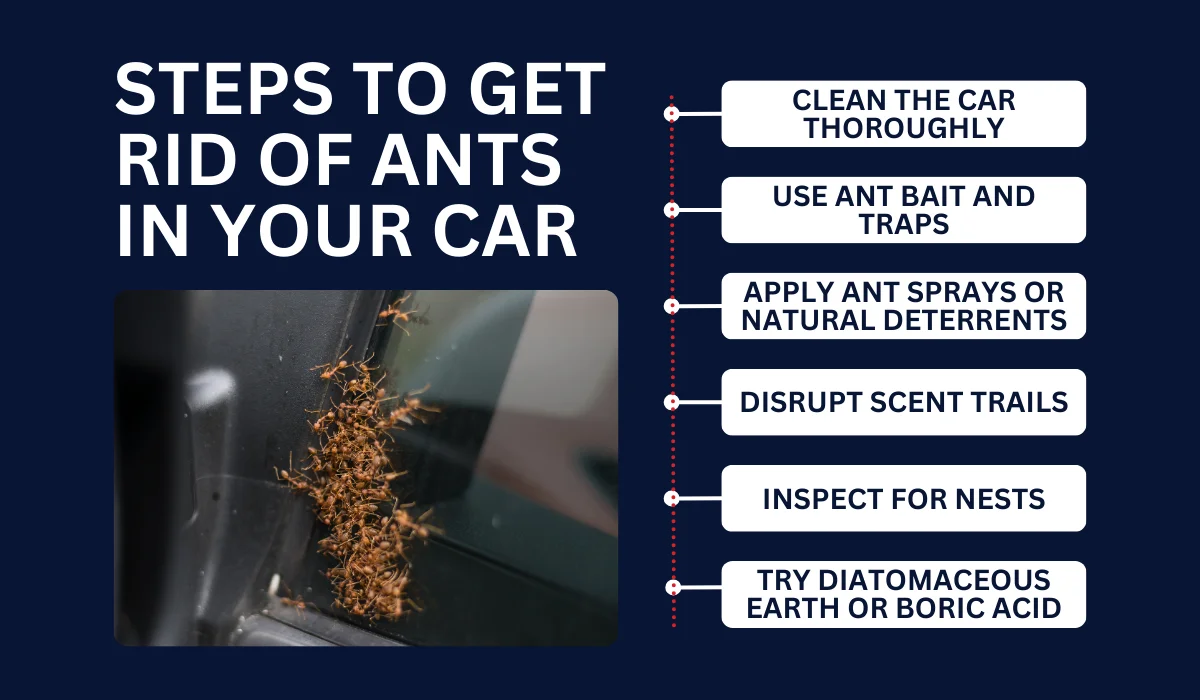
Step-by-step: how to get rid of ants in car
Follow these steps in order. This plan balances speed, safety, and results.
- Park smart and prep
- Park away from trees, shrubs, and trash cans.
- Open doors to air out the cabin.
- Wear gloves if you see biting species.
- Remove every food source
- Empty the glove box, door pockets, seatback pockets, and trunk.
- Toss all wrappers and bottles.
- Take out child seats and liners for separate cleaning.
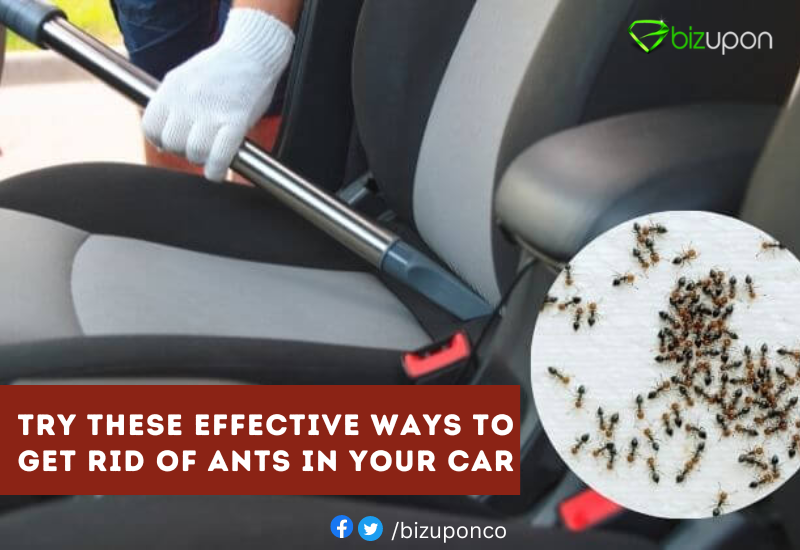
- Vacuum like a pro
- Use a crevice tool for seat rails, seams, and under mats.
- Vacuum carpet, seats, trunk, and spare tire well.
- A HEPA vacuum helps capture fine debris and eggs.
- Shampoo and wipe to erase scent trails
- Clean carpets and mats with a mild car-safe cleaner or steam.
- Wipe hard surfaces with a 50% white vinegar and water mix, then follow with a neutral car interior cleaner to protect surfaces.
- Test any product on a small hidden spot first, especially on leather.
- Place ant bait strategically
- Use sealed ant bait stations labeled for household use.
- Put bait on the ground outside the car near tires or along the driveway trail, not on upholstery.
- Baits work because ants take the slow-acting poison back to the colony.
- Treat the parking spot
- Rinse away food residues on the driveway.
- Use outdoor ant bait or granular bait around the perimeter as directed.
- Avoid spraying harsh chemicals inside the cabin.
- Seal and block entry points
- Check door and trunk seals for gaps or tears.
- Clear debris from weather stripping and drains.
- If you spot gaps in the garage, seal them with caulk.
- Use dry desiccants with care
- Lightly apply food-grade diatomaceous earth under floor mats and in the trunk, then vacuum after 24–48 hours.
- Avoid breathing dust. Keep away from kids and pets.
- Monitor for 3–7 days
- Expect to see some ants as the bait works.
- Re-clean any new spills at once.
- Reposition bait outside if trails shift.
- Repeat key steps if needed
- Vacuum again after two days.
- Refresh bait weekly until no activity remains.
I have tested this flow many times. It is the most reliable method for how to get rid of ants in car without harsh chemicals or damage.
Best ant killers and repellents that are safe for cars
Choose control tools that fit how you drive and who rides with you.
Ant baits
- Gel or station baits work best long term because they target the colony.
- Place outside the car, near tire paths or along the driveway trail.
- Rotate sugar-based and protein-based baits if activity stalls.
Contact sprays
- Use only for quick knockdown and only on exterior areas or garage floors.
- Avoid pyrethroid sprays inside the cabin to protect air quality and materials.
- Always ventilate and follow the label.
Natural repellents
- Vinegar and soapy water remove scent trails on hard surfaces.
- Essential oils like peppermint may repel ants, but they can stain or harm plastics. Test first and keep very dilute.
- Boiling water should never be used near a car or driveway surfaces.
Professional-grade options
- Insect growth regulators can prevent colony growth, but rely on labels or a pro.
- For fire ants or large nests near the car, a licensed technician is safer.
Balanced use of baits and cleaning is the proven core of how to get rid of ants in car. Repellents help, but removal of food and scents matters more.
Deep cleaning methods that break the ant scent trail
Ants follow pheromone trails like GPS lines. If you erase the map, the traffic stops.
- Use an enzymatic cleaner on sticky spills from soda, juice, or milk.
- Steam clean fabric mats and carpets to lift sugar residues.
- For leather or vinyl, use a car-safe interior cleaner, not harsh vinegar or alcohol.
- Wash rubber mats with hot soapy water and let them dry fully.
When I once skipped steaming the rear mat after a smoothie spill, ants returned in two days. After a deep clean, the trail vanished. This step is vital for how to get rid of ants in car for good.
Outdoor and garage fixes to stop reinfestation
Think of your driveway as the staging area. If you treat only the cabin, ants can return.
- Move the car away from overhanging branches and nesting sites.
- Keep trash bins sealed and a few feet from where you park.
- Sweep leaves and food debris from the garage and driveway.
- Place outdoor bait near columns, door frames, and along visible trails.
- Seal garage cracks and weather-strip doors to block access.
These small shifts cut the chance of a repeat problem. They also support your main plan for how to get rid of ants in car.

Special cases and how to handle them
Sugar ants after family trips
- Focus on carpets, seat rails, and cup holders.
- Use sugar-based bait outside the car while you deep clean.
Grease ants from fast-food leftovers
- Clean oily stains and seat fabric with a degreasing interior cleaner.
- Try a protein-based bait outside the car.
Fire ants or biting species
- Do not reach into areas with heavy activity.
- Call a pro if ants are inside panels, under the hood, or if anyone has allergies.
Ants after rain or heat waves
- Expect temporary scouting. Clean spills and add bait outside.
- Dry out floor mats and check for moisture under carpets.
Dial in your response to the species and situation. This precision is a smart way for how to get rid of ants in car without over-treating.
Mistakes to avoid
Avoid these common traps that keep ants coming back.
- Spraying strong pesticides inside the cabin. It risks health and can stain.
- Placing liquid bait on seats or carpet. Use sealed stations, and keep them outside.
- Skipping a second cleaning. Ant scents can linger in seat rails and seams.
- Using strong vinegar on leather or delicate trims. Use car-safe cleaners.
- Ignoring the parking spot. If you do not treat the outside, ants may return.
Steering clear of these errors makes how to get rid of ants in car faster, safer, and cheaper.

When to call a professional
Some infestations are not worth the risk.
- You find a nest inside body panels, under insulation, or near wiring.
- You see fire ants, or someone in your family has a sting allergy.
- The car has baby seats, respiratory needs, or sensitive riders.
- You have tried bait and deep cleaning for two weeks with no change.
A pro can identify the species, treat the colony, and protect your car’s interior. That may be the safest move for how to get rid of ants in car when the problem is severe.
Frequently Asked Questions of how to get rid of ants in car
How fast can I get rid of ants in my car?
Light cases clear in 24–72 hours with cleaning and bait. Heavy infestations often need one to two weeks.
Is it safe to spray insecticide inside the car?
It is better to avoid it. Use baits outside the car and clean inside with car-safe products.
Will ants damage my car’s wiring?
Most ants do not, but nests can cause moisture and debris issues. If you see heavy activity under the hood, get a professional check.
What is the best bait for car ants?
Start with a sugar-based bait, then rotate to a protein bait if activity stalls. Place bait outside near trails, not on the upholstery.
Do essential oils work to repel ants in cars?
They can help short term, but they may stain or harm plastics. If you try them, dilute well and spot test.
How do I stop ants from coming back?
Keep the car crumb-free, deep clean after spills, and treat the parking area with bait. Fix seals and avoid parking by nests or trash.
Can I use diatomaceous earth inside the car?
Yes, in small amounts and with care. Keep it under mats or in the trunk and avoid breathing dust.
Conclusion
You can clear ants fast with a simple plan. Remove food, erase scent trails, use bait outside the car, and fix the parking area. Repeat light cleaning over a week, and watch activity drop. That is the practical heart of how to get rid of ants in car and keep it that way.
Take one action today. Vacuum the cabin, clean cup holders, and place bait by the tires. If you found this useful, subscribe for more simple car care guides or leave a comment with your results.