

Introduction
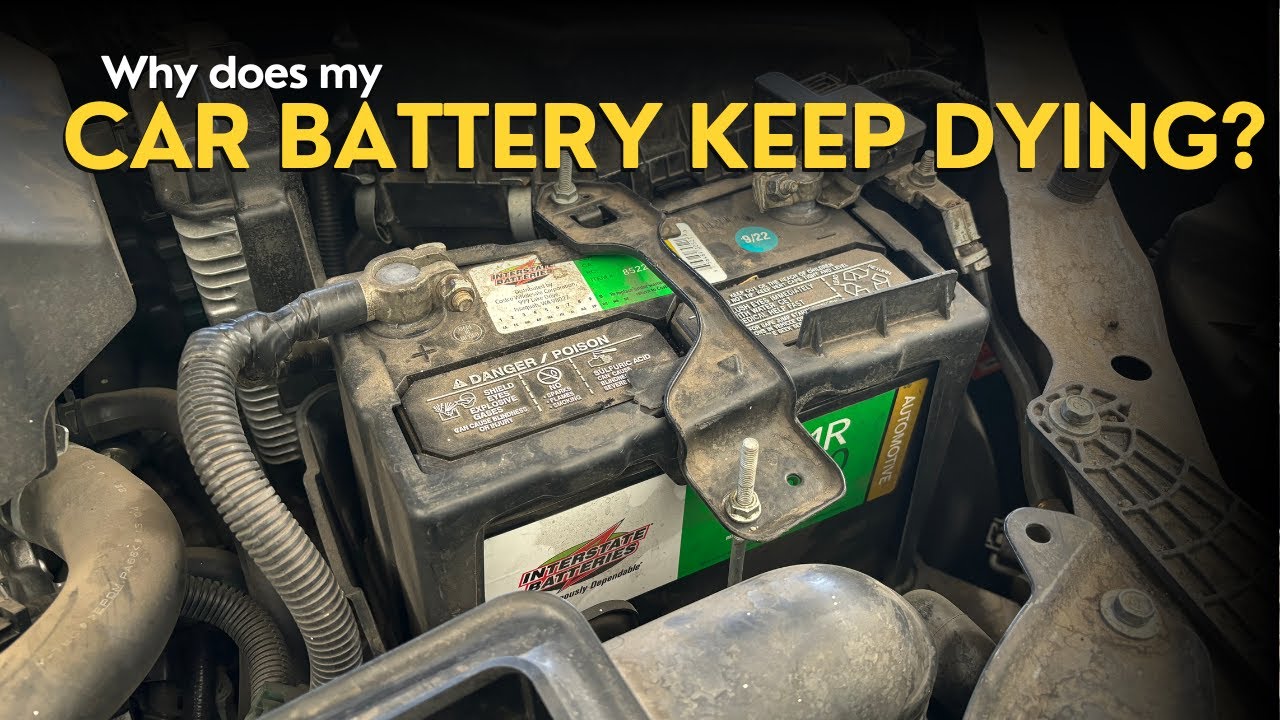
A new car battery that repeatedly dies usually points to a problem beyond the battery itself. The most common causes are an undercharging alternator, a parasitic electrical drain, loose or corroded connections, incorrect battery specifications, or a battery that was defective, discharged, or damaged before installation.
For drivers in the United States, modern vehicles make this diagnosis more complicated than it was in older cars. Many newer cars use battery monitoring sensors, start-stop systems, computers that remain active after the vehicle is parked, and “smart” charging systems that do not maintain a constant alternator voltage. A replacement battery may also require registration or programming, depending on the vehicle.
Do not assume the battery is bad simply because it is new. Test the battery, charging system, cable connections, and key-off electrical draw in a logical order.
Source: Bing
The Short Answer: Why a New Car Battery Keeps Dying
A new car battery keeps dying because it is either not being recharged, losing power while the vehicle is parked, unable to deliver current through a poor connection, or not suitable for the vehicle.
The most likely causes are:
- A failing alternator or charging-system fault
- A parasitic drain from a light, module, accessory, or aftermarket device
- Loose, dirty, damaged, or undersized battery cables
- Repeated short trips that do not replace the energy used during starting
- A defective, undercharged, or incorrect replacement battery
- Extreme temperatures, especially severe cold
- A battery-monitoring or start-stop system that was not reset or configured correctly
- A starter motor or engine problem that causes unusually high cranking demand
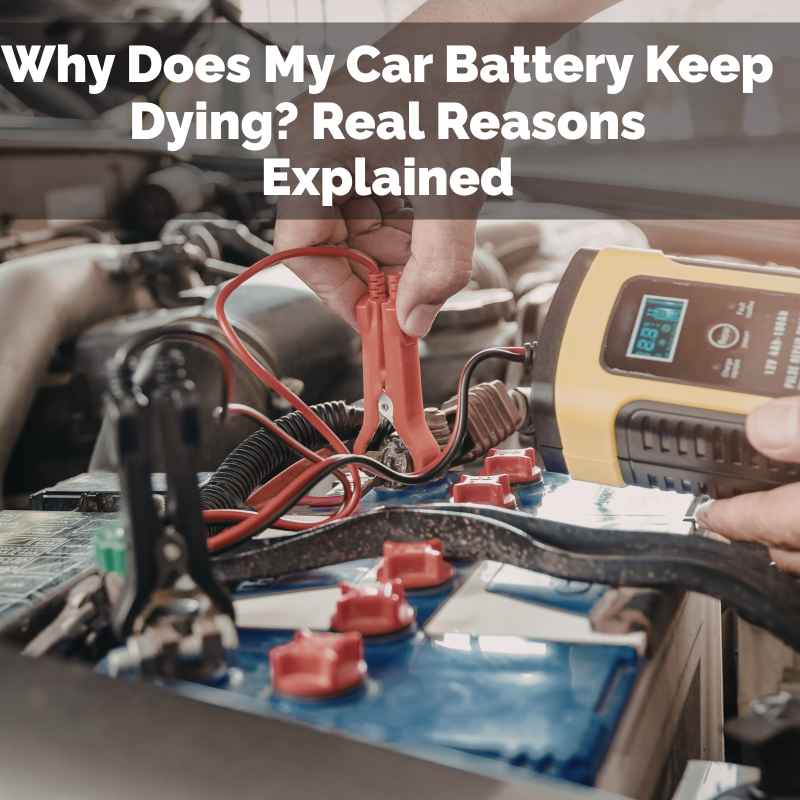
A battery that repeatedly goes completely flat can be damaged by deep discharge, even if it was recently purchased. The first priority is to determine why the battery is losing charge before replacing it again.
Source: Bing
What “Dead Battery” Actually Means
A dead battery is not always a failed battery. The phrase can describe several different conditions:
- Discharged battery: The battery has insufficient charge to start the engine but may recover after correct charging.
- Failed battery: The battery cannot hold or deliver an adequate charge because of internal damage, sulfation, a shorted cell, or another defect.
- Low-voltage battery: The battery may still power some accessories but lacks enough voltage or current for the starter.
- Poor electrical connection: The battery may be charged, but power cannot pass effectively through corroded terminals, loose clamps, ground straps, or damaged cables.
- Charging-system failure: The alternator is not replacing the energy used during starting and driving.
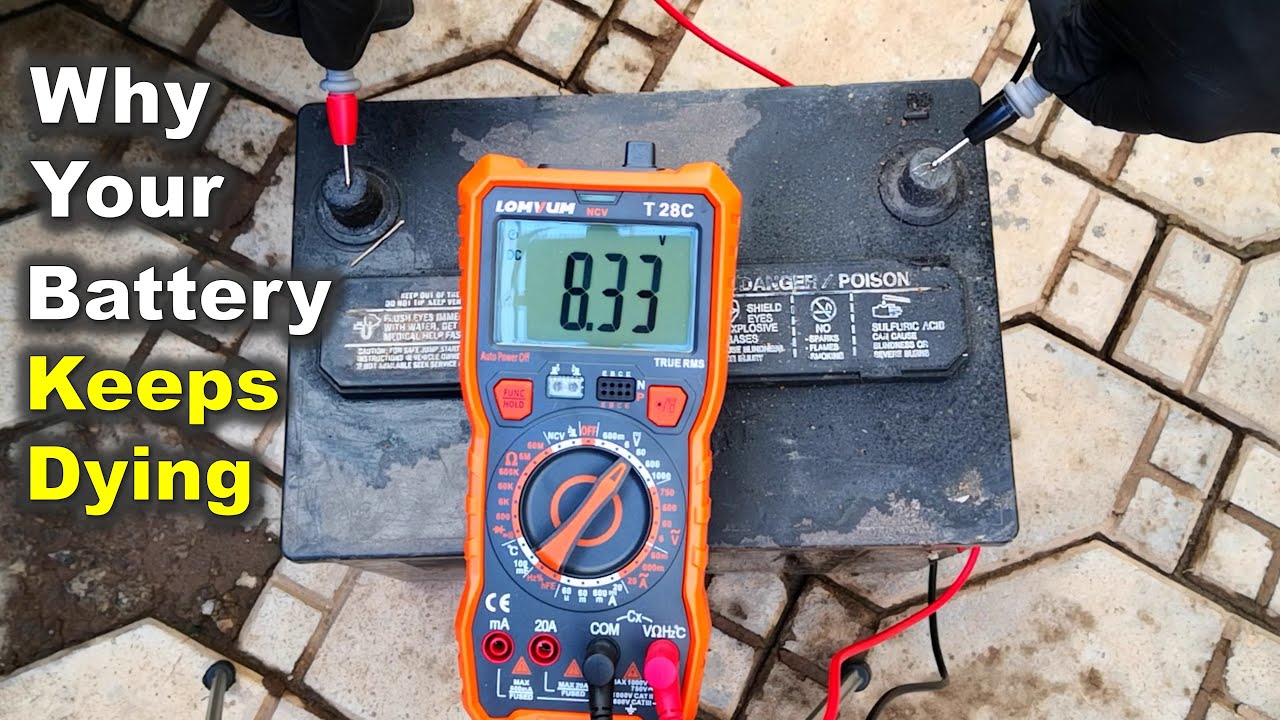
A typical 12-volt automotive battery contains six cells. A fully charged conventional lead-acid battery often measures approximately 12.6 to 12.8 volts after resting, although the exact reading depends on battery type, temperature, state of charge, and measurement conditions. Voltage alone does not prove that a battery is healthy; a proper load or conductance test is also useful.
Battery symptoms versus likely causes
| Symptom | More likely explanation |
|---|---|
| Car starts after a jump but dies again soon | Charging problem, severe battery failure, or connection fault |
| Battery is dead after sitting overnight | Parasitic drain, interior light, or module staying awake |
| Battery dies after several weeks of short trips | Insufficient charging time or high accessory use |
| Headlights are bright but starter clicks | Starter circuit, cable connection, or starter motor problem |
| Battery repeatedly fails in winter | Weak battery, low state of charge, or excessive cold-weather load |
| New battery fails immediately | Wrong battery, defective battery, poor connection, or vehicle fault |
| Battery warning light appears while driving | Charging-system problem requiring prompt diagnosis |

Source: Bing
The Most Common Reasons a New Car Battery Dies
1. The alternator is not charging the battery
The alternator supplies electrical power while the engine runs and replenishes energy used during starting. If the alternator, voltage regulator, drive belt, wiring, or charging fuse has a problem, the vehicle may continue running temporarily on battery power until the battery becomes discharged.
Possible charging-system faults include:
- Worn alternator brushes or internal components
- Failed voltage regulator
- Loose or slipping serpentine belt
- Damaged alternator wiring
- Blown fusible link or charging fuse
- Poor engine-to-body ground strap
- Faulty battery current sensor
- Incorrect charging behavior caused by a control-module problem
A battery warning light does not necessarily mean the battery itself is defective. It often indicates that the vehicle is not charging correctly.
Many modern vehicles use variable or “smart” charging. As a result, a single voltage reading may not provide a complete diagnosis. The vehicle may intentionally reduce alternator output under certain conditions. A technician may need to test charging behavior under load and follow the vehicle manufacturer’s procedure.
2. A parasitic drain is using power while the car is parked
A parasitic drain is electrical current consumed after the vehicle is switched off and the modules are supposed to enter sleep mode. Some power draw is normal because systems such as security, keyless entry, and memory functions remain active. The problem occurs when a component draws excessive current or prevents the vehicle from entering its normal sleep state.
Common sources include:
- Glove-box, trunk, vanity-mirror, or interior lights
- An infotainment system that does not shut down
- Aftermarket alarm or remote-start systems
- Dash cameras connected to constant power
- GPS trackers and fleet devices
- USB adapters and plugged-in accessories
- A faulty door, hood, or liftgate switch
- A relay that remains stuck on
- A control module that fails to enter sleep mode
- A key fob stored too close to a keyless-entry vehicle
A drain can be intermittent. For example, a module may remain awake only after a certain type of door opening, phone connection, or remote-command event. That is why a vehicle may start normally one day and have a dead battery the next morning.
3. The battery terminals or ground connections are poor
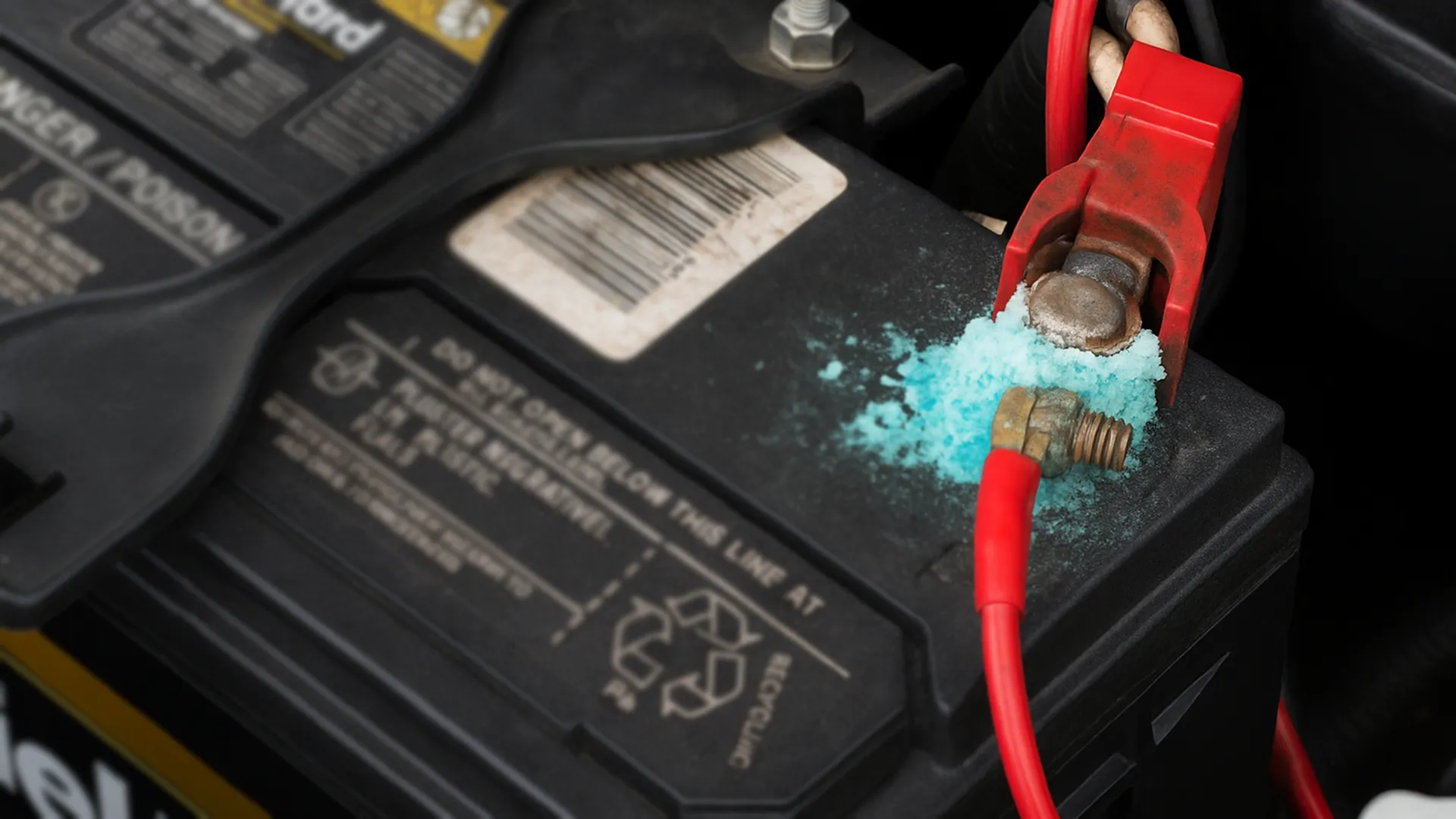
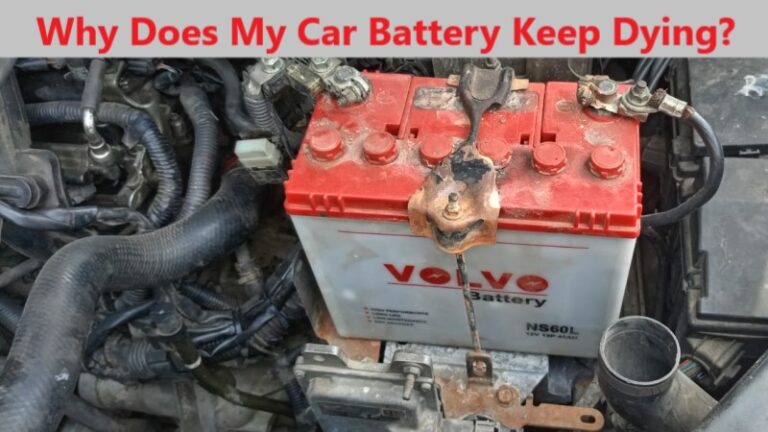
A new battery cannot work properly if the electrical path is restricted. Corrosion may be visible around the terminals, but resistance can also exist inside a cable end, under a battery clamp, or at the engine ground connection.
Inspect for:
- Battery clamps that can be rotated by hand
- White, blue, or green corrosion
- Frayed or swollen battery cables
- A damaged positive-terminal fuse block
- A loose negative cable at the body or engine
- A broken ground strap
- Battery movement caused by a missing hold-down bracket
A poor connection can produce slow cranking, clicking, intermittent electrical shutdowns, or symptoms that resemble a weak battery. Clean and tighten connections only after turning the vehicle off and following the vehicle manual’s safety instructions.
4. The vehicle has the wrong battery type or capacity
A replacement battery must match more than physical size. Important specifications include:
- Battery group size
- Cold-cranking amps, or CCA
- Reserve capacity
- Amp-hour rating where specified
- Terminal layout and polarity
- Flooded lead-acid, AGM, or EFB construction
- Start-stop compatibility
- Manufacturer-required battery sensor or registration procedure
Replacing an AGM battery with a conventional flooded battery, or installing a battery with insufficient capacity, can cause premature failure and charging-system problems in vehicles designed for a specific battery type.
Do not choose a battery solely because it fits in the tray. Check the owner’s manual, the vehicle manufacturer’s specifications, or a reliable parts catalog using the exact year, make, model, engine, and equipment package.
5. The battery was installed undercharged or has an internal defect
A battery sold as “new” may have spent a long time in storage, experienced a deep discharge, or developed an internal fault. Some batteries are installed without being fully recharged because the installer assumes driving will complete the charge.
That assumption is not always correct. Alternators are designed primarily to maintain the electrical system, not necessarily to recover a deeply discharged battery quickly. Repeatedly driving with a low battery can also overwork the alternator.
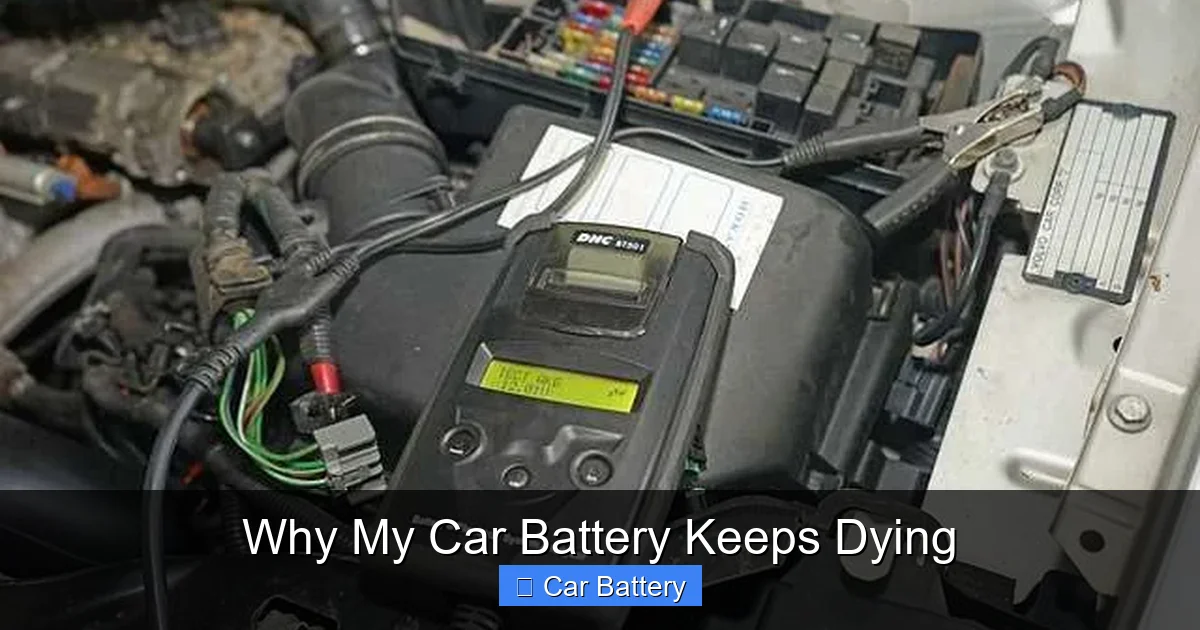
Ask the seller or installer to perform a battery test and provide the result. A proper test may include open-circuit voltage, conductance, or a controlled load test. Warranty replacement may be appropriate if the battery fails after it has been fully charged and tested under the manufacturer’s conditions.
6. Short trips and heavy electrical use are preventing recovery
Starting the engine uses a substantial amount of energy. A short drive may not replace it, particularly when the vehicle is also powering:
- Heated seats and steering wheel
- Defrosters
- Headlights
- HVAC blower motors
- Audio and navigation systems
- Windshield wipers
- Phone chargers
- Accessories powered through an inverter
Frequent short trips do not automatically indicate a defect. However, if the vehicle is used mainly for brief errands, the battery may remain at a low state of charge. Low charge increases the risk of failure, especially during cold weather.
7. Cold weather is exposing an existing weakness
Cold temperatures reduce a lead-acid battery’s available starting performance while making the engine oil more difficult to turn. A battery that starts the car in mild weather may fail during a cold spell if it was already undercharged or aging.
Cold weather usually reveals a marginal battery or charging problem rather than creating the only problem. If a relatively new battery fails only in winter, test the battery, charging system, engine oil specification, starter draw, and cable connections.
Source: Bing
How to Diagnose a New Car Battery That Keeps Dying
Follow the checks in this order. Stop and seek professional help if you are uncomfortable working around batteries, moving belts, or electrical circuits.
Step 1: Record when the failure occurs
Write down the circumstances:
- Does the battery die after driving or while parked?
- Does it fail overnight, after a weekend, or after several weeks?
- Are the headlights or interior lights dim?
- Does the starter click, crank slowly, or remain silent?
- Does the vehicle start immediately with a jump?
- Does a battery or charging warning light appear?
- Are there aftermarket accessories?
- Did the problem begin after a battery replacement, repair, or software update?
The timing helps separate charging faults from key-off drains.
Step 2: Inspect the installation and connections
With the vehicle off, inspect the battery and surrounding components. The battery should be secured firmly, and the terminals should be clean and tight. Check both ends of the negative cable, not just the battery terminal.
Do not disconnect a battery randomly on a modern vehicle. Some vehicles can lose window, radio, steering, alarm, transmission, or battery-monitor settings. Consult the owner’s manual before disconnecting power.
Step 3: Fully charge the battery with an appropriate charger
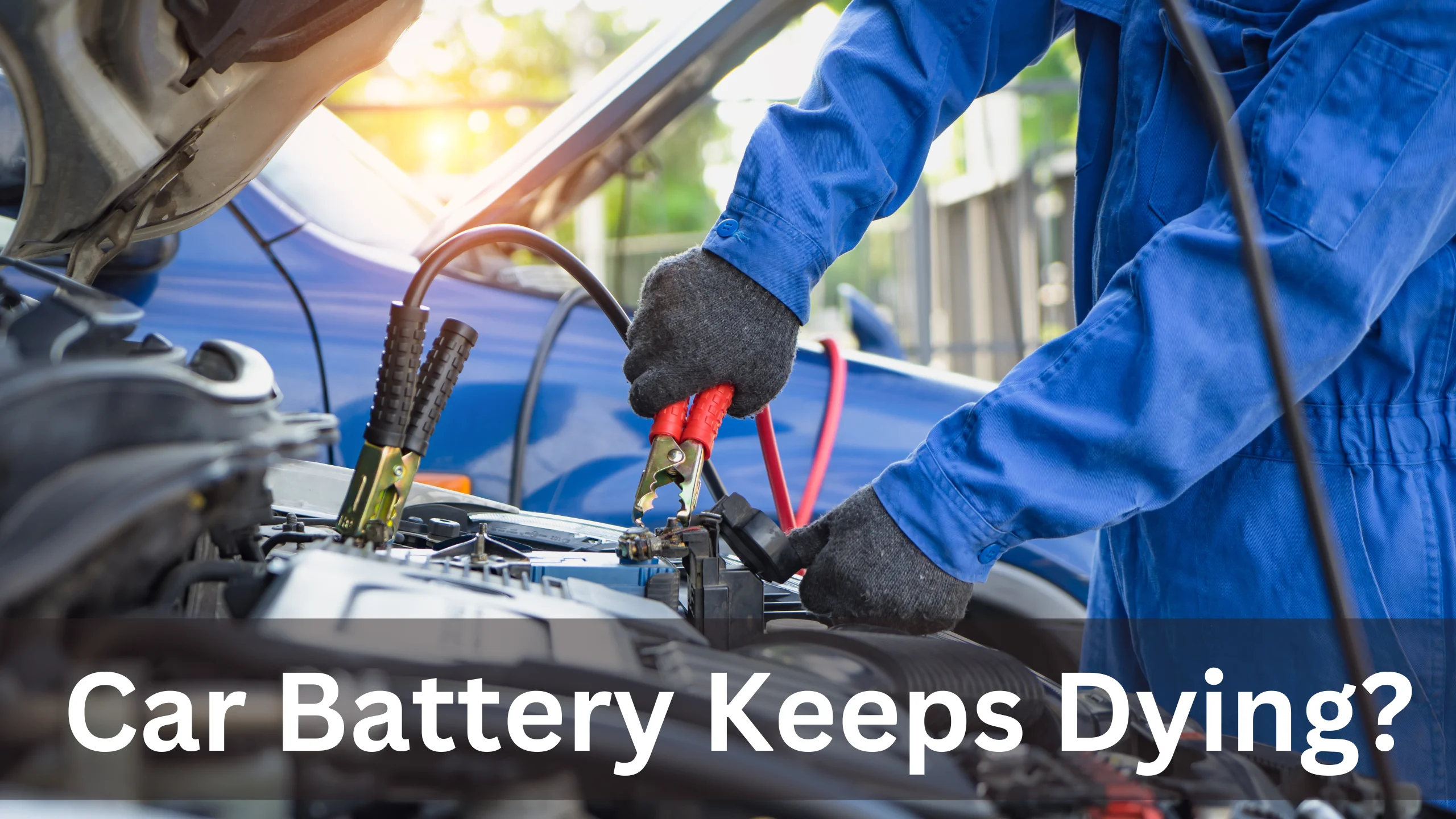
A jump-start gets the engine running; it does not necessarily recharge the battery. Use a charger compatible with the battery type, especially if the vehicle uses AGM or EFB technology.
After charging, allow the battery to rest according to the test instructions. Then measure voltage and have the battery tested. A battery that is fully charged but fails a load or conductance test may need replacement.
Step 4: Test the charging system
A technician should test the alternator and charging system with the engine running. The test should account for:
- Engine speed
- Headlights and HVAC load
- Battery state of charge
- Smart-charging strategy
- Voltage drop across positive and ground cables
- Alternator ripple or diode faults
- Charging-system warning codes
A basic voltage check can identify obvious problems, but it should not be the only test on a modern vehicle.
Step 5: Test for a parasitic draw
A parasitic-drain test normally requires the vehicle to be shut down and allowed to enter its sleep mode. The time varies by vehicle. Doors, the hood, key fobs, and diagnostic equipment can wake modules and invalidate the test.
Professionals may use a low-current clamp meter or connect a meter in series with the battery under controlled conditions. Do not place a standard ammeter across the battery terminals; doing so can cause a short circuit, blow the meter fuse, or damage vehicle electronics.
If excessive draw is confirmed, the technician can isolate the circuit by checking fuses, relays, modules, and aftermarket equipment. Pulling fuses at random may wake modules or erase useful diagnostic clues.
Step 6: Check the starter and engine cranking load
If the battery and charging system pass but the engine cranks slowly, the starter may be drawing excessive current. A mechanical issue, such as an engine that is difficult to turn, can produce a similar symptom.
A starter-current test and voltage-drop test can distinguish:
- Weak battery
- High-resistance cable
- Defective starter
- Engine mechanical resistance
Source: Bing
Useful Voltage and Testing Guidelines
The following values are general diagnostic guides, not universal pass/fail limits:
| Test condition | General interpretation |
|---|---|
| Battery at rest near 12.6–12.8 volts | Often indicates a high state of charge |
| Battery at rest around 12.4 volts | Partially charged; testing conditions matter |
| Battery at rest near or below 12.0 volts | Significantly discharged |
| Voltage drops sharply during cranking | Possible weak battery, poor cables, or high starter demand |
| Charging voltage varies while driving | May be normal on a smart-charging vehicle |
| Battery warning light remains on | Possible charging-system fault |
Temperature, surface charge, battery chemistry, meter accuracy, and recent charging affect readings. A voltage measurement cannot determine battery capacity by itself.
A better diagnostic sequence is:
- Fully charge the battery.
- Verify resting voltage after the specified waiting period.
- Perform a battery health test.
- Test charging output and voltage drop.
- Test for excessive key-off current if the battery passes the first checks.
- Investigate the starter if cranking remains abnormal.

Source: Bing
What to Do When a New Battery Keeps Dying
The correct repair depends on the confirmed cause:
- Alternator fault: Repair or replace the faulty alternator, regulator, belt, fuse, wiring, or ground connection.
- Parasitic drain: Repair the responsible circuit or disconnect an improperly installed accessory.
- Poor connection: Clean, repair, and correctly tighten terminals and ground points.
- Incorrect battery: Install the specified type and capacity, then complete any required battery registration.
- Defective battery: Fully charge and test it before using the warranty.
- Short-trip use: Periodically use a suitable maintenance charger if the vehicle and parking conditions permit.
- Starter problem: Test and repair the starter or related engine issue.
- Battery-monitoring fault: Follow the manufacturer’s diagnostic and reset procedure.
Do not repeatedly replace batteries without testing the vehicle. A persistent drain or charging fault can damage the replacement battery and create unnecessary cost.
Battery registration and reset procedures
Some vehicles require the replacement battery to be registered with the body control module or battery-management system. Registration tells the vehicle that a new battery has been installed. On some models, the replacement must also be coded for battery type or capacity.
The exact requirement varies by vehicle. Check the owner’s manual or service information for the specific model. A reset procedure intended for one vehicle should not be assumed to work on another.

Source: Bing
Common Mistakes That Make the Problem Worse
Assuming a jump-start fixed the problem
A jump-start only provides enough power to start the engine. It does not identify whether the alternator works or whether the battery can hold a charge.
Replacing the battery without testing the alternator
A defective alternator can discharge a new battery repeatedly. If the alternator has a diode or regulator problem, it may also contribute to key-off drain or excessive charging.
Driving for a few minutes after a jump
A short drive may not restore the battery. If the battery was deeply discharged, use an appropriate charger and then test it.
Disconnecting the battery while the engine is running
Do not use this outdated practice to test an alternator. Disconnecting the battery can create voltage spikes and damage electronic modules.
Measuring parasitic draw immediately after shutdown
Modern cars may take several minutes to enter sleep mode. Opening a door, pressing a key fob, or connecting a meter incorrectly can wake the vehicle and produce a misleading result.
Installing the cheapest battery that fits
Physical fit does not guarantee correct chemistry, capacity, terminal placement, or start-stop compatibility.
Source: Bing
When to See a Professional
Seek professional diagnosis when:
- The battery dies repeatedly after full charging.
- A battery or charging warning light appears while driving.
- The vehicle stalls after a jump-start.
- The battery becomes hot, swells, leaks, or smells strongly of sulfur.
- Cables become hot during starting.
- The vehicle has complex start-stop, hybrid, or battery-management systems.
- You cannot safely access the battery or charging components.
- An aftermarket alarm, remote starter, audio system, or dash camera is installed.
- The vehicle has multiple electrical fault messages.
Hybrid and electric vehicles contain high-voltage systems that are separate from the conventional 12-volt system. Do not service high-voltage components unless you have the required training and equipment.
Automotive batteries can produce explosive hydrogen gas and corrosive acid. Keep sparks and flames away, wear suitable eye protection, and follow the battery and vehicle manufacturer’s instructions.
Source: Bing
Frequently Asked Questions
Can a bad alternator ruin a new battery?
Yes. If the alternator does not recharge the battery, the battery can become deeply discharged. Overcharging caused by a regulator fault can also damage it. Test the charging system before installing another battery.
How long should a new car battery last?
Service life varies with battery type, climate, driving pattern, vehicle design, maintenance, and charging performance. A battery that fails soon after installation should be tested under warranty rather than judged by an assumed lifespan.
Why does my car battery die after sitting for two days?
The leading possibilities are a parasitic electrical drain, a battery that was not fully charged, a weak battery, or a charging fault from the previous drive. Test the battery and key-off draw instead of guessing.
Can a dashcam drain a car battery?
Yes, especially when it uses parking mode and connects to constant power. A properly configured low-voltage cutoff can reduce the risk, but the installation and cutoff settings must be compatible with the vehicle and battery.
Will driving recharge a dead battery?
Driving may restore some charge, but it is not a reliable substitute for a battery charger. A deeply discharged battery may need controlled charging and testing, and the alternator may not be designed to recover it quickly.
Source: Bing
Conclusion
A new car battery that keeps dying is usually a symptom of an unresolved electrical or charging problem. Start by checking the installation, fully charging and testing the battery, evaluating the alternator, and then investigating parasitic drain if the first tests pass.
The most efficient repair is the one based on measured evidence: battery health, charging behavior, voltage drop, key-off current, and starter performance. If the vehicle uses a start-stop system or battery-management module, confirm the correct battery type and whether registration or reset is required.
Sources and further reading
- AAA: Car Battery and Electrical System Guidance
- U.S. Department of Energy: Vehicle Maintenance and Fuel Economy
- Interstate Batteries: Battery Testing and Maintenance Information
- Battery Council International: Automotive Battery Safety Information
- The vehicle owner’s manual and manufacturer service information for battery specifications, charging procedures, and battery-management-system requirements