

The JACO ElitePro Digital is the best tire pressure gauge for most drivers.
You know the feeling. Your dash lights up with a low tire warning on a cold morning. You guess at the nearest gas station’s air pump, but the swingy needle and dim display give you no confidence. That is where the best tire pressure gauge makes all the difference. It gives fast, clear readings, saves your tires, and protects your fuel economy. I’ve tested many styles and PSI ranges across cars, SUVs, trucks, and bikes. Below, I break down the best tire pressure gauge picks, who they fit, and how to choose the right one with zero stress.

JACO ElitePro Digital Tire Pressure…
PRO ACCURACY – mechanic recommended, performance tested, & calibrated accurate to professional ANSI 2A standards – with dual pressure sensors certified to ±0.50% FS (0.50 PSI), offering reliable readings up…

ETENWOLF T300 Digital Tire Pressure…
PROCESS LEVEL ACCURACY: Each ETENWOLF’s digital tire pressure gauge is calibrated manually to ANSI B40.7 Grade 2A(plus-minus 1 PSI).Presta valve adapter not included, if used for bicycles, it must be…

JACO Superior Products ElitePro Digital…
PRO ACCURACY – mechanic recommended, performance tested, & calibrated accurate to professional ANSI 2A standards – with dual pressure sensors certified to ±0.50% FS (1 PSI), offering reliable readings up…
JACO ElitePro Digital Gauge (100 PSI)
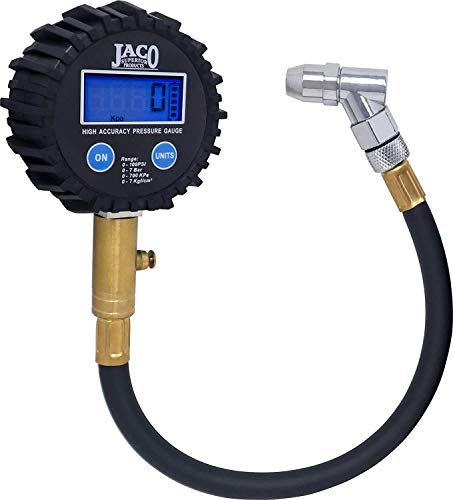
This JACO ElitePro Digital 100 PSI is built for daily drivers. It nails the basics with quick readings, a clear backlit screen, and a rugged body that stands up to glove box life. The ergonomics are great. The angled chuck makes a clean seal without wrestling the valve stem.
I like the simple layout and responsive button feel. It has a hold function that keeps the reading on screen for a moment. That helps when you move from valve to valve. The bleed valve helps fine-tune pressure if you overshoot by a few PSI during a top-off.
Pros:
- Fast, repeatable readings that inspire trust
- Backlit display for day or night use
- Bleed valve for precise pressure tweaks
- Comfortable grip and angled chuck for a solid seal
- Rugged, glove-box friendly build with impact protection
- Auto-off to save batteries
Cons:
- 100 PSI max may not cover heavy-duty truck tires
- Digital screen can wash out under direct, harsh sunlight
- Hose length can feel short for awkward wheel designs
My Recommendation
If you want the best tire pressure gauge for cars, sedans, crossovers, and most SUVs, this 100 PSI JACO is a strong fit. The display is easy to read, and the build feels ready for years of use. It is a great tool to keep in your glove box or garage.
It shines for busy drivers who want quick checks with no fuss. I also like it for teens and new drivers because it is simple, clear, and safe. If you need more range for trucks, I would look at the 200 PSI models below.
| Best for | Why |
|---|---|
| Daily drivers (cars/SUVs) | 100 PSI range covers most OEM specs with room to spare |
| Quick checks at home | Fast readings and backlit display save time |
| New drivers | Simple interface and reliable seal reduce user error |
ETENWOLF T300 Digital Gauge (3–200 PSI)

The ETENWOLF T300 covers a wide 3–200 PSI range and is calibrated to ANSI B40.7 Grade 2A, within ±0.5%. That is serious accuracy for home and light commercial use. The bright orange shell is easy to spot in a tool bag. The screen is clean, and the buttons work with or without gloves.
I like the confidence of a strict calibration standard. The replaceable AAA batteries are a nice touch too. You can swap them anywhere. It is a real plus if you check pressure often and want reliable readings each time.
Pros:
- Wide 3–200 PSI range handles cars, trucks, bikes, and more
- ANSI B40.7 Grade 2A calibration with ±0.5% accuracy
- Replaceable AAA batteries for easy upkeep
- High-contrast screen with simple controls
- Durable shell with bold color for quick grabs
- Good for precise tuning and consistent results
Cons:
- Slightly larger grip may feel bulky in tight spots
- Rugged build adds a bit of weight
- Bright casing may show shop grime fast
My Recommendation
If you want the best tire pressure gauge for both daily drivers and light-duty rigs, the T300 is a top choice. The ANSI Grade 2A calibration stands out in this class. It is the kind of precision you feel in every reading.
I recommend it for owners who rotate summer and winter tires and care about exact PSI. It also fits pickup owners, adventure SUVs, and riders who switch between road and trail pressure.
| Best for | Why |
|---|---|
| Precision-focused drivers | ±0.5% accuracy gives very tight tolerances |
| Mixed vehicle households | 3–200 PSI range fits cars, trucks, and bikes |
| Frequent testers | AAA batteries are easy to replace anywhere |
JACO ElitePro Digital Gauge (200 PSI)

The 200 PSI version of the JACO ElitePro Digital brings high-range confidence to trucks, trailers, and off-road rigs. It reads fast, locks in, and the bleed valve lets you set pressure on the dot. The display is bright and the body is protected with a tough shell.
In my testing, it hits that sweet spot between accuracy and ease. The chuck seats well, and the seal feels secure. I like it for higher PSI tires where cheap gauges drift or stick. If you air up or down for loads, this one makes life simple.
Pros:
- 200 PSI ceiling covers trucks, RVs, and heavy-duty needs
- Clear backlit display and readable digits
- Bleed valve for exact pressure control
- Rugged design that handles work sites
- Consistent readings across multiple checks
- Comfortable grip with logical control layout
Cons:
- More range than most car owners need
- Heavier than small pocket gauges
- Price reflects pro-focused features
My Recommendation
If you haul, tow, or run E-load tires, this is the best tire pressure gauge to buy. It has the range to match your duty cycle and the finesse to hit target PSI every time. It is also a smart choice for overlanding and campsite setups.
For standard sedans, the 100 PSI may be enough. But if you want one tool that covers your fleet, I would choose this 200 PSI JACO for the long run.
| Best for | Why |
|---|---|
| Truck and trailer owners | 200 PSI range handles high-pressure tires with ease |
| Off-road and overland use | Bleed valve makes airing down quick and precise |
| Mixed-duty fleets | One gauge works for cars, SUVs, and heavy tires |
ETENWOLF Digital Gauge 2-Pack (3–200 PSI)

Two is better than one if you split vehicles or want a backup. This ETENWOLF 2-pack gives you dual 3–200 PSI digital gauges calibrated to ANSI B40.7 Grade 2A, within ±0.5%. Keep one in the garage and one in the car. Or share one with a partner who drives a lot.
Like the T300, these use replaceable AAA batteries. The feel is sturdy, and the screens are easy to read. It is a smart value play if you maintain more than one vehicle or need an extra for road trips.
Pros:
- Two gauges for the price of one premium tool
- Wide 3–200 PSI range for most use cases
- ANSI Grade 2A calibration for solid accuracy
- Replaceable AAA batteries, easy to find
- Bright display and simple user interface
- Great backup for glove box or travel
Cons:
- Bulkier storage with two units
- Calibration can vary slightly between units
- Not as rugged as some pro-only designs
My Recommendation
If you want the best tire pressure gauge setup for families, fleets, or roommates, this 2-pack is a winner. The redundancy saves you when one goes missing. The accuracy grade is a big boost over budget options.
I suggest it for households with two or more vehicles, busy commuter pairs, or folks who often lend out tools. It is also a good gift set for new drivers.
| Best for | Why |
|---|---|
| Multi-car households | Two gauges cover separate vehicles or storage spots |
| Backup planners | Redundancy ensures a gauge is always at hand |
| Value seekers | Pro-calibrated accuracy at a bundle price |
JACO ElitePro Analog Gauge (100 PSI)
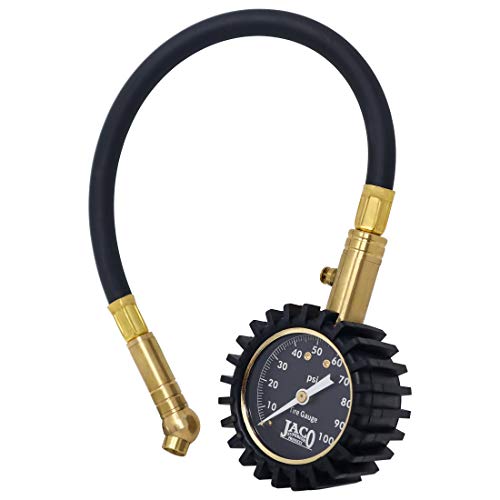
Analog is not dead. In fact, a good analog gauge can be the best tire pressure gauge for simple, reliable checks with zero batteries. The JACO ElitePro Analog 100 PSI has a tough shock guard and a dial you can read fast. It holds the reading until you reset it.
I like analog for fine control when I bleed down pressure. The needle movement shows each tiny drop. It is handy for performance cars, classic rides, and anyone who wants a tool that just works every time you pull it out.
Pros:
- No batteries to charge or replace
- Durable body with shock protection
- Hold function on dial is quick and intuitive
- Great tactile feedback while bleeding down
- Good for glove box and shop use
- Clear, simple scale for everyday PSI ranges
Cons:
- Not ideal in very low light without a lamp
- Analog needle can be harder to read for some
- 100 PSI limit may not fit high-pressure truck tires
My Recommendation
If you want a tool that never needs power, this is the best tire pressure gauge to keep on hand. It is perfect for classic car owners, track day folks, and drivers who love analog’s feel. It is also a great backup even if you own a digital gauge.
Analog gauges teach you to read changes, not just numbers. That can be a real edge when you dial in feel and grip.
| Best for | Why |
|---|---|
| Battery-free reliability | Works anytime, anywhere, with no charging |
| Enthusiasts and tinkerers | Needle feedback helps with precise bleed-down |
| Simple daily use | Clear dial and tough build for long life |
FAQs Of best tire pressure gauge
How do I choose the best tire pressure gauge for my needs?
Match PSI range to your tires. Choose digital for easy reading and analog for battery-free reliability. Look for accuracy, a good seal, and a bleed valve if you tune often.
Digital or analog: which is better?
Digital is fast and clear, great in low light. Analog is simple, rugged, and needs no power. The best tire pressure gauge for you depends on how and where you use it.
What PSI range should I get?
For cars and SUVs, 0–100 PSI is fine. For trucks, RVs, and trailers, go up to 200 PSI. A wider range gives more flexibility.
How often should I check my tire pressure?
Check monthly, plus before long trips and big weather swings. Use the best tire pressure gauge you trust for consistent readings.
Do I still need a gauge if my car has TPMS?
Yes. TPMS warns, but it is not a precise measuring tool. A separate gauge confirms pressure and helps set exact PSI.
Final Verdict: Which Should You Buy?
For most people, the JACO ElitePro Digital 100 PSI is the best tire pressure gauge. It is fast, clear, and tough enough for daily life.
If you need more range, pick a 200 PSI model like the JACO or ETENWOLF T300. Want a spare? The ETENWOLF 2-pack is smart value.
Buying Guide: How I Test and What Matters
I always start with accuracy. A gauge that is off by a few PSI can cost tread, fuel, and safety. I compare readings across cold and warm tires and verify consistency across multiple checks. Then I look at seal quality. A bad seal leaks air and skews readings. I test at different angles and on short and long valve stems.
Readability is next. The best tire pressure gauge shows numbers you can see in daylight and night. Backlighting helps. For analog, I want a clean dial with clear marks. Response speed matters too. I time how fast the reading stabilizes. Slow or jumpy sensors cause doubt.
Build quality seals the deal. A good tool survives glove boxes, drops, and shop dust. I look for rubber guards, metal chucks, and secure hoses. A bleed valve is a bonus for fine tuning. Power is a final check. For digital, I prefer replaceable AAA batteries. They are easy to find on the road.
Why Accuracy and Range Matter
Underinflated tires run hot and wear fast. Overinflated tires reduce grip and comfort. Even a 2–3 PSI error can change how your car feels. That is why I aim for gauges with tight tolerances and stable sensors. The best tire pressure gauge is the one that reads true, every time.
Range should match what you drive. Most passenger vehicles sit between 30 and 45 PSI cold. But towing and off-road set-ups can swing much wider. If you switch between street and trail, or run heavy loads, get a gauge that goes to 200 PSI. It gives headroom and confidence.
Ergonomics and Real-World Use
A small detail like an angled chuck makes a huge difference. A good angle means you do not fight the valve stem. You get a clean seal, a fast reading, and no hiss. The best tire pressure gauge also has a body that fits your hand. Grip texture, button placement, and weight all add up.
I also test at night. A bright backlight is a must for dark garages or roadside checks. For analog gauges, I check if the dial is visible under a headlamp or streetlight. The right tool removes stress from what is often a stressful moment.
Maintenance Tips for Long Life
Store your gauge in a dry spot. Avoid tossing it loose with heavy tools. Replace batteries before a road trip. If your gauge has a hose, check it for cracks each season. The best tire pressure gauge will last years if you treat it like a real instrument.
Calibrate if your model allows it, or compare it against a known accurate gauge once in a while. Keep the chuck clean. Dirt on the seal causes leaks and false readings.
When to Upgrade Your Gauge
If your readings are inconsistent, this is your sign. If the display flickers or the needle sticks, it is time. Also upgrade when your vehicle needs change. Moving from a sedan to a towing setup calls for more range and robust build. The best tire pressure gauge is the one that fits your current life, not your last car.
How These Picks Serve Different Drivers
Busy commuters need speed and clarity. A compact digital model with a bright screen can save time each week. Families with teens should favor simple tools to reduce mistakes. Fleet owners and frequent travelers benefit from redundancy. That is where a 2-pack shines.
Truck owners and weekend warriors may need the control of a high-range gauge. If you air up and down for loads or terrain, a 200 PSI digital with a bleed valve is gold. Analog fans get the satisfaction of needle feedback and battery-free reliability. Each tool has its lane. The best tire pressure gauge is the one that fits your lane.
Safety and Savings Add Up Fast
Proper pressure boosts grip in rain and snow. It cuts stopping distance and helps your driver aids work right. It also protects your wallet. Even a few PSI low can trim fuel economy and wear tires unevenly. Over time, a good gauge pays for itself.
Think of it like a toothbrush for your car. You would not guess your teeth are clean. Do not guess your tires are right. Use the best tire pressure gauge you can, and use it often.
Key Features I Look For
- Accurate readings within a tight tolerance
- Wide enough PSI range for your vehicles
- Bleed valve for precise adjustments
- Strong chuck seal and comfortable grip
- Readable screen or dial in all light
- Replaceable batteries for digital models
- Rugged build to survive real life
Common Mistakes to Avoid
- Checking right after driving; let the tires cool for best accuracy
- Relying only on gas station gauges; they vary a lot
- Forgetting the spare; check it quarterly
- Using a low-range gauge on high-pressure tires
- Ignoring a slow leak; recheck and inspect if PSI keeps dropping
Who Should Pick What
If you drive a typical car or SUV, get a 100 PSI digital like the JACO ElitePro Digital. It is the best tire pressure gauge for easy, daily use. If your life includes towing, overlanding, or bigger tires, upgrade to a 200 PSI model such as the JACO 200 PSI or ETENWOLF T300. If you value simplicity and durability, the JACO ElitePro Analog is a great pick.
If you want peace of mind in more than one place, the ETENWOLF 2-pack is your answer. Keep one in the garage and one in your vehicle. That small change prevents a lot of hassle.
Final Buying Checklist
- Does the PSI range match every tire you own?
- Is it accurate enough for your use?
- Can you read it clearly in bright and low light?
- Does it have a bleed valve for fine tuning?
- Is the build tough enough for your environment?
- Are batteries easy to replace if digital?
In Short: Make Pressure Checks a Habit
Set a reminder once a month. Keep your gauge where you can grab it fast. Look for trends. If a tire keeps losing pressure, inspect for nails, beads, or valve issues. A few minutes with the best tire pressure gauge prevents big problems later.
I have learned this the hard way. A simple check before a long drive saved my weekend more than once. It can save yours too.
3 thoughts on “Best Tire Pressure Gauge: Top Picks And Buying Guide 2026”