

Most drivers choose 20%–35% tint; professional installs cost $150–$600 on sedans and SUVs.
If you are asking how much to tint car windows, you might mean two things. You want to know the legal tint percentage and the real cost. I have guided hundreds of owners on both. In this guide, I break down laws, costs, film types, and smart picks.
You will see how much to tint car windows for your needs, your budget, and your state rules.

What “how much to tint car windows” really means
People use how much to tint car windows in two ways. It can mean the darkness level. It can also mean the money you will spend.
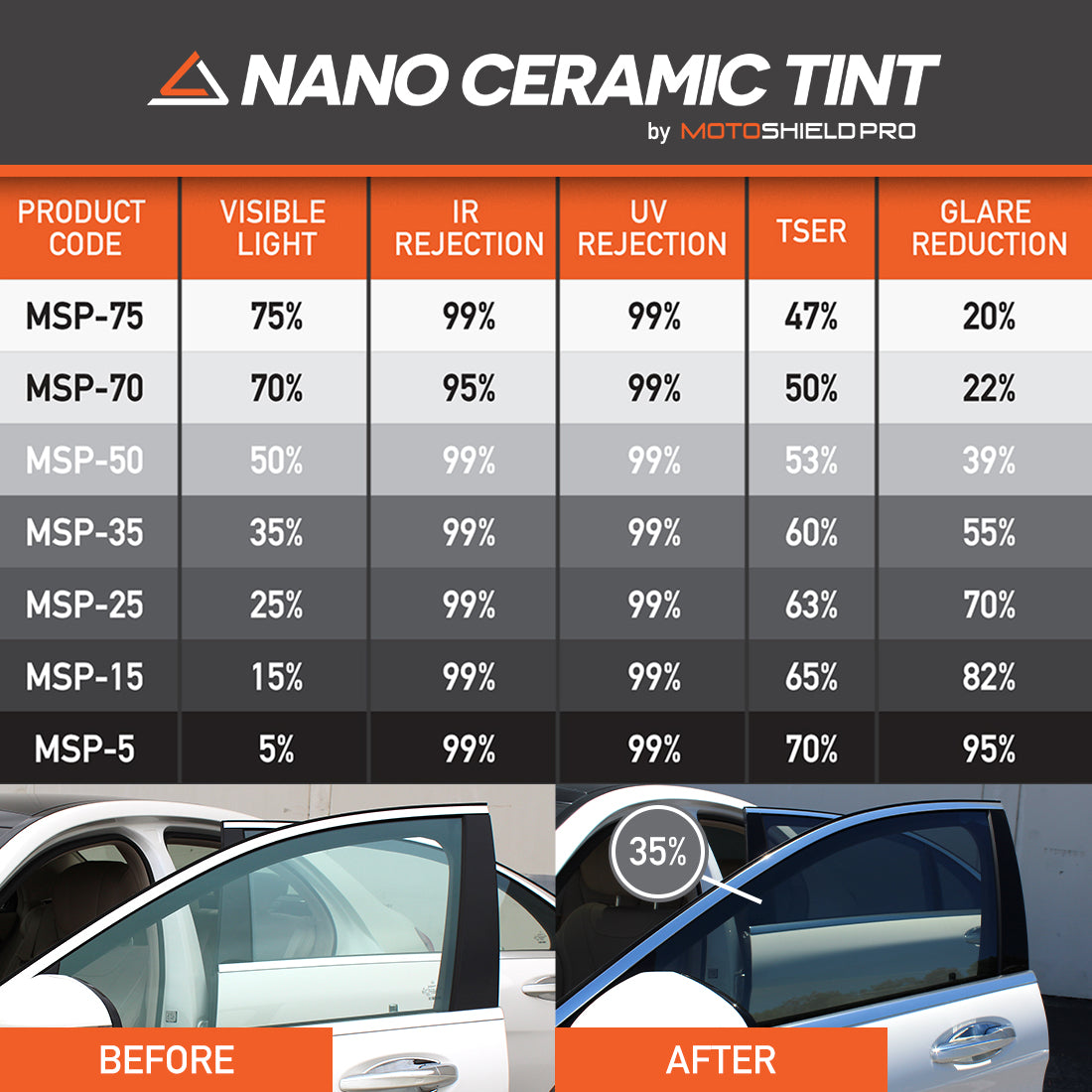
Tint darkness is measured by VLT. It stands for visible light transmission. A 35% VLT lets in 35% of light. A 5% VLT is very dark.
Cost depends on film type, car size, and local labor. It also depends on extras like a windshield strip or removing old film. We will cover both sides so you can decide how much to tint car windows with confidence.
Legal limits by state: how much tint you can have
State laws set the legal tint for front side windows, rear side windows, and the rear glass. Many states allow 35% on front sides. Some allow 25%. A few require 70% or lighter. Rear windows often can be darker, sometimes down to 20% or 5%. Windshields are usually limited to the top strip, or a very light film.
You must check your state vehicle code. Some states have medical exemptions. Many states measure VLT with a tint meter during stops or inspections. If you go too dark, you risk fines, removal, or inspection failure.
Pro tip from the field: I once tested 20% on my front windows in a state that required 35%. I got a warning and swapped to legal film the next day. Learn the rules first. That saves time and money. This also helps you choose how much to tint car windows without stress.

Cost breakdown: how much to tint car windows in dollars
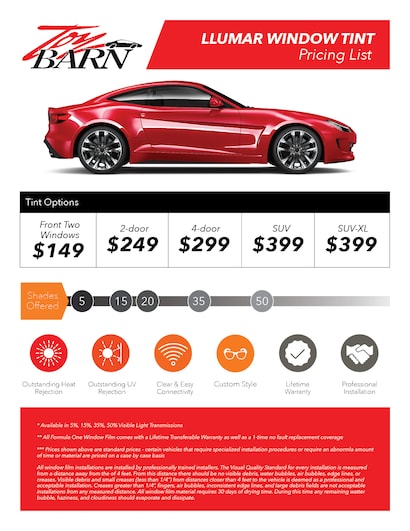
Prices vary by film tech, shop skill, and car shape. Here is what I see in most US cities.
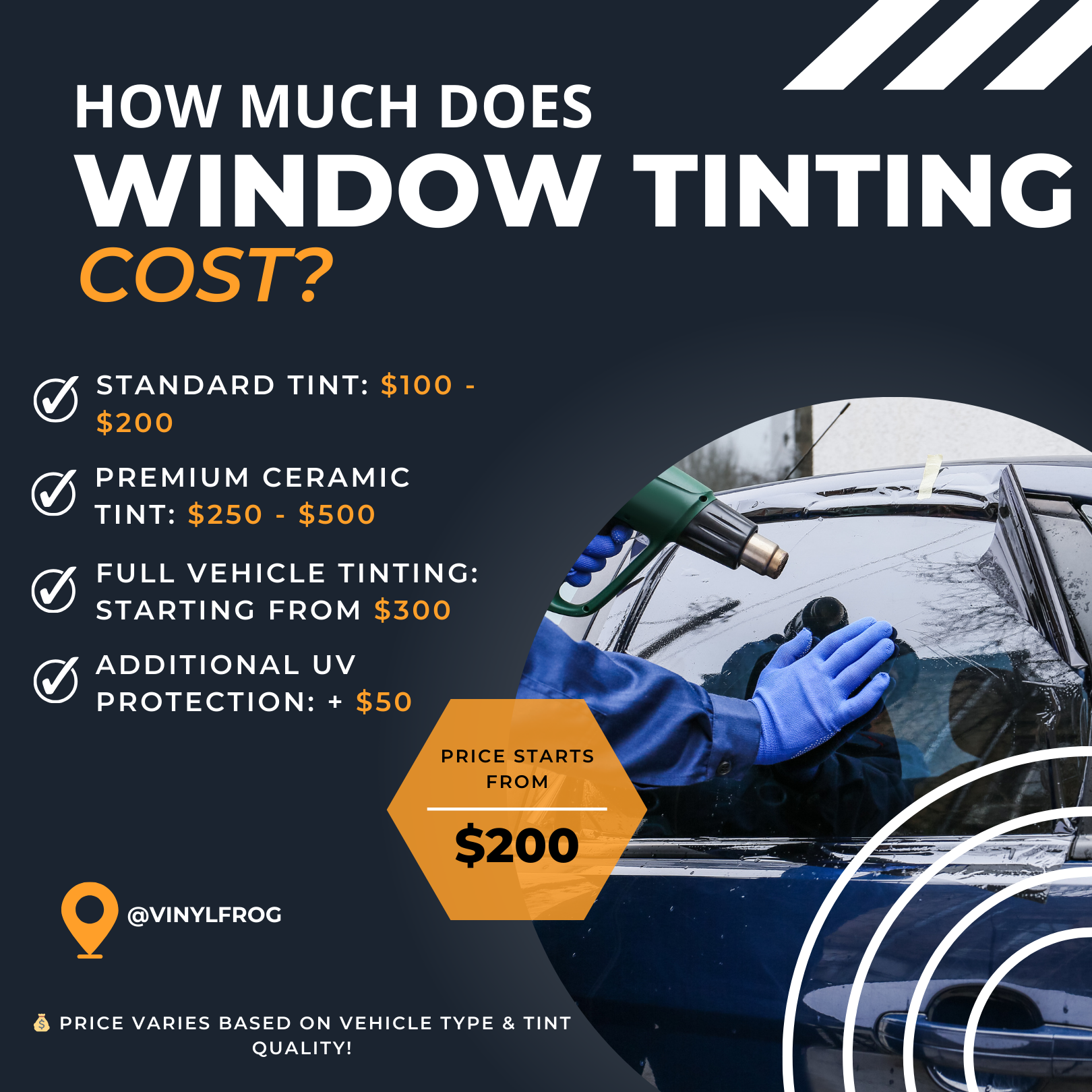
- Dyed film: About $120–$250 for a sedan. About $200–$350 for an SUV. Good for looks and glare. Lower heat rejection. Shorter life in harsh sun.
- Metalized film: About $180–$350 sedan. About $260–$420 SUV. Better heat control. Can affect radio, GPS, or key fobs in some cars.
- Carbon film: About $250–$450 sedan. About $320–$550 SUV. Solid heat control. No signal issues. Color stays stable.
- Ceramic film: About $350–$900 sedan. About $450–$1,200 SUV. Top heat and UV block with higher VLT. Best for hot climates.
- Premium IR ceramic: Add $100–$300 more than standard ceramic. Higher infrared rejection. Cooler cabin without going dark.
Add-ons and extras:
- Windshield sun strip: About $20–$60.
- Full windshield (where legal): About $150–$400 with light ceramic.
- Panoramic roof or sunroof: About $40–$120 each.
- Old tint removal: About $60–$200 based on glue and defroster lines.
- Curved or complex windows: About $20–$100 extra due to time and risk.
- Mobile service: Often $30–$100 extra.
- Lifetime warranty: Usually included on mid to high tier films.
Use this to plan how much to tint car windows within your budget. Ask for a written quote. Confirm the exact film line and warranty.
How to choose the right tint percentage for your needs
Picking how much to tint car windows is a balance. Think about heat, privacy, night driving, and law.
Follow these steps:
- Check your state rules. Note front, rear, and windshield limits.
- Decide your heat and glare needs. Hot states may favor ceramic even at lighter VLT.
- Consider night vision. If you drive at night a lot, avoid 5% or 15% on fronts.
- Think about privacy. Rear windows at 20% or 15% add privacy without hurting front vision.
- Match daily use. If you use cameras or ADAS, do not block sensors. Avoid metalized films if you worry about signal loss.
- Try samples. Ask a shop to hold 35%, 25%, and 20% samples on your windows. Step back and look.
Popular setups I see often:
- Balanced daily driver: 35% front, 20% rear. Legal in many states and easy at night.
- Max heat cut within law: 50% or 70% ceramic all around. Feels cooler but looks close to stock.
- Privacy heavy (where legal): 25% front, 15% or 5% rear. Great daytime privacy. Harder at night.
Use this to decide how much to tint car windows for your own comfort and safety.
Film technologies explained
Not all tint is the same. Here is a quick guide to film types and what they do.
- Dyed film blocks light but not much heat. It can fade over time.
- Metalized film reflects heat well. But it may affect AM/FM, TPMS, or GPS in some cars.
- Carbon film keeps color and adds heat control. It is a safe all-round pick.
- Ceramic film blocks heat by filtering infrared. You get strong heat cut even with 50% or 70% VLT.
- IR ceramic ups heat rejection even more. It is great for hot and humid areas.
Key specs you may see:
- VLT: Visible light transmission. It tells you how dark it looks.
- TSER: Total solar energy rejected. Higher is cooler.
- IRR: Infrared rejection. Helps with radiant heat.
- UV rejection: Most quality films block up to 99% of UV.
If you want to know how much to tint car windows without losing night visibility, look at ceramic. It keeps things cool even at lighter shades.
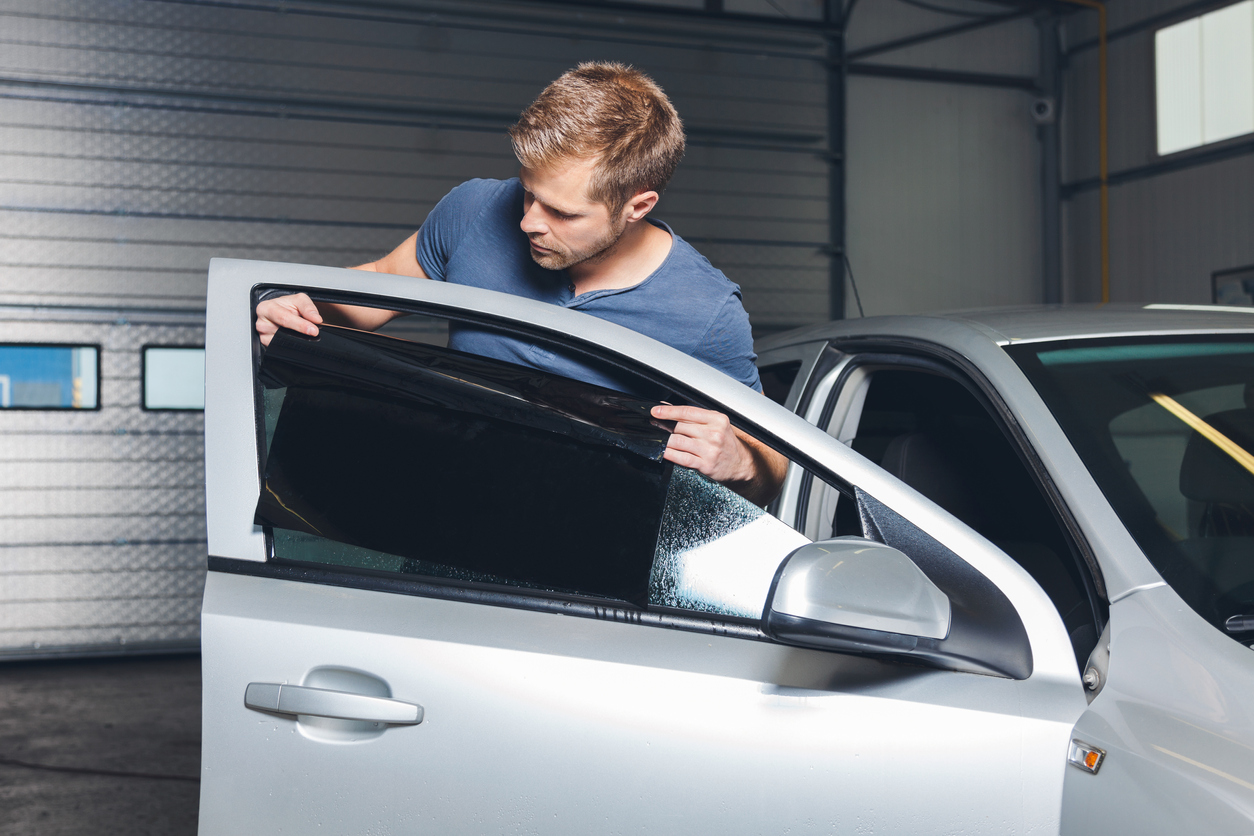
DIY vs professional installation
DIY can save money. But it has a learning curve. I did my first DIY on a coupe. I used clean tools and took my time. It still had a few dust specks and a crease on the rear glass. The next car I hired a pro. The result was spotless, and the warranty had real value.
DIY basics:
- You need a heat gun, squeegees, blades, spray bottle, and slip solution.
- Work in a clean, wind-free area. Dust is the enemy.
- Pre-cut kits help a lot. Hand-cutting on glass risks scratches.
- The rear window is the hardest part due to curves and defroster lines.
When to go pro:
- You want a perfect look and a warranty.
- Your car has complex glass or tight seals.
- You plan to choose high-end ceramic.
If your budget is tight but you want quality, ask shops about dyed or carbon options. That way you get how much to tint car windows done right at a fair price.

Care, curing, and maintenance after tint
New tint needs time to cure. You may see haze or small water pockets. That is normal. Do not press them. They will clear as water evaporates.
- Wait at least 2–5 days before rolling windows. In cold or wet weather, wait up to 2–3 weeks.
- Clean with ammonia-free glass cleaner or mild soap and water. Use a soft microfiber.
- Avoid razor blades on tinted surfaces. Use a plastic card edge wrapped in a cloth.
- Be gentle near dot matrix edges. Some films have a light halo there. A pro can add a border if needed.
- Keep your receipt and warranty card. If a bubble or peel shows after curing, ask the shop to fix it.
Smart care helps your film last longer. It protects your glass and keeps how much to tint car windows a good investment.

Common mistakes and how to avoid them
I see the same errors again and again. Here is how to dodge them.
- Skipping the law check. Dark fronts can lead to tickets or removal. Always verify limits first.
- Going too dark for night driving. If you have weak headlights, keep fronts at 35% or lighter.
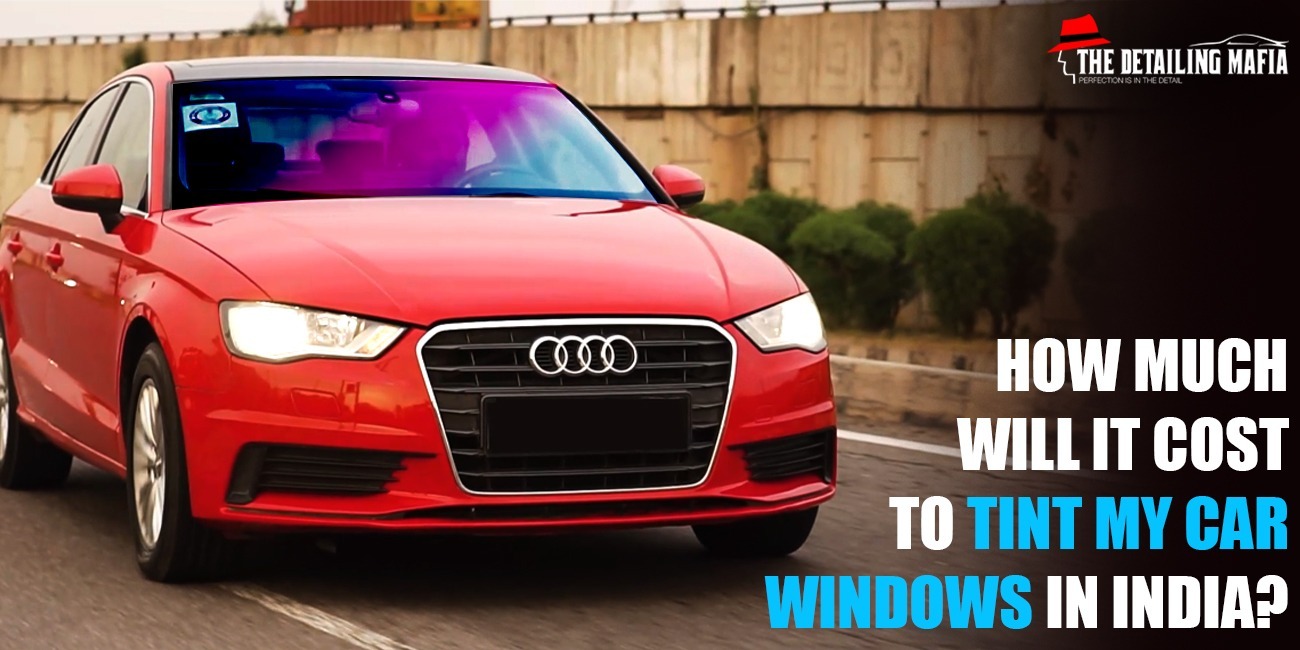
- Choosing the cheapest film. Low-end dyed film can turn purple and fade fast.
- Ignoring signals. Metalized film may hurt reception in some cars. Carbon or ceramic avoids that.
- Rushing prep. Dust makes permanent dots in the film. Clean and de-lint every surface.
- Damaging defroster lines during removal. Use steam and patience. Do not yank.
Avoid these and you will be happy with how much to tint car windows in the long run.
Insurance, inspections, and resale
Some states check tint during annual or biennial inspections. If your tint fails, you must remove or replace it. Keep that in mind when you pick how much to tint car windows.
Tell your insurer if you tint the windshield or go very dark. It can affect claims if local law bans it. For resale, legal and neat tint helps value. Illegal or purple film hurts it. Buyers like a receipt and a known brand.
If your car has ADAS cameras near the top of the windshield, use only approved light films there. It keeps features like lane keep and auto high beams working as designed.
Frequently Asked Questions of how much to tint car windows
How much to tint car windows for the front doors?
Most states allow 35% to 70% on front doors. Check your local law and aim for legal first, then pick a film that fits your heat and glare needs.
How much to tint car windows if I drive a lot at night?
Keep fronts at 35% or lighter, and use ceramic. You get heat control without losing too much night vision.
How much to tint car windows for the best heat rejection?
Choose ceramic or IR ceramic, even at 50% or 70%. These films cut heat far better than dark dyed films.
How much does it cost to tint car windows?
Expect $150–$600 for most sedans and small SUVs with quality films. High-end ceramic on larger SUVs can reach $900–$1,200.
How much to tint car windows on the windshield?
Most states only allow a top strip. A few allow very light film like 70%. Always confirm your state rule before tinting the windshield.
How long does tint last?
Dyed film may last 3–5 years in harsh sun. Quality carbon or ceramic with a lifetime warranty can last 10 years or more.
Will tint affect my radio or GPS?
Metalized films might reduce signal in some cars. Carbon and ceramic films avoid that issue in most cases.
Conclusion
You now know how much to tint car windows in both senses: the ideal VLT and the real cost. Start with your state law, your driving habits, and your climate. Pick a film that fits your goals, not just a shade that looks cool. If you want max comfort with fewer trade-offs, a light ceramic setup is a smart, legal win.
Ready to choose your setup? Get two or three quotes, ask to see heat lamp demos, and hold sample shades against your glass. If this guide helped, share it with a friend, subscribe for more car care tips, or drop your questions in the comments.
1 thought on “How Much To Tint Car Windows: Cost, Legal Limits & Tips”