

Replace tires if tread is under 2/32 inch, sidewalls crack or bulge, or age exceeds six years.
If you drive, you need to know when to swap old rubber for new. I’ve spent years helping drivers decide when it’s time. In this guide, I’ll show you how to know when tires need replacement with clear steps, real examples, and simple tests you can do at home. You’ll learn what to look for, what to ignore, and how to stay safe without wasting money.

Source: wikihow.com
Why timing your tire replacement matters
Good tires help you stop faster and steer with control. Worn tires lose grip, take longer to stop, and can hydroplane in rain. On wet roads, shallow tread can add many feet to your stop. In snow, worn tread is even worse.
I’ve seen drivers blame brakes or shocks. Often, the real fault was bald or old tires. Use this guide to make a smart call before small wear turns into a big risk.
Source: roberts-autorepair.com
The quick checklist: how to know when tires need replacement today
When people ask how to know when tires need replacement, I share this simple list. If you see any of these, it’s time to act.
- Tread depth at or below 2/32 inch
- Cracks in sidewalls or between tread blocks
- Bulges, bubbles, or blisters on the sidewall
- Cords or fabric showing through rubber
- Punctures in the sidewall or large holes in the tread
- Repeated air loss or slow leaks
- Tire age over six years, or past ten years max
- Strong vibration, pulling, or odd noises that do not go away
- TPMS light on with no clear cause after checking pressure
If you want a fast answer on how to know when tires need replacement, start here.

Source: wikihow.com
Tread depth tests that work
Tread depth is the first clue. The legal limit in many places is 2/32 inch. But you should not wait that long if you drive in rain or snow.
Use these tests:
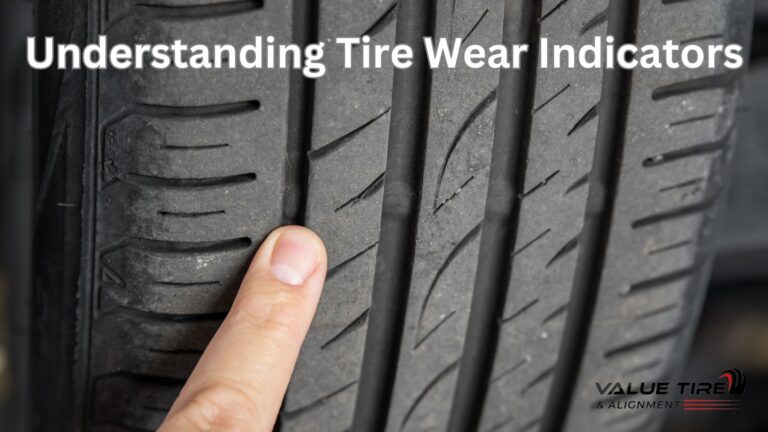
- Wear bars: Look across the grooves for raised bars. If the bars are flush with the tread, the tire is at 2/32 inch and must be replaced.
- Penny test: Put a penny in the groove with Lincoln’s head down. If you see the top of his head, tread is under 2/32 inch. Replace the tire.
- Quarter test: Use a quarter with Washington’s head down. If you see the top of his head, tread is under 4/32 inch. Replace for better wet grip.
- Gauge check: A tread depth gauge gives a clear number. Replace at 4/32 inch for rain, 6/32 inch for snow.
From my work in wet areas, I tell drivers to swap at 4/32 inch. It cuts the risk of hydroplaning and long stops.

Source: agirlsguidetocars.com
Age matters: decode the DOT date and lifespan
Rubber ages even if you do not drive much. Heat, sun, and time harden the compound. That means less grip and more cracks.
Check the sidewall for the DOT date code. It has four digits at the end. The first two are the week. The last two are the year. For example, 2319 means week 23 of 2019.
Use these age rules:
- Inspect closely after six years
- Replace at ten years from the DOT date, even if tread looks fine
- Store spares in a cool, dark, dry place
If you park outside in heat, tires can age faster. That’s key for anyone asking how to know when tires need replacement on weekend cars or trailers.

Source: youtube.com
Visible damage you should never ignore
Some damage means you must replace the tire at once. Do not drive on a damaged tire.
Watch for:
- Sidewall bulge or bubble: The inner cords have failed. Replace now.
- Deep cuts or gashes: If cords show, it is unsafe.
- Cracks in the sidewall: Aging and UV damage. Replace soon.
- Embedded objects: Nails in the tread can be repaired only if the hole is small and centered. Sidewall punctures cannot be repaired.
- Patch limits: Best practice is a proper patch and plug done from inside. Holes larger than 1/4 inch, or near the shoulder, often need a new tire.
I have seen plugs thrown in from the outside fail at highway speeds. Do not risk it. If in doubt, ask a pro shop.
Source: valuetirefl.com
Feel and sound: handling clues from behind the wheel
Your hands, seat, and ears can tell you a lot. This is a big part of how to know when tires need replacement if you drive daily.
- Vibration that grows with speed: May be a bent wheel, a broken belt, or cupping from worn shocks
- Pulling to one side: Could be alignment or uneven wear
- Loud humming or whine that changes with speed: Often uneven wear
- Less grip in rain or snow: Tread is too low or rubber is too hard
- Longer stops and more ABS kick-in: Tread is worn or compound is old
If the car felt fine last month but is rough today, inspect all four tires and check pressure.
Source: autonationtoyotawinterpark.com
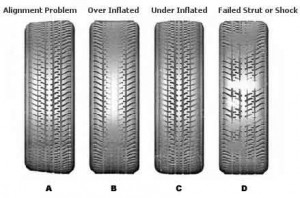
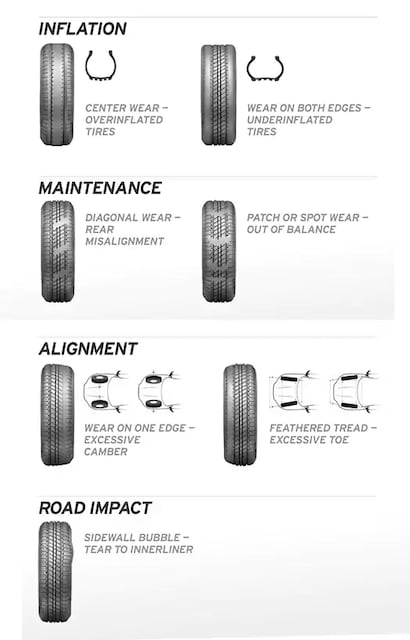
Uneven wear patterns and what they tell you
Uneven wear helps you spot the cause and fix it fast. It is key for anyone learning how to know when tires need replacement without guesswork.
- Center wear: Overinflation. Lower to the door-jamb pressure.
- Edge wear on both sides: Underinflation. Add air to spec.
- One-edge wear: Poor alignment or camber issue. Get an alignment and check suspension.
- Cupping or scallops: Worn shocks or struts. Replace them and balance tires.
- Feathering or sawtooth: Toe misalignment. Alignment needed.
If uneven wear is deep, you likely need replacement and an alignment. Solve the cause so the new set lasts.
Step-by-step at-home tire inspection
You do not need a lift to do this. Here is how to know when tires need replacement with a simple routine.
- Gather a coin, a tread gauge, a flashlight, chalk, and a tire pressure gauge.
- Park on a level spot. Set the parking brake.
- Check pressures when tires are cold. Use the door-jamb spec.
- Inspect each tire’s tread across the whole width. Use the quarter and the penny tests.
- Look for wear bars, cuts, bulges, and cracks with a flashlight.
- Run your hand lightly over the tread. Feel for high and low spots.
- Check inside sidewalls by turning the wheel or using a mirror.
- Note DOT date codes for tire age.
- Rotate the tires if the pattern allows and recheck ride feel.
Write down your readings. A simple log helps you spot trends over time.
Special cases: winter, all-terrain, EVs, and heavy loads
Not all tires age the same. How to know when tires need replacement depends on your use.
- Winter tires: Replace at 6/32 inch. Snow grip needs deep sipes and blocks.
- All-terrain tires: Chipping and chunking off-road can weaken blocks. Inspect after each trip.
- EVs: Extra weight and torque wear tires faster. Rotate often, usually every 5,000 to 6,000 miles.
- Heavy towing: Heat build-up is higher. Watch pressures and check for shoulder wear after long hauls.
If you swap sets, store the off-season set bagged and out of sun.
Smart replacement: one tire, a pair, or a full set
This is a common place people get stuck when learning how to know when tires need replacement.
- One tire: Only if the others are very new and tread matches closely. Put the new one on the rear for stability, even on front-wheel-drive cars.
- A pair: Replace in pairs on the same axle if tread differs. Put the newer pair on the rear.
- Full set: Best for AWD vehicles, or when tread and age differ a lot.
Check these specs before you buy:
- Size, load index, and speed rating that match or exceed the original
- Tread pattern that fits your climate and driving
- UTQG ratings for wear and traction for a hint of life and grip
- Fresh stock with a recent DOT date
- Road-hazard or mileage warranties
After install, get an alignment and road-force balance if needed. Break in new tires with gentle driving for the first 300 to 500 miles.
Budgeting and timing tips
You can save money and stay safe. How to know when tires need replacement also means knowing when to shop.
- Buy off-season if you can. Winter tires cost less in spring.
- Watch for rebates and shop price-match offers.
- Keep tires at the right pressure. It boosts life and saves fuel.
- Rotate on schedule to prevent uneven wear.
- Fix alignment issues early to protect your investment.
Small care steps can add thousands of miles to a set.
How maintenance extends tire life
Knowing how to know when tires need replacement is only half the story. Good habits push that date out and keep you safer between checks.
- Check pressure monthly and before trips
- Rotate every 5,000 to 7,500 miles, or as your manual says
- Inspect after pothole hits or curbing
- Keep loads within the tire’s max rating
- Avoid hard launches and stops when you can
From my shop days, the cars with tidy logs and regular rotations had the most even wear and the fewest surprises.
When to trust a pro
DIY checks help, but a trained eye can catch small clues. This matters if you are still unsure about how to know when tires need replacement.
- Get a pro inspection if you see bulges, deep cuts, or odd wear
- Ask for a tread-depth report across the tire
- Request a road-force balance check for stubborn vibration
- Have alignment checked after suspension work or big pothole hits
A quick visit can confirm your call and prevent a repeat problem on your next set.
Frequently Asked Questions of how to know when tires need replacement
How often should I check my tires?
Check pressure and tread once a month and before long trips. Look sooner after a curb impact or if handling feels off.
Is the penny test accurate enough?
It tells you if you are at the legal limit of 2/32 inch. For rain safety, the quarter test at 4/32 inch is better.
Can I replace just one tire on an AWD car?
It is risky if tread depth differs a lot. Many AWD systems need closely matched circumferences to avoid damage.
Are tiny sidewall cracks normal?
Small hairline marks can appear with age and sun. If cracks deepen or spread, replace soon.
How long do tires last in years, not miles?
Plan for six years as a rule of thumb with regular checks. Replace by ten years from the DOT date at the latest.
Does tire brand matter for safety?
All major brands meet standards, but performance varies. Choose a tire tested for your climate and driving style.
Can I use plugs instead of patches?
External plugs are a temporary fix at best. A proper repair is a patch-plug from inside, and sidewalls cannot be repaired.
Conclusion
You now know how to spot tread wear, read date codes, and catch damage early. You also know how to know when tires need replacement in rain, snow, or with EVs and heavy loads. Small checks prevent big scares and save money over time.
Put this into action today. Grab a coin, a gauge, and a light, and inspect all four tires. If anything looks wrong, schedule a pro check and plan your next set with confidence. Want more tips like this? Subscribe, share your questions, or leave a comment with what you found on your tires.