

A gas smell usually means a fuel or EVAP leak, rich running, or a spill.
If you have wondered why does my car smell like gas, you are in the right place. I have diagnosed hundreds of fuel odors, from tiny hose cracks to major injector leaks. In this guide, I will explain the causes, what to check first, how pros find the source, and the smartest fixes. You will understand why does my car smell like gas, when it is safe to drive, and how to prevent it for good.

Safety first: what a fuel smell really means
A gasoline odor is a safety issue. Raw fuel vapors are flammable. Exhaust leaks can also bring carbon monoxide into the cabin. If the smell is strong, stop driving and inspect in a safe, open area.
Do not ignore it. Gasoline evaporates fast. A small leak can turn into a fire risk or damage the catalytic converter. If you asked yourself why does my car smell like gas, treat it as urgent until you know the source.
What to do right now:
- Turn off the car, pop the hood, and let vapors clear in open air.
- Do not smoke or use open flames nearby.
- If you see wet fuel, call roadside help or a tow. Do not drive.
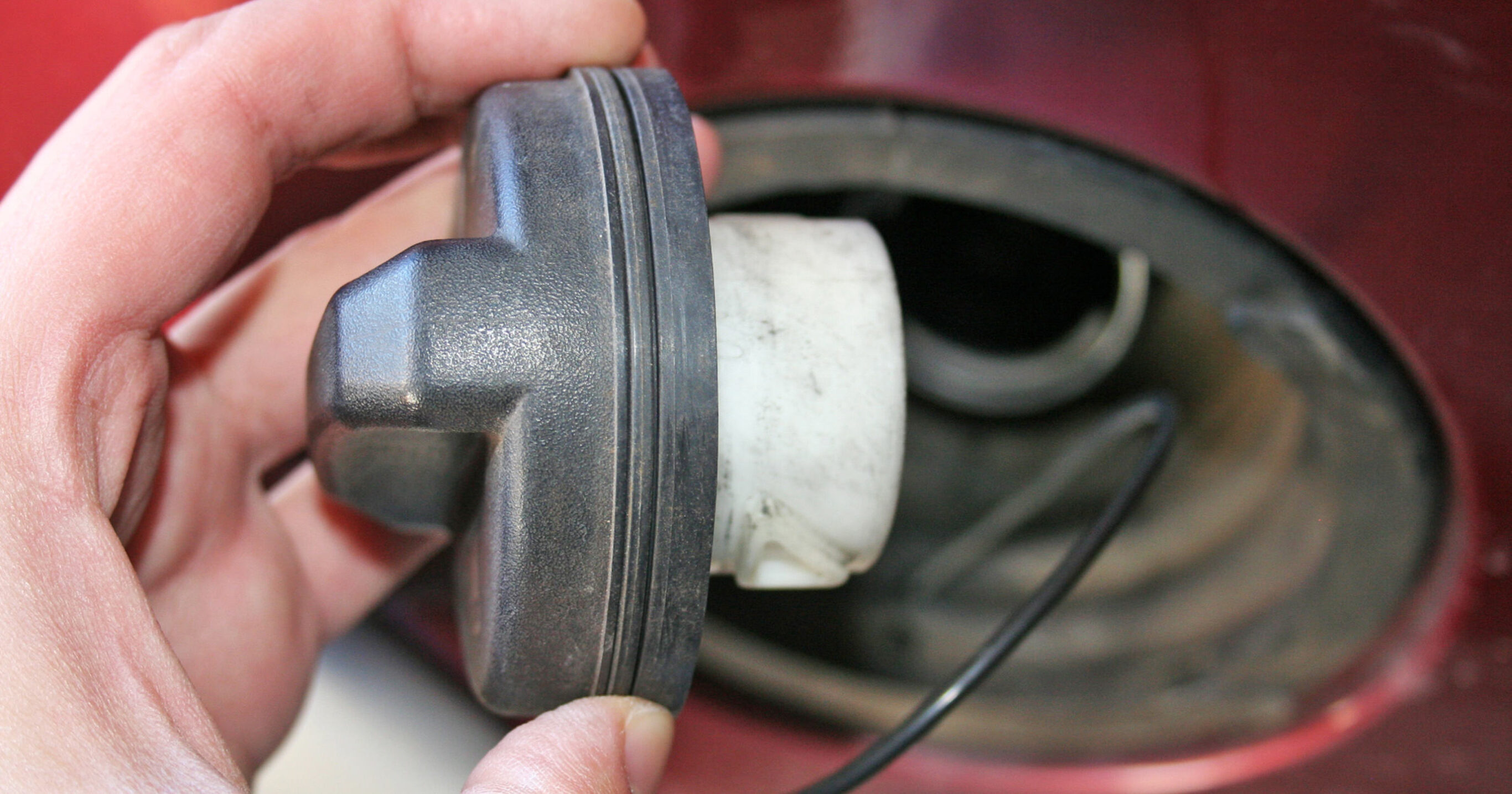
- If the odor is mild and only after refueling, check the gas cap first.
The most common reasons your car smells like gas
If you are asking why does my car smell like gas, start with the usual suspects. Most causes fall into a few systems: the fuel delivery hardware, the EVAP system, the exhaust and engine tune, and simple spills.
Fuel system leaks
These are physical leaks of liquid fuel or strong vapor near the engine or under the car.
- Rubber fuel hoses and clamps can crack with age. Look along the frame and near the fuel filter.
- Injector O-rings can harden. You may see dampness or smell raw fuel at the fuel rail.
- The fuel rail or line fittings can leak after DIY work or an impact.
- Fuel tank seams or a failing fuel pump seal can seep, often after tank service.
Signs:
- Wet spots, shiny stains, or dirt stuck to damp areas.
- Strong smell after parking, especially in a garage.
- Visible drips on hot days.
EVAP system faults
The EVAP system captures fuel vapors so they do not vent to air. When EVAP parts fail, the car can smell like gas.
- Loose or damaged gas cap lets vapors escape. A common reason people ask why does my car smell like gas after refueling.
- Purge valve stuck open can push vapors into the intake at the wrong time.
- Vent valve stuck closed can cause pressure and leaks at seals.
- Cracked EVAP hoses or a saturated charcoal canister can release smells.
Watch for a check-engine light with codes like P0440 to P0456. These often point to EVAP leaks.
Exhaust and rich-running conditions
A rich mixture makes the exhaust smell like unburned fuel. It is not raw gasoline, but it can smell similar.
- Misfires, bad spark plugs, or worn coils.
- Faulty oxygen sensors or MAF sensors.
- High fuel pressure from a stuck regulator.
- Cold starts on short trips, where the engine never warms up.
This can damage the catalytic converter. If you often wonder why does my car smell like gas at idle, look for a rich condition or an exhaust leak near the front of the car.
After refueling or spills
Sometimes the cause is simple.
- Spilled fuel on the filler area or paint will stink for a day or two.
- Overfilling the tank can flood the charcoal canister.
- A gas can in the trunk can vent fumes into the cabin.
If the odor only shows up right after filling up, the answer to why does my car smell like gas is often a loose cap or a minor spill.
Weather and storage
Heat expands vapors. Cold shrinks seals.
- Hot weather can amplify normal EVAP venting if there is a small leak.
- Old cars with carburetors may vent fuel smell after shutdown.
These can make a mild issue smell much worse.
Quick checks you can do now
You can find many causes without tools. Keep it safe and simple.
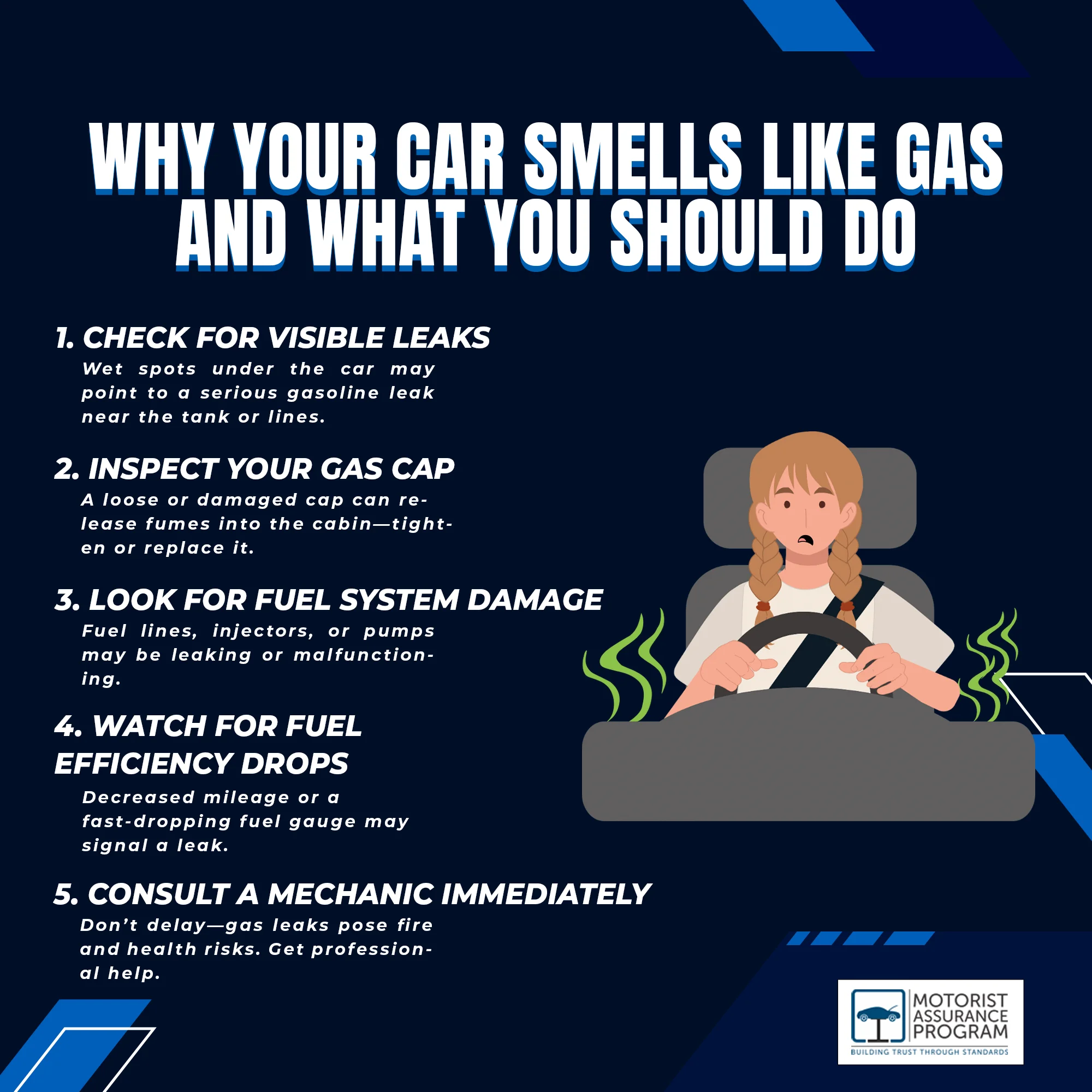
- Check the gas cap. Make sure it clicks tight. Inspect the gasket for cracks.
- Look under the car for wet spots or drips near the tank or along the frame.
- Inspect under the hood with the engine off. Look around the fuel rail and injectors for dampness.
- Sniff test. Note where the smell is strongest: front of car, rear near tank, or inside cabin.
- Start the car cold. Watch for visible leaks. Listen for hissing that might be a vapor leak.
- Review recent work. Fuel filter changes, injector work, or EVAP hose removal can cause new leaks.
- Scan for codes if you have a basic OBD-II reader. EVAP and fuel trim codes give clues.
If you keep asking why does my car smell like gas after these checks, plan a professional diagnosis.

How professionals diagnose the smell
A good shop follows a safe, step-by-step plan. This prevents guesses and wasted parts.
- Visual and smell inspection. With lights and mirrors, they check rails, lines, and tank seals.
- Fuel pressure test. High pressure or a drop after shutdown can show internal leaks.
- EVAP smoke test. A smoke machine pushes vapor to reveal tiny hose cracks or valve leaks.
- OBD-II data. Fuel trims, oxygen sensor behavior, misfire counts, and EVAP command tests narrow causes.
- Exhaust backpressure and leak check. A small leak before the catalytic converter can smell like fuel.
- UV dye for persistent leaks. Dye in the fuel can show a slow seep over time.
This process answers why does my car smell like gas with evidence, not guesses.

Fixes and typical repair costs
Prices vary by car, region, and parts quality. These ranges reflect common shop rates.
- Gas cap replacement: 10 to 40 dollars. Many EVAP codes are solved here.
- Injector O-rings: 50 to 250 dollars for seals. More if injectors need service.
- Damaged fuel line or hose: 100 to 500 dollars depending on location and material.
- Charcoal canister or EVAP valve: 150 to 600 dollars for parts and labor.
- Oxygen sensor or MAF sensor: 120 to 450 dollars installed.
- Fuel pump module seal or tank work: 250 to 1,000 dollars based on access.
- Ignition tune up for rich running: 150 to 600 dollars for plugs and coils as needed.
If you have wondered why does my car smell like gas and worry about cost, start with the basics. A proper test can avoid replacing good parts.

Prevention checklist and smart habits
Small steps keep vapors in check and leaks at bay.
- Replace the gas cap gasket if it looks dry or cracked.
- Do not top off the tank after the nozzle clicks.
- Inspect fuel hoses every oil change for cracks or damp spots.
- Fix small misfires right away to avoid rich running.
- Use quality fuel and change filters on schedule.
- Keep the engine bay clean so new leaks are easy to spot.
- Park in a ventilated area if you notice a faint odor and schedule a check.
These habits reduce the chance you will ask why does my car smell like gas again.

When to stop driving and call for help
Some signs mean park it now.
- Strong fuel smell in or around the car that does not fade.
- Visible fuel dripping or a wet spot under the tank or engine.
- Headache or dizziness in the cabin, which may signal exhaust gases.
- A check-engine light with strong odor and poor running.
If any apply and you are thinking why does my car smell like gas today, play it safe. Get a tow.

Field notes from the shop: real fixes and lessons
A few patterns show up again and again.
- The loose cap case. Many drivers came in asking why does my car smell like gas after fill-ups. The cap gasket was cracked. A new cap solved it.
- The cold start leak. Fine when warm, but damp at the injector base in the morning. New O-rings fixed the smell.
- The hidden EVAP crack. The smoke test found a tiny split in a hose on top of the tank. Cheap part, but access took time.
- The rich idle mystery. A failed front oxygen sensor made the mix rich. Replacing it cleared the odor and saved the catalytic converter.
- The spill surprise. Fuel splashed into the fender pocket during a rushed fill. A simple wash with mild soap ended the smell.
The lesson is simple. If you ask why does my car smell like gas, check the obvious first, then test. Do not guess.
Frequently Asked Questions of why does my car smell like gas
Why does my car smell like gas only after I fill up?
A loose or damaged gas cap is most common. Overfilling can also saturate the charcoal canister and cause a temporary odor.
Why does my car smell like gas inside the cabin?
An exhaust leak near the front, a rich mixture, or EVAP vapors entering through the HVAC intake can do this. Avoid driving until it is checked.
Why does my car smell like gas when parked overnight?
Cold seals may seep, or an injector O-ring may leak slightly. Look for damp spots near the fuel rail or under the tank.
Why does my car smell like gas but there are no visible leaks?
EVAP leaks often release vapors without liquid. A smoke test can find tiny hose cracks or a stuck valve.
Why does my car smell like gas at idle but not while driving?
A rich condition or small exhaust leak is more noticeable at idle. Once moving, airflow dilutes the odor, masking the problem.
Why does my car smell like gas in hot weather?
Heat expands fuel vapors and can worsen small leaks. Check the gas cap and EVAP hoses first.
Is it safe to drive if my car smells like gas?
If the smell is strong or you see wet fuel, do not drive. A faint, occasional odor after refueling may be safe, but inspect soon.
Conclusion
A gasoline odor is not a mystery you should ignore. Start with simple checks like the gas cap, look for damp spots, and pay attention to when the smell appears. If you still wonder why does my car smell like gas, schedule a proper smoke test and a fuel system inspection.
Stay proactive. Fix small issues before they become risky and costly. If this guide helped, share it, subscribe for more maintenance tips, or leave a comment with your symptoms so I can help you pinpoint the cause.
2 thoughts on “Why Does My Car Smell Like Gas: Causes And Fixes”