

Most cars fail to accelerate due to fuel, air, spark, or transmission issues.
If you’re asking why is my car not accelerating, you’re in the right place. I’ve spent years diagnosing cars that felt flat, hesitated, or bogged under load. In this guide, I’ll break down the real reasons your car loses power, how to test each one at home, when to call a pro, and what it might cost. Stick with me and you’ll leave with clear answers, not guesswork.
What “not accelerating” feels like: symptoms you can trust
When drivers ask why is my car not accelerating, the symptoms often point us to the fix. Pay attention to what you feel and hear. It tells a story.
Common signs:
- The engine revs, but the car crawls. This hints at a slipping clutch or transmission.
- You press the gas and there’s a delay, then a weak surge. Think air, fuel, or throttle issues.
- The car jerks, stumbles, or shakes under load. That often means a misfire or fuel starvation.
- The check engine light is on. Pull the codes as your first step.
- A rotten egg smell or glowing exhaust parts. That points to a clogged catalytic converter.
- Traction or stability lights flash and power cuts. Safety systems may be limiting power.
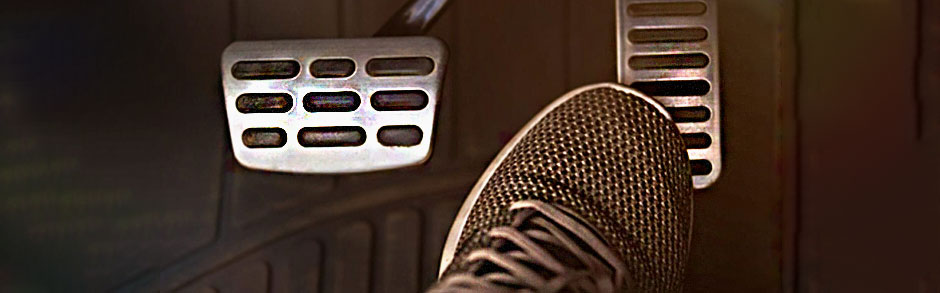
A quick note from the field: I once had a driver swear the engine was dying. The floor mat had slid under the accelerator. A two-second fix made them a believer in simple checks first.
Source: mileschevy.com
Quick checks before you panic
Start simple. These basics solve more cases than you’d think, and they cost nothing.
- Look for dashboard lights. If the check engine light is on, scan for codes first.
- Check for Eco or Valet mode. These modes can dull throttle response.
- Confirm the parking brake is fully off. Even a partial drag kills power.
- Inspect the air filter. If it’s packed with debris, replace it.
- Check for loose or cracked intake hoses. Any split after the mass air sensor is a big vacuum leak.
- Verify transmission fluid level and color on automatics. Low or burnt fluid means trouble.
- Make sure traction control is not fighting you. On slick roads, it will cut power.
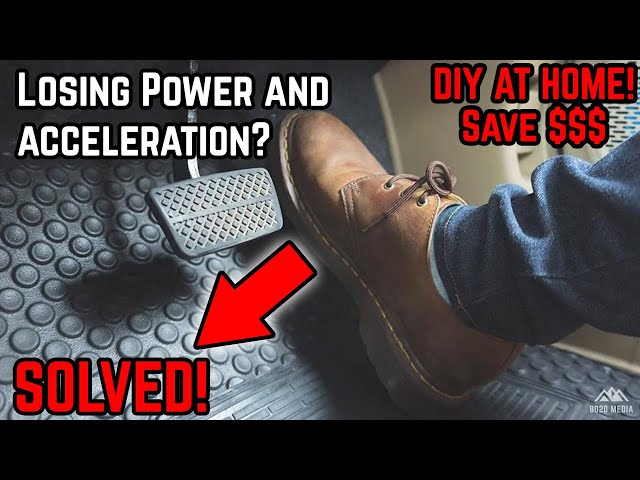
If your goal is to solve why is my car not accelerating fast, these checks can save you time and money.
Source: youtube.com
How acceleration works in simple terms
Power comes down to this: the engine needs the right air, fuel, spark, and timing to make torque. Then the transmission multiplies that torque and sends it to the wheels.
- Air: The engine must breathe in clean, measured air.
- Fuel: The pump, filter, and injectors must deliver the right amount at the right pressure.
- Spark: Plugs and coils must fire strong and on time.
- Timing and compression: Valves and pistons must seal and move in sync.
- Drivetrain: The transmission, clutch, axles, and brakes must not slip or drag.
If any step fails, you feel it as slow acceleration. This is the core answer to why is my car not accelerating under load or at highway speed.
Source: zutobi.com
Common causes and fixes by system
Below is the structured, real-world list I use on the job. It covers 90% of cases when someone asks why is my car not accelerating.
Fuel delivery problems
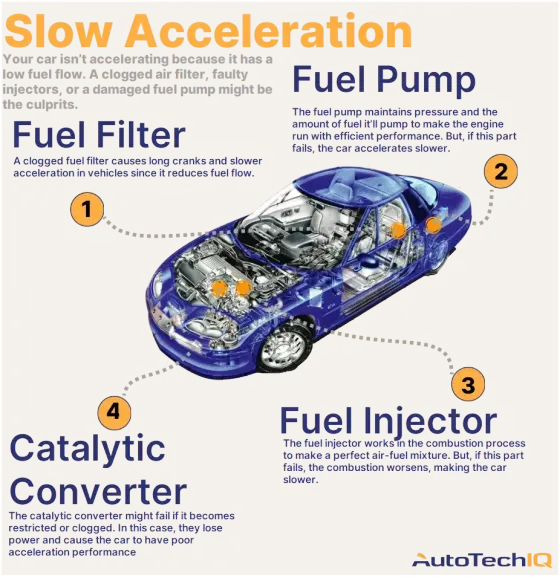
- Weak fuel pump or clogged filter. At high demand, fuel pressure drops and the car bogs.
- Signs: Long cranks, sputter on hills, code P0087 (low rail pressure).
- DIY: Listen for pump priming. Check pressure with a gauge. Replace the filter if serviceable.
- Dirty or failing injectors. The engine runs lean or uneven.
- Signs: Misfire on one cylinder, rough idle, poor MPG.
- Fix: Try quality injector cleaner. For severe cases, get a pro cleaning or replace injectors.
- Bad fuel or water in fuel. Power drops right after a fill-up.
- Fix: Drain and refill with fresh fuel. Add a water remover if minor.
Air intake issues
- Clogged air filter. Limited air means weak power, especially on older engines.
- Fix: Replace the filter. It’s cheap and fast.
- Dirty MAF or MAP sensor. The ECU gets bad air data and mixes fuel wrong.
- Signs: Hesitation, surging, code P0101.
- Fix: Clean the MAF with MAF-safe cleaner only. Do not touch the wire.
- Sticky throttle body. The plate gums up and restricts airflow.
- Fix: Clean the throttle body. Relearn idle if needed.
- Vacuum or boost leaks. Any split hose after the MAF kills power. On turbo cars, boost leaks feel like a dead turbo.
- Signs: Hissing, whooshing, P0171 (lean), P0299 (underboost).
- Fix: Inspect all couplers and lines. Smoke test if possible.
Ignition and misfires
- Worn spark plugs or coils. Under load, weak spark shows first.
- Signs: Shudder on hills, flashing MIL, P0300-P030x codes.
- Fix: Replace plugs to spec. Swap coils to confirm a bad one.
- Weak battery or alternator. Low voltage hurts coil strength and ECU control.
- Fix: Test voltage at idle and under load. Replace faulty parts.
Exhaust restrictions
- Clogged catalytic converter. Exhaust cannot exit, so power dies.
- Signs: Sulfur smell, red-hot cat, poor top speed, P0420, high backpressure.
- Tests: Backpressure gauge, vacuum at idle vs 2500 rpm, temporary upstream O2 removal for test only.
- Fix: Replace the cat. Do not hollow it out; that is illegal and harms performance.
- Bad O2 sensors. Wrong fuel trim over time reduces power.
- Signs: Rich or lean running, poor MPG, codes P013x/P014x series.
- Fix: Replace the sensor after confirming with live data.
Transmission and clutch
- Slipping automatic or CVT. RPMs rise but speed does not.
- Signs: Delayed shifts, shudder, burnt ATF, P07xx codes.
- Fix: Service fluid if due. Severe slip needs repair or rebuild.
- Worn clutch on manual cars. The engine revs and the car goes nowhere.
- Fix: Replace clutch, resurface flywheel, check hydraulics.
- Dragging brakes or seized caliper. Feels like towing a trailer.
- Signs: Car pulls, hot wheel, reduced coasting.
- Fix: Free or replace the caliper. Service pads and rotors.
Turbo and supercharger faults
- Wastegate stuck open or bad boost control solenoid.
- Signs: No boost, P0299, slow spool.
- Fix: Test actuators and lines. Repair leaks. Replace failed parts.
- Intercooler leaks or clogged fins.
- Fix: Pressure test the charge system. Repair or replace the cooler.
Sensors and the computer
- Throttle or pedal position sensor faults.
- Signs: Dead spot in pedal, limp mode, codes P0120-P2135.
- Fix: Test with a scan tool. Replace faulty parts and relearn.
- Knock sensor pulling timing. The ECU retards spark to protect the engine.
- Fix: Check for real knock, low octane, or sensor faults.
- Cam or crank sensor errors. The engine may run but with poor timing.
- Fix: Scan for sync errors. Repair wiring or replace sensors.
- Outdated ECU software.
- Fix: Ask the dealer for a calibration update if TSBs exist.
Safety modes and traction systems
- Limp mode. The ECU limits throttle to protect the engine or trans.
- Signs: Low power with codes stored, fixed RPM limit.
- Fix: Scan, repair root cause, clear codes, road test.
- Traction and stability control. On slick roads, the system cuts power.
- Fix: Drive smooth. If safe, toggle the system off for testing only.
Other mechanical causes
- Low compression or timing chain/belt jumped a tooth.
- Signs: Rough idle, low power everywhere, backfire.
- Fix: Compression or leak-down test. Repair timing system.
- EGR valve stuck open. It dilutes the air and weakens power.
- Fix: Clean or replace the EGR and passages.
- Accessory drag. A failing A/C compressor or alternator can load the engine.
- Fix: Remove the belt to test short-term, then repair.
I often hear, “why is my car not accelerating after I fueled up?” I once traced that to a failing EVAP purge valve flooding the intake with vapors. Small parts can cause big power loss.
Step-by-step diagnosis you can do at home
If you want proof before you pay, follow this plan. It is the same flow I use when drivers ask why is my car not accelerating.
- Scan for codes and freeze-frame data
- Common codes: P0300 misfire, P0101 MAF, P0171 lean, P0420 cat, P0299 underboost, P0700 transmission.
- Note RPM, load, and speed when the fault set.
- Visual and sound check
- Inspect intake boots, vacuum lines, and turbo couplers.
- Listen for hissing, whistling, or exhaust leaks.
- Fluid checks
- Automatic fluid should be the right level and not burnt.
- Engine oil level and condition matter for VVT timing and turbo health.
- Air and throttle
- Check the air filter. Clean the throttle body if dirty.
- Clean the MAF with proper cleaner. Do not swap chemicals.
- Fuel tests
- Check fuel pressure at idle and under load if you can.
- Add a trusted injector cleaner if mild.
- Ignition tests
- Inspect plugs for wear or oil. Replace if due.
- Swap coils to see if a misfire moves.
- Exhaust restriction
- If it dies at high RPM, suspect a clogged cat.
- Do a backpressure check or vacuum test.
- Live data road test
- Watch MAF grams/second, fuel trims, and O2 switching.
- Under load, trims should not shoot way lean.
- Compression and timing if still stuck
- Low or uneven compression kills power.
- If timing is off, fix that first.
- Battery and charging
- Voltage under load should stay healthy. Weak powertrain control needs solid voltage.

Source: youtube.com
When to visit a mechanic and typical costs
Some cases call for pro tools and lifts. If you still wonder why is my car not accelerating after the checks above, get help when:
- The car is in limp mode or unsafe to drive.
- You smell sulfur or see a glowing converter.
- The transmission slips or bangs into gear.
- There are complex codes across many systems.
- The car is under warranty or has an open service bulletin.
Typical costs vary by car and region, but these ballparks help:
- Diagnostic test: 100 to 200 dollars
- Spark plugs and coils: 150 to 600 dollars
- MAF sensor: 150 to 400 dollars
- Throttle body clean: 100 to 200 dollars
- Fuel pump and filter: 400 to 1,200 dollars
- O2 sensor: 150 to 350 dollars
- Catalytic converter: 800 to 2,500 dollars
- Clutch kit: 800 to 1,800 dollars
- Transmission rebuild: 1,500 to 4,000 dollars
- Turbo repair or replace: 1,000 to 3,500 dollars
Pro tip from experience: Authorize diagnosis first. A good tech will confirm root cause before parts fly. You will spend less in the end.
Source: infinitiofspringfield.com
Prevention and maintenance that keep power strong
Many drivers never have to ask why is my car not accelerating because they stick to a simple plan.
- Change air filters on time. Inspect at every oil change.
- Replace spark plugs at the factory interval. Use the correct type.
- Use quality fuel. Avoid running near empty to protect the pump.
- Service the transmission as recommended. Heat and old fluid ruin clutches.
- Clean the MAF and throttle body with the right cleaner when dirty.
- Watch for leaks and cracked hoses. Rubber ages fast in heat.
- Keep tires at the right pressure. Low PSI makes the car feel sluggish.
- Update ECU software when a dealer or TSB recommends it.
Two quick wins I see work often: a fresh air filter and proper tire pressure. They may feel small but add up to smooth, sharp response.
Source: autotechiq.com
Frequently Asked Questions of why is my car not accelerating
Why is my car not accelerating but RPMs go up?
This points to a slipping transmission or a worn clutch. Check fluid level and condition on automatics, and clutch wear on manuals.
Why is my car not accelerating when I press the gas?
Air, fuel, or spark is missing under load. Start with a scan for codes, then check the air filter, MAF, fuel pressure, and plugs.
Why is my car not accelerating past 40 mph?
A clogged catalytic converter or a severe boost leak can cap top speed. Limp mode can also limit throttle after certain faults.
Why is my car not accelerating uphill?
Weak fuel delivery or ignition breakdown shows up first on hills. A failing pump, dirty injectors, or worn plugs are common causes.
Why is my car not accelerating after a fill-up?
Bad fuel or a stuck EVAP purge valve can flood the intake. If symptoms start right after fueling, consider draining and refilling.
Why is my car not accelerating at low RPM?
A dirty throttle body or faulty MAF can cause poor low-end response. So can a vacuum leak that leans the mix at idle and off-idle.
Why is my car not accelerating with no check engine light?
Some issues do not set a code right away, like a weak pump or clogged filter. Use real-time data or do pressure and backpressure tests.
Conclusion
Slow acceleration is not a mystery when you break it into systems. Air, fuel, spark, exhaust flow, and the drivetrain must all do their job. Start with simple checks, scan for codes, and test under load. You will solve why is my car not accelerating with a calm, step-by-step plan.
Ready to fix it for good? Try the checklist today, keep up with basics, and ask questions if you get stuck. Want more guides like this? Subscribe, share your story in the comments, and let’s get your car pulling strong again.
1 thought on “Why Is My Car Not Accelerating: Fixes, Causes & Tips 2026”