

Most car shakes come from tires, wheels, brakes, suspension, or engine misfires.
If you keep asking, why is my car shaking when I drive, you’re not alone. I’ve diagnosed hundreds of these shakes in shops and driveways. In this guide, I’ll break down what the vibration means, what to check first, and how to fix it fast. You’ll learn how to read the clues, avoid costly mistakes, and drive smooth again.
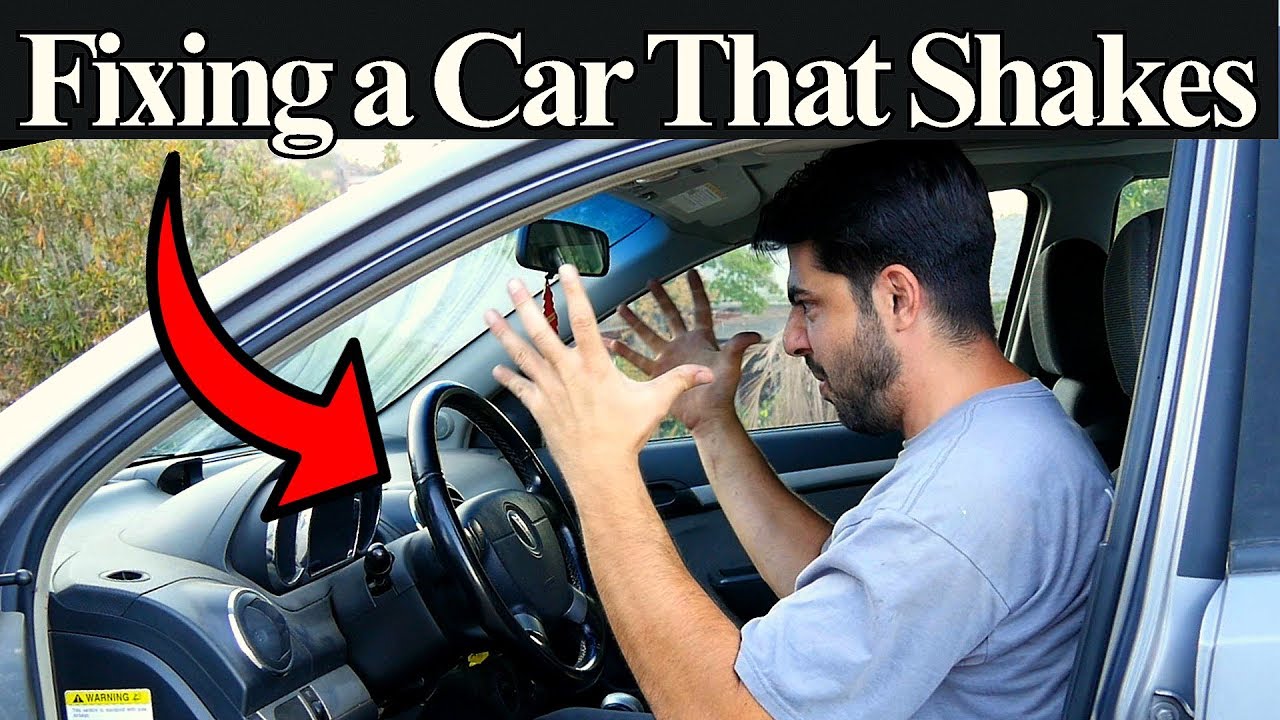
What causes car shaking while driving?
Shaking is your car’s way of telling you something is out of balance, worn, or loose. The cause often ties to speed, braking, or acceleration. Pinpoint that pattern, and you’ll find the fix faster.
Most cases fall into a few groups:
- Tires and wheels that are out of balance, bent, or worn in odd patterns
- Brake rotors that are uneven or calipers that stick
- Suspension or steering parts with play or damage
- Engine or transmission problems, like misfires or worn mounts
As a rule, tire and wheel issues lead the list. If you ask why is my car shaking when I drive at highway speeds, start there.
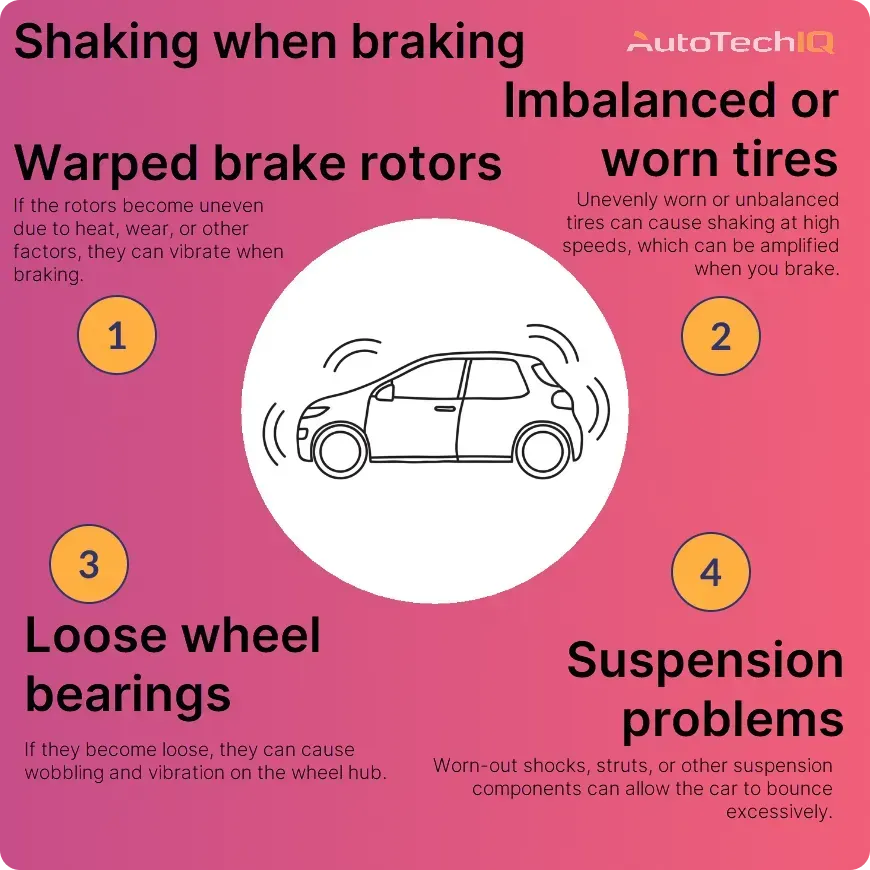
Tire and wheel issues
This is the top reason drivers ask, why is my car shaking when I drive. Any defect here can send a shake through the whole car.
Common culprits:
- Out-of-balance wheels cause a shake at 50–70 mph that gets worse with speed.
- Bent rims from potholes create a repeating wobble, often felt in the steering wheel.
- Uneven or cupped tires buzz or thrum and make the car vibrate at many speeds.
- Low pressure or mismatched tire sizes can make the car feel rough and unstable.
- Loose or over-torqued lug nuts can cause wobble and are a safety risk.
What to do:
- Check pressure cold and set it to the door sticker.
- Inspect tread for scallops, flat spots, bulges, cords, or nails.
- Rotate the tires; if the shake moves, you found the bad tire or wheel.
- Get a spin balance; ask for road-force balance if standard balance fails.
- Replace bent rims or tires with heavy road-force numbers.
Pro tip from the bay: I’ve seen many “mystery shakes” vanish after a proper road-force balance. It finds hidden tire stiffness that regular balancing misses.

Brake-related vibrations
If you ask why is my car shaking when I drive and it gets worse when braking, look at the brakes. This is very common after long downhill drives or after the car sits with wet rotors.
Signs and causes:
- The steering wheel pulses when braking. This hints at front rotor thickness variation.
- The whole car shakes when braking hard. Rear rotors may be uneven too.
- A dragging caliper heats a rotor and warps it, which leads to shake and a hot smell.
Fixes:
- Measure rotor runout and thickness. Replace rotors and pads in axle pairs if out of spec.
- Clean and lube slide pins. Make sure calipers move smooth.
- Bed-in new pads and rotors. Follow the maker’s steps to avoid uneven pad transfer.
Note: Cheap pads and rotors can glaze fast and return the shake. Buy quality parts once.
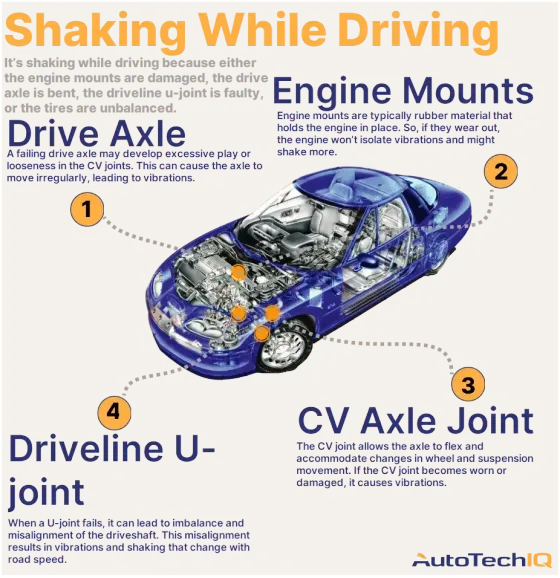
Suspension and steering causes
Loose parts let wheels wiggle. That wiggle becomes a shake at speed. If you think, why is my car shaking when I drive even after new tires, check this system next.
Key parts to inspect:
- Tie rods and ball joints for play; even small play can cause a big shimmy.
- Control arm bushings that crack or split; they allow the wheel to move under load.
- Shocks and struts that leak or are weak; they let tires bounce and cup.
- Wheel bearings that hum and vibrate, often louder in turns.
Simple checks:
- With the car lifted, grab the tire at 3 and 9 o’clock and feel for play.
- Look for wet shocks, torn boots, and loose hardware.
- Spin the wheel by hand and listen for grinding.
If parts are worn, fix them before balancing tires. Worn parts will keep creating new vibration.
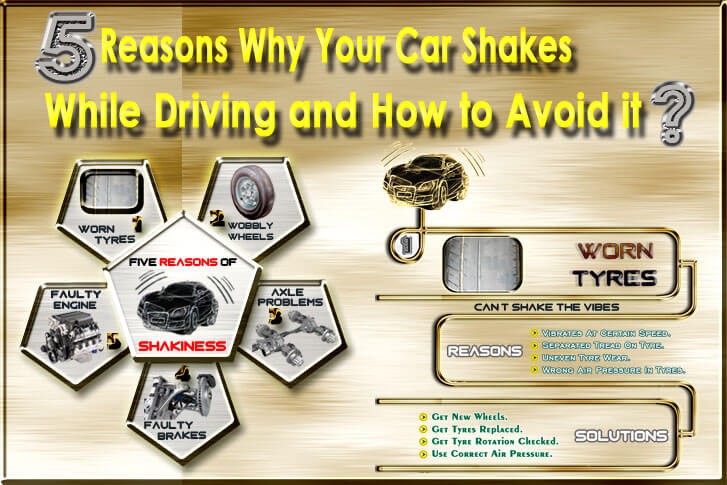
Engine and transmission causes
If your car shakes at idle or under load, the engine may be the issue. Many drivers ask, why is my car shaking when I drive uphill or when I accelerate. That often means a misfire or a mount problem.
Common causes:
- Misfires from bad spark plugs, coils, or injectors cause a harsh shake.
- Vacuum leaks or a dirty throttle body can make idle rough.
- Worn engine or transmission mounts transmit normal engine movement into the cabin.
- Torque converter shudder feels like a light rumble at 30–50 mph with light throttle.
What helps:
- Scan for codes and misfire data. Even if the light is off, there may be pending codes.
- Replace aged plugs and coils as a set if high mileage.
- Clean the throttle body and fix any leaks.
- Try a transmission fluid service if the maker allows it. Some shudders improve with fresh fluid and the correct spec.
In my experience, a collapsed mount can mimic a tire shake. Watch the engine while someone shifts from Park to Drive with the brake on. Big movement points to a bad mount.

Speed-specific clues: what the shake tells you
When you ask, why is my car shaking when I drive, note the speed and the trigger. The pattern is a clue.
- Shakes at 45–70 mph and worse as speed rises: Wheel balance or bent rim
- Shakes only under braking: Rotor thickness variation or sticking caliper
- Shakes at low speed but smooth at high speed: Flat-spotted tire or bent wheel
- Shakes under hard acceleration: Inner CV joint wear or driveshaft issue
- Shakes at idle, more in gear than in Park: Engine mount or misfire
- Steering wheel only shakes: Front tires, front rotors, or front-end parts
- Seat or floor shakes: Rear tires or rear driveline
Track these notes and share them with your tech. You will save time and money.

DIY checks and quick fixes
You can solve many shakes at home. If you ask, why is my car shaking when I drive and need a quick plan, use this list.
Start here:
- Set tire pressures to spec.
- Inspect tread and sidewalls. Replace tires with bulges or cords showing.
- Swap front and rear tires. If the shake moves, you found the bad corner.
- Check lug nut torque with a torque wrench.
- Clean any packed mud or ice from inside the wheels.
- Look for missing wheel weights.
- Check for steering or suspension play. Fix safety items first.
When to see a pro:
- If high-speed shake stays after balance and rotation
- If braking makes the wheel or car pulse
- If there is noise with vibration, like a hum, clunk, or grind
- If the steering feels loose or the car drifts

When it’s unsafe to keep driving
Some shakes are more than a comfort issue. If you’re thinking, why is my car shaking when I drive and is it safe, use these red flags.
Stop or slow down and seek help if:
- The steering wheel shakes hard or the car pulls when braking.
- You hear a loud thump, grind, or smell burning.
- A tire looks low, bulged, or very hot.
- Lug nuts seem loose or a wheel looks crooked.
- The car vibrates so much you can’t see clearly.
Safety first. A small shake can become a big repair if you push on.

Prevention: keep your ride smooth
A smooth car starts with good habits. If you never want to ask, why is my car shaking when I drive, stick to these basics.
Do this on schedule:
- Rotate tires every 5,000–7,500 miles.
- Balance wheels when you mount new tires or feel a new buzz.
- Align the car yearly or after hits to curbs or potholes.
- Replace worn shocks, struts, and bushings before they cup tires.
- Use quality brake parts and bed them in right.
- Keep engine tune items fresh: plugs, coils, filters.
Small steps prevent big shakes. Your car, and your coffee, will thank you.
Cost and time estimates
People ask me, why is my car shaking when I drive and how much will it cost. Prices vary by car and area, but these rough ranges help.
Typical ranges:
- Wheel balance: low cost per wheel, done in under an hour
- New tire: mid to high cost each, plus mount and balance
- Brake rotors and pads: moderate cost per axle, a few hours of labor
- Suspension parts (tie rods, ball joints, bushings): moderate to high, plus alignment
- Engine mounts: moderate to high, 1–4 hours each
- CV axle: moderate to high, 1–3 hours per side
Ask for a written estimate and parts warranty. Quality parts pay off with a smoother ride.
Frequently Asked Questions of why is my car shaking when i drive
Why does my car shake at 60 mph but not at 30 mph?
That speed range points to wheel balance or a bent rim. Start with a balance and inspect the wheels and tires for damage.
Why does the steering wheel shake only when I brake?
That often means front rotors have thickness variation. Replace rotors and pads in pairs and service the calipers.
Why is my car shaking when I drive uphill or when I accelerate?
This can be a misfire, worn CV joint, or a torque converter shudder. Scan for codes and check mounts and axles.
Why is the car shaking but there’s no check engine light?
Not all misfires set the light right away. You may still have pending codes or mechanical issues like a bent rim or bad rotor.
Can low tire pressure cause vibration?
Yes. Low pressure deforms the tire and can cause a shake or a pull. Set pressures to the door sticker and recheck in a week.
Is it safe to drive with a shaking car?
If the shake is mild and no warning lights are on, drive gently to a shop. If it is violent, pull over and call for help.
Conclusion
Shakes have patterns, and patterns point to causes. Tires and wheels lead the list, but brakes, suspension, and engine issues are common too. If you slow down, note when it happens, and follow the checks above, you can fix the problem with less guesswork and cost.
Use this guide to track your symptoms, try safe DIY steps, and book a focused visit with a trusted shop. If this helped you answer why is my car shaking when I drive, share it, subscribe for more car care tips, or drop your question in the comments.
1 thought on “Why Is My Car Shaking When I Drive: Causes And Quick Fixes”